
Kundakçi Koyunbaba, Başak
Loading...
Name Variants
Başak Kundakcı Koyunbaba
Basak Kundakci Koyunbaba
Basak Kundakci Koyunbaba
Job Title
Doç.Dr.
Email Address
Main Affiliation
01.01.10.02. Mimarlık Bölümü
Status
Current Staff
Website
ORCID ID
Scopus Author ID
Turkish CoHE Profile ID
Google Scholar ID
WoS Researcher ID
Sustainable Development Goals
 1
1NO POVERTY
0
Research Products
 2
2ZERO HUNGER
2
Research Products
 3
3GOOD HEALTH AND WELL-BEING
0
Research Products
 4
4QUALITY EDUCATION
0
Research Products
 5
5GENDER EQUALITY
0
Research Products
 6
6CLEAN WATER AND SANITATION
0
Research Products
 7
7AFFORDABLE AND CLEAN ENERGY
7
Research Products
 8
8DECENT WORK AND ECONOMIC GROWTH
0
Research Products
 9
9INDUSTRY, INNOVATION AND INFRASTRUCTURE
2
Research Products
 10
10REDUCED INEQUALITIES
0
Research Products
 11
11SUSTAINABLE CITIES AND COMMUNITIES
0
Research Products
 12
12RESPONSIBLE CONSUMPTION AND PRODUCTION
5
Research Products
 13
13CLIMATE ACTION
1
Research Products
 14
14LIFE BELOW WATER
0
Research Products
 15
15LIFE ON LAND
0
Research Products
 16
16PEACE, JUSTICE AND STRONG INSTITUTIONS
0
Research Products
 17
17PARTNERSHIPS FOR THE GOALS
0
Research Products

Scopus data could not be loaded because of an error. Please refresh the page or try again later.

Documents
9
Citations
622

Scholarly Output
15
Articles
8
Views / Downloads
0/0
Supervised MSc Theses
0
Supervised PhD Theses
0
WoS Citation Count
396
Scopus Citation Count
499
Patents
0
Projects
0
WoS Citations per Publication
26.40
Scopus Citations per Publication
33.27
Open Access Source
2
Supervised Theses
0
| Journal | Count |
|---|---|
| Solar Energy | 4 |
| IEEE Congress on Evolutionary Computation (CEC) | 2 |
| Renewable and Sustainable Energy Reviews | 2 |
| A/Z ITU Journal of the Faculty of Architecture | 1 |
| Balıkesir Üniversitesi Fen Bilimleri Enstitüsü Dergisi | 1 |
Current Page: 1 / 2
Scopus Quartile Distribution
Quartile distribution chart data is not available
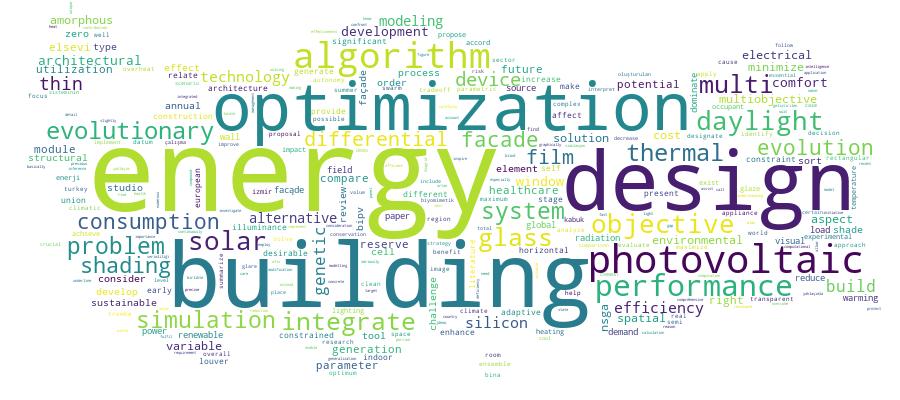
Competency Cloud
15 results
Scholarly Output Search Results
Now showing 1 - 10 of 15
Conference Object Multi-objective optimization for shading devices in buildings by using evolutionary algorithms(Institute of Electrical and Electronics Engineers Inc., 2016) Ayca Kirimtat; Basak Kundakci Koyunbaba; Ioannis Chatzikonstantinou; I. Sevil Sariyildiz; Ponnuthurai Nagaratnam SuganthanThe reduction of energy consumption is a major challenge around the world. Architectural aspects have a significant place to minimize energy consumption to the maximum level. The use of large glazed facades causes overheating problems in certain climatic regions. Shading elements must be considered at an early stage in the design process to overcome this problem. An application of the method is presented focusing on the horizontal louvers integrated to a building in Izmir Turkey. The contributions of the paper can be summarized as follows. We show that most architectural design problems are basically real-parameter multi-objective constrained optimization problems. So any type of evolutionary and swarm optimization methods can be used in this field. A multi-objective self-adaptive differential evolution algorithm (jDEMO) inspired from the DEMO algorithm from the literature with some modifications is developed and compared to the well-known fast and non-dominated sorting genetic algorithm so called NSGA-II in order to solve this complex problem and identify alternative design solutions to decision makers. Through the experimental results we show that the proposed algorithm generated slightly better results when comparing to the NSGA-II algorithm. © 2017 Elsevier B.V. All rights reserved.Article Citation - WoS: 23Citation - Scopus: 25Multi-objective evolutionary optimization of photovoltaic glass for thermal- daylight- and energy consideration(PERGAMON-ELSEVIER SCIENCE LTD, 2023) Aybuke Taser; Tugce Kazanasmaz; Basak Kundakci Koyunbaba; Zeynep Durmus Arsan; Kundakcı Koyunbaba, Başak; Taşer, Aybüke; Durmuş Arsan, Zeynep; Koyunbaba, Basak Kundakci; Arsan, Zeynep Durmus; Kazanasmaz, TuğçeThe potential of fenestration systems is increased by incorporating photovoltaic technology into windows. This recently developed technology enhances the ability to generate energy from the building facade improve the thermal and daylight performance of buildings and visual comfort of occupants. Integrating an evolutionary optimization algorithm into this technology is one of the possible sustainable solutions to enhance building performance and minimize environmental impact. This paper uses a genetic evolutionary optimization algorithm to explore the optimum performance of photovoltaic glass in an architecture studio regarding annual energy consumption energy generation and daylight performance. Design variables include a window-to-wall ratio (i. e. window size and location) and amorphous-silicon thin-film solar cell transparency to generate optimum Pareto-front solutions for the case building. Optimization objectives are minimizing annual thermal (i.e. heating and cooling) loads and maximizing Spatial Daylight Autonomy. Optimized results of low-E semi-transparent amorphous-silicon photovoltaic glass applied on the facade show that the spatial daylight autonomy is increased to 82% with reduced glare risk and higher visual comfort for the occupants. Photovoltaic glass helped reduce the selected room's seasonal and annual lighting loads by up to 26.7%. Lastly compared to non-optimized photovoltaic glass they provide 23.2% more annual electrical energy.Conference Object Thermal and lighting energy benefits of photovoltaic glass in an architecture studio(Institute of Electrical and Electronics Engineers Inc., 2022) Aybüke Taser; Zeynep Durmus Arsan; Basak Kundakci Koyunbaba; Tugce Kazanasmaz; Taser, Aybuke; Arsan, Zeynep Durmus; Koyunbaba, Basak Kundakci; Kazanasmaz, Z. TugceBuildings are responsible for 40% of the total energy consumption which is critical for global warming. Thus our buildings are expected to be renovated following the zero-energy building (ZEB) strategies. In the context of ZEB strategies renewable energy sources are crucial. It is necessary to understand their role in a nearly-ZEB for future scenarios. This research aims to find out the thermal daylight and energy performance of thin-film amorphous-silicon (a-Si) photovoltaic (PV) glass on an architecture studio of an education building at Izmir Institute of Technology (IZTECH) Campus in Izmir Turkey. Simulation modeling and field measurements have become the methods applied in three scenarios to test the benefits of such a PV glass in terms of thermal and lighting energy consumption and comfort levels. Scenarios included a-Si thin-film modules in three transmittance values modeled in existing windows. Research findings propose that PV glasses have the potential to balance the room's lighting loads in a range between 15.1-and 20.3%. They improved occupant thermal and visual comfort by preventing overheating and glare risks. They also decreased cooling loads. However an essential development could not be achieved in reducing heating loads since new PV glasses absorb less heat due to a lower g-value. © 2022 Elsevier B.V. All rights reserved.Conference Object Citation - WoS: 9Design of Rectangular Facade Modules through Computational Intelligence Case of Common Space in Healthcare Building(IEEE, 2017) Selim Karaman; Berk Ekici; Cemre Cubukcuoglu; Basak Kundakci Koyunbaba; Ilker Kahraman; Ekici, Berk; Karaman, Selim; Cubukcuoglu, Cemre; Koyunbaba, Basak Kundakci; Kahraman, IlkerThis paper presents an implementation of multi-objective optimization for a rectangular facade design proposal in a healthcare building's common space. Objectives are to maximize daylight performance and to minimize facade construction cost. The aim of this study is to enhance indoor comfort of an existing healthcare building by concerning cost-effective facade design alternatives subject to several constraints. To handle the problem we formulate a multi-objective real-parameter constraint problem. In order to solve this Non-Dominated Sorting Genetic Algorithm II (NSGA-II) and Multi-objective Self-Adaptive Ensemble Differential Evolution (jE_DEMO) algorithms are used. Finally both algorithms are capable to discover desirable set of design alternatives.Article Citation - Scopus: 8The performance comparison of fan-assisted Trombe wall system(Istanbul Teknik Universitesi Faculty of Architecture, 2013) Basak Kundakci Koyunbaba; Zerrin Yilmaz; Kundakçi Koyunbaba, Başak; Yilmaz, ZerrinOne of the various systems used for energy conservation in buildings is building integrated photovoltaic (BIPV) Trombe wall system. This system is applied to the blind south facades of buildings to produce heat and electrical energy. In this paper the energy performance comparison of fan-assisted single glass double glass and a-Si semi-transparent PV module integrated on the Trombe wall façade of a model test room built in Izmir Turkey has been carried out. The system has been operated during 19 - 21 January. The temperature variations at certain nodes where the temperature probes are placed have been evaluated. The measured values of inter-space inlet and outlet air temperatures for single glass double glass and photovoltaic module have been compared. The surface temperatures of the photovoltaic module and the thermal wall have also been evaluated. The comparison of the thermal performance for three modules has been made according to the experimental results. The change in electrical efficiency by surface temperature of the photovoltaic module has also been interpreted. According to the experimental results 10% of solar radiation has been transmitted through the semi-transparent photovoltaic module. Meanwhile the electrical efficiency of PV cells can reach 4.5 % according to the experimental results. © 2023 Elsevier B.V. All rights reserved.Review Citation - WoS: 85Citation - Scopus: 102Thermal daylight and energy potential of building-integrated photovoltaic (BIPV) systems: A comprehensive review of effects and developments(Elsevier Ltd, 2023) Aybüke Taser; Basak Kundakci Koyunbaba; Tugce Kazanasmaz; Koyunbaba, Basak Kundakci; Kazanasmaz, Tugce; Taser, AybukeAccording to energy consumption data of the European Union buildings account for 40 % of overall energy consumption in all sectors. The rise in building energy demand seriously affects global warming. To reduce demand buildings must be designed to be energy-efficient. As part of energy-efficiency initiatives unique systems that employ renewable energy sources should be implemented in buildings. As a new technology building-integrated photovoltaics is considered an essential technology to achieve this target. Several variables affect the thermal daylight and energy performance of building-integrated photovoltaic systems, related to environmental and photovoltaic-related parameters. Thus the challenges and effects of these variables on the overall performance of these systems should be investigated. This research analyzes building-integrated photovoltaic implemented studies and presents a state-of-art review of recent developments. The study not only summarizes the existing studies developed in this field so far but also analyzes the variables and makes concrete generalizations and inferences. It enables finding gaps and deficiencies in the literature and provides a better understanding of all the variables that affect the performance of building-integrated photovoltaic systems by interpreting the results in detail and representing them graphically instead of only through textual analysis. Results show that building-integrated photovoltaics contribute to constructing a sustainable future for cities. Developments in this industry motivate researchers in this field whose work will make it easier to cope with future ecological challenges. It helps to build a more sustainable future for society. With new developments it will be possible to mitigate the effects of future environmental problems. © 2023 Elsevier B.V. All rights reserved.Article Multi-objective evolutionary optimization of photovoltaic glass for thermal daylight and energy consideration(Elsevier Ltd, 2023) Aybüke Taser; Tugce Kazanasmaz; Başak Kundakcı Koyunbaba; Zeynep Durmus ArsanThe potential of fenestration systems is increased by incorporating photovoltaic technology into windows. This recently developed technology enhances the ability to generate energy from the building façade improve the thermal and daylight performance of buildings and visual comfort of occupants. Integrating an evolutionary optimization algorithm into this technology is one of the possible sustainable solutions to enhance building performance and minimize environmental impact. This paper uses a genetic evolutionary optimization algorithm to explore the optimum performance of photovoltaic glass in an architecture studio regarding annual energy consumption energy generation and daylight performance. Design variables include a window-to-wall ratio (i.e. window size and location) and amorphous-silicon thin-film solar cell transparency to generate optimum Pareto-front solutions for the case building. Optimization objectives are minimizing annual thermal (i.e. heating and cooling) loads and maximizing Spatial Daylight Autonomy. Optimized results of low-E semi-transparent amorphous-silicon photovoltaic glass applied on the façade show that the spatial daylight autonomy is increased to 82% with reduced glare risk and higher visual comfort for the occupants. Photovoltaic glass helped reduce the selected room's seasonal and annual lighting loads by up to 26.7%. Lastly compared to non-optimized photovoltaic glass they provide 23.2% more annual electrical energy. © 2023 Elsevier B.V. All rights reserved.Conference Object Citation - WoS: 13Citation - Scopus: 16Multi-objective diagrid facąde optimization using differential evolution(Institute of Electrical and Electronics Engineers Inc., 2015) Ioannis Chatzikonstantinou; Berk Ekici; I. Sevil Sariyildiz; Basak Kundakci Koyunbaba; Ekici, Berk; Chatzikonstantinou, Ioannis; Sariyildiz, I. Sevil; Koyunbaba, Basak KundakciFacądes constitute one of the fundamental systems of contemporary buildings. They serve multiple purposes such as to ensure proper indoor climate to provide sufficient daylight but also to create a desirable architectural image. Integration of these aspects makes facąde design a complex task that requires significant effort in order to achieve well-performing results. It is thus desirable that systematic approaches to facąde design are developed. In this study we consider facąde design as a multiobjective optimization problem integrating diverse design criteria namely indoor daylight distribution structural performance and cost. We evaluate design performance by making use of simulation. Consequently we use Differential Evolution (DE) to search for best-tradeoff solutions. We compare the performance of two DE variants using the Hypervolume metric and also through qualitative inspection. We report facąde designs that demonstrate interesting and often unexpected features concluding that the proposed approach may lead to a novel more integrated design process. © 2017 Elsevier B.V. All rights reserved.Review Citation - WoS: 258Citation - Scopus: 318Review of simulation modeling for shading devices in buildings(PERGAMON-ELSEVIER SCIENCE LTD, 2016) Ayca Kirimtat; Basak Kundakci Koyunbaba; Ioannis Chatzikonstantinou; Sevil Sariyildiz; Sariyildiz, Sevil; Chatzikonstantinou, Ioannis; Koyunbaba, Basak Kundakci; Kirimtat, AycaMany countries around the world are confronted with the challenge of decreasing energy consumption while the use of electrical appliances is continuously increasing in buildings. The requirement to minimize the energy consumption can be fulfilled by revaluating architectural aspects. One of these aspects is related to overheating problems caused by facades with large glazed portions. In such designs shading elements must carefully be integrated and considered at an early-design stage in the design process. Shading of buildings is crucial especially in climates with hot summer. It is significant to protect the window from solar radiation in summer while allowing maximum solar radiation in winter. For this reason precise figures of their performance are needed. As such simulation tools are often used for identifying the most suitable shading element that suits the building. In literature there are many studies that have been done to designate the energy performance of shading devices in buildings by using simulation tools. This study focuses both on the shading device types used in the building sector and the previous studies done for designating the performance aspects of different shading devices types. Numerous studies for different building types located in different climatic regions have been reviewed in order to underline the importance of simulation modeling for shading devices in buildings. (C) 2015 Elsevier Ltd. All rights reserved.Article Doha’da enerji verimli bina kabuğu tasarımı için biyomimetik yaklaşım(2024) Berkay Nalçakan; Basak Kundakci Koyunbaba; Koyunbaba, Basak Kundakci; Nalçakan, BerkayBu çalışmada dünya genelinde artan nüfusa bağlı olarak yapılı çevrenin her geçen gün artan enerji talebine karşılık binaların enerji tüketimini doğrudan etkileyen bina kabuk tasarımları için bir yaklaşım önerilmektedir. Çalışma kapsamında doğadan ilham alan yaklaşımla oluşturulan bina kabuk sisteminin hem tasarım hem de simülasyon süreçleri birlikte ele alınarak enerji verimliliği noktasında iyileştirme hedeflenmektedir. Ekstrem hava koşullarına sahip Doha Katar'da hayali bir ofis binasının güney cephesinde yer alan ofis birimi için geliştirilen bu kabuk sisteminin tüm mimari entegrasyon süreci ele alınmaktadır. Çalışma boyunca oluşturulan simülasyon çıktıları ile birlikte geliştirilen biyomimetik kabuk tasarımının soğutma yükü ve gün ışığı parametreleri üzerine etkileri analiz edilmektedir. Çalışma sonucunda biyomimetik yaklaşımla oluşturulan bina kabuk sisteminin binayı enerji verimliliği açısından iyileştirdiği gözlemlenmiştir.
