Çavlak, Hakan

Loading...
Profile Picture
Name Variants
Çağla Sarvan
Job Title
Öğrt.Gör.
Email Address
Main Affiliation
01.01.15.01. İngilizce Hazırlık Sınıfı Programı
Status
Former Staff
Website
ORCID ID
Scopus Author ID
Turkish CoHE Profile ID
Google Scholar ID
WoS Researcher ID

Sustainable Development Goals

SDG data is not available
This researcher does not have a Scopus ID.
This researcher does not have a WoS ID.
Scholarly Output

3

Articles

1

Views / Downloads

0/0

Supervised MSc Theses

0

Supervised PhD Theses

0

WoS Citation Count

7

Scopus Citation Count

17

Patents

0

Projects

0

WoS Citations per Publication

2.33

Scopus Citations per Publication

5.67

Open Access Source

0

Supervised Theses

0

JournalCount
2019 Innovations in Intelligent Systems and Applications Conference ASYU 20191
2019 Medical Technologies Congress TIPTEKNO 20191
Biomedical Signal Processing and Control1
Current Page: 1 / 1

Scopus Quartile Distribution

Quartile distribution chart data is not available

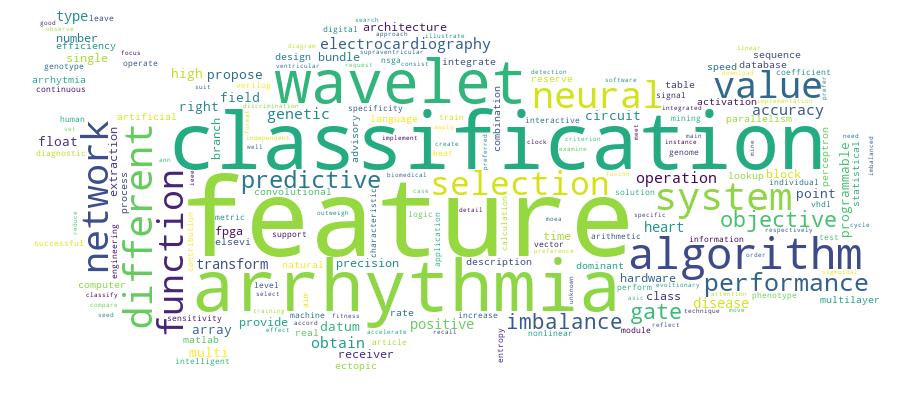
Competency Cloud

GCRIS Competency Cloud

Scholarly Output Search Results

Now showing 1 - 3 of 3
  • Conference Object
    Implementation of ANN Training Module on Field Programmable Gate Arrays
    (Institute of Electrical and Electronics Engineers Inc., 2019) Çağla Sarvan; Mustafa Gündüzalp
    This study provides an application-specific integrated circuit (ASIC) diagram of Artificial Neural Networks (ANN) with module design for 32-bit floating point operations on Field Programmable Gate Array (FPGA). It is aimed that ANNs train operations are moved from software to hardware and calculations are made by using IEEE 754 single precision floating point number format. The proposed architecture is designed with combination of Verilog and Very High Speed Integrated Circuits Hardware Description Language (VHDL). Sigmoidal non-linear function was used as the activation function of the train and lookup table (LUT) was created for process efficiency of the designed circuit. Natural parallelisms were used in the calculation of the operations which are implemented on FPGA thus the system operations was accelerated by performing independent operations during the same clock cycle. The results obtained from FPGA were compared with the results obtained from MATLAB R2016b. © 2020 Elsevier B.V. All rights reserved.
  • Article
    Citation - WoS: 3
    Citation - Scopus: 3
    Multi-objective advisory system for arrhytmia classification
    (Elsevier Ltd, 2021) Çağla Sarvan; Nalan Ǒzkurt; Sarvan, Çağla; Özkurt, Nalan
    The study proposes the best electrocardiography (ECG) arrhythmia classification features suited to application needs by using multi-objective approach. The wavelet transform (WT) is successful for ECG classification. Also the combination of features obtained from different coefficients of different wavelets provides higher performance rate than individual wavelet. However most of the feature selection algorithm focuses attention on one objective such as accuracy or to the number of features for a real time system. In this study different solutions were proposed that will increase the classification performance on three different objectives such as positive predictive value (PPV) accuracy and number of selected features. The wavelet type and level that best reflect the 4 different ECG arrhythmia types were searched by using Multi-Objective Evoltionary Algorithm (MOEA). Multilayer perceptron (MLP) was preferred as a fitness function. The non-dominant sequencing genetic algorithm II (NSGA-II) was used and the algorithm ran many times with different seed values. The preferred solutions meeting the preference criteria were examined in detail. The highest accuracy and PPV rate obtained was 9782% and 94.94% respectively with 24 features. Moreover it has been observed that some of the features obtained from an individual wavelet type have a low contribution to the classification performance and some of them can outweigh. To illustrate that the combination of features obtained from different level coefficients of different wavelet types provides more successful discrimination in ECG arrhythmias and to provide feature sets according to the requested metric values are the some of the main contributions of this study. © 2021 Elsevier B.V. All rights reserved.
  • Conference Object
    Citation - WoS: 4
    Citation - Scopus: 14
    ECG beat arrhythmia classification by using 1-d CNN in case of class imbalance
    (Institute of Electrical and Electronics Engineers Inc., 2019) Çağla Sarvan; Nalan Ǒzkurt; Sarvan, Cagla; Ozkurt, Nalan
    In this study ECG arrhythmia types of non-ectopic (N) ventricular ectopic (V) unknown (Q) supraventricular ectopic (S) and fusion (F) were classified by using the convolutional neural network (CNN) architecture. QRS detection was performed on these ECG arrhythmias that downloaded from MIT-BIH database. An imbalanced number of beats was obtained for 5 different arrhythmia types. In order to reduce the effect of imbalance in statistical performance metrics data mining techniques such as recall of data were applied. It was aimed to increase the positive predictive value (PPV) rates of the classes which consist of a few instances. © 2020 Elsevier B.V. All rights reserved.