
Güler Nakip, Gizem
Loading...

Name Variants
Gizem Güler Nakip
Job Title
Araş.Gör.
Email Address
Main Affiliation
01.01.10.01. İç Mimarlık ve Çevre Tasarımı Bölümü
Status
Former Staff
Website
ORCID ID
Scopus Author ID
Turkish CoHE Profile ID
Google Scholar ID
WoS Researcher ID
Sustainable Development Goals
 1
1NO POVERTY
0
Research Products
 2
2ZERO HUNGER
0
Research Products
 3
3GOOD HEALTH AND WELL-BEING
0
Research Products
 4
4QUALITY EDUCATION
1
Research Products
 5
5GENDER EQUALITY
0
Research Products
 6
6CLEAN WATER AND SANITATION
0
Research Products
 7
7AFFORDABLE AND CLEAN ENERGY
0
Research Products
 8
8DECENT WORK AND ECONOMIC GROWTH
0
Research Products
 9
9INDUSTRY, INNOVATION AND INFRASTRUCTURE
0
Research Products
 10
10REDUCED INEQUALITIES
0
Research Products
 11
11SUSTAINABLE CITIES AND COMMUNITIES
4
Research Products
 12
12RESPONSIBLE CONSUMPTION AND PRODUCTION
0
Research Products
 13
13CLIMATE ACTION
0
Research Products
 14
14LIFE BELOW WATER
2
Research Products
 15
15LIFE ON LAND
0
Research Products
 16
16PEACE, JUSTICE AND STRONG INSTITUTIONS
0
Research Products
 17
17PARTNERSHIPS FOR THE GOALS
0
Research Products

Documents
2
Citations
3
h-index
1

This researcher does not have a WoS ID.

Scholarly Output
7
Articles
4
Views / Downloads
0/0
Supervised MSc Theses
0
Supervised PhD Theses
0
WoS Citation Count
4
Scopus Citation Count
13
Patents
0
Projects
0
WoS Citations per Publication
0.57
Scopus Citations per Publication
1.86
Open Access Source
3
Supervised Theses
0
| Journal | Count |
|---|---|
| A/Z : ITU journal of Faculty of Architecture | 3 |
| 16th International Docomomo Conference Tokyo Japan 2020+1 | 1 |
| 4th International Conference on Cities Identity Through Architecture and Arts CITAA 2020 | 1 |
| Buildings | 1 |
| Springer Series in Design and Innovation | 1 |
Current Page: 1 / 1
Scopus Quartile Distribution
Quartile distribution chart data is not available
Competency Cloud
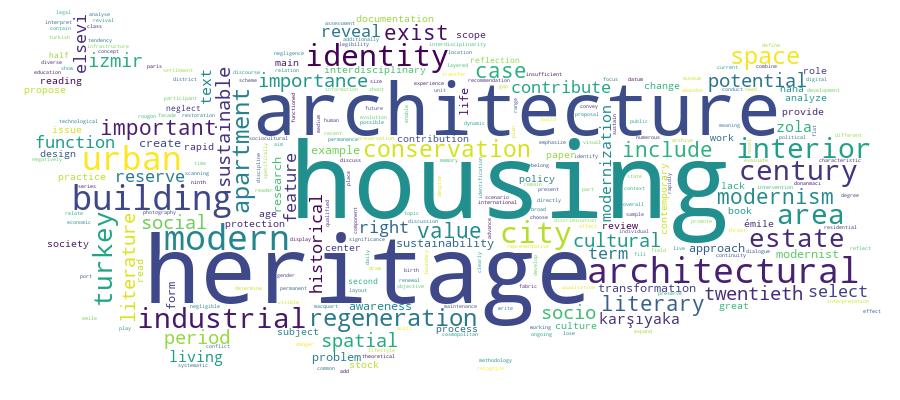
7 results
Scholarly Output Search Results
Now showing 1 - 7 of 7
Book Part Citation - Scopus: 2Evaluation of Playgrounds in Terms of Universal Design: İzmir Karşıyaka Coast After İzmir Deniz Project(Springer Nature, 2021) Eda Paykoç; Gülnur Ballice; Gizem Güler; Ballice, Gülnur; Paykoç, Eda; Güler, GizemPlaygrounds are the areas that are specifically designed for children to play which are actually the places enable them to take part in the everyday life. In addition to taking place the quality of this participation is also important. For analysing the quality of these areas evaluating them in terms of Universal Design principles is one of the effective methods through seven parameters that enable to evaluate from the perspective of all different user profiles like children elderly disabled playgrounds can be analysed like their dimensions material usages whether they are meeting the needs of children from different ages or with different abilities and other design qualities specific to open public areas. As a case study the playgrounds located in İzmir Karşıyaka coast which was re-designed and re-arranged with İzmir Deniz Project were analysed. As a part of this project some playgrounds are re-generated whereas some of them are added. As a method of this study observations which will also be proved with photograph taking and analysis were used. It can be concluded that although the playgrounds in the area are just considered they cannot fulfil the needs of children completely especially with the focus of the universal design. © 2022 Elsevier B.V. All rights reserved.Article Citation - Scopus: 5Turkey’s modern housing heritage: Apartment buildings and interiors in İzmir Karşıyaka (1965-1980)(Istanbul Teknik Universitesi, Faculty of Architecture, 2022) Gizem GÜLER NAKIP; Gülnur BALLİCE; Eda PAYKOÇ ÖZÇELİK; İrem Deniz AKÇAM; Nakıp, Gizem Güler; Özçelik, Eda Paykoç; Güler Nakip, Gizem; Paykoç Özçelik, Eda; Ballice, Gülnur; Akçam, İrem DenizHousing architecture clearly reveals lifestyle social/cultural/political/economic changes and architectural approaches. The changing needs of society negligible conservation awareness and interventions in housing units due to urban renewal policies negatively affect historical continuity and permanence. It is therefore important for conducting multi-layered studies on the analysis and documentation of housing architecture and interiors which are representative of the period. The aim of this paper is interpreting modern architecture through housing heritage and analysing the architectural features residential life proposals and modernist design approaches of selected interior spaces. In this context Karşıyaka İzmir which has a qualified housing stock on the subject and is in danger of losing its current housing stock in a rapid transformation has been determined as a case area. Within the scope of this paper the modernist architectural features and interior practices of four apartment buildings built between 1965-1980 in Donanmacı District have been revealed. The selected time range was identified to include periods that are important for Turkey’s housing architecture - the periods of rapid development and modernization. The method includes literature review sample identification photography shooting archive scanning transferring data to digital media and data analysis. The analysis which contains the facades and common areas of the apartments and plan schemes and interior features of the flats has enabled the interpretation of design culture and the revival of apartment buildings as modern housing heritage values. Written and visual documentation of the apartments and interiors made the effects of the modernization process more visible and permanent.Conference Object Citation - Scopus: 1Local interpretations of modern housing in post-republican period in İzmİr-Turkey(Docomomo, 2021) Gülnur Ballice; Gizem Güler; Eda Paykoç Özçelik; Özçelik, Eda Paykoç; Ballice, Gülnur; Güler, Gizem; A. Tostoes , Y. YamanaThe modernisation process in Turkey which had started with the proclamation of the Republic in 1923 has also influenced architecture and then has led to the emergence of modern design. International architectural languages began to be sprawled much faster in cities like İzmir where different cultures have been living together for centuries. The city plan prepared for the completely burned areas in the fire in 1924 shaped today's İzmir urban pattern as the first example of the modernist/positivist approach of the period. Due to the development of planning laws different morphologies have emerged periodically in the city's housing architecture. The modernist apartment buildings of the city which were built especially in Alsancak Güzelyalı and Karșıyaka after the 1950s were diversified in other districts of the city in the following years. This architectural language tried to integrate mutually different international architectural language on behalf of local modernism in the city. This paper aims to present these local modernism efforts in terms of the multi-story apartment buildings of İzmir. The purpose of this paper is to emphasize the importance of apartment blocks which have had an important role in the identity of the city by revealing the architects and buildings of that period. These buildings which both reflect international architectural languages and local modernisms are investigated in terms of their architectural style plan layout facade characteristics material selection and interior elements. Relationships and syntheses between international modernism and local culture will be searched through analysing pioneering apartment blocks constructed between 1950 and 1980 in the city. © 2021 Elsevier B.V. All rights reserved.Article Turkey’s modern housing heritage: Apartment buildings and interiors in İzmir Karşıyaka (1965-1980)(Istanbul Teknik Universitesi Faculty of Architecture, 2022) Gülnur Ballice; Gizem Güler Nakip; Eda Paykoç Özçelik; İrem Deniz AkçamHousing architecture clearly reveals lifestyle social/cultural/political/economic changes and architectural approaches. The changing needs of society negligible conservation awareness and interventions in housing units due to urban renewal policies negatively affect historical continuity and permanence. It is therefore important for conducting multi-layered studies on the analysis and documentation of housing architecture and interiors which are representative of the period. The aim of this paper is interpreting modern architecture through housing heritage and analysing the architectural features residential life proposals and modernist design approaches of selected interior spaces. In this context Karşıyaka İzmir which has a qualified housing stock on the subject and is in danger of losing its current housing stock in a rapid transformation has been determined as a case area. Within the scope of this paper the modernist architectural features and interior practices of four apartment buildings built between 1965-1980 in Donanmacı District have been revealed. The selected time range was identified to include periods that are important for Turkey’s housing architecture-the periods of rapid development and modernization. The method includes literature review sample identification photography shooting archive scanning transferring data to digital media and data analysis. The analysis which contains the facades and common areas of the apartments and plan schemes and interior features of the flats has enabled the interpretation of design culture and the revival of apartment buildings as modern housing heritage values. Written and visual documentation of the apartments and interiors made the effects of the modernization process more visible and permanent. © 2022 Elsevier B.V. All rights reserved.Article Citation - WoS: 4Citation - Scopus: 4The Neglected Modern Architectural Heritage: Analysis of Housing Estates in the Second Half of the 20th Century from Izmir Turkey Case Study Area(Multidisciplinary Digital Publishing Institute (MDPI), 2024) Gizem Güler Nakip; Magdalena Żmudzińska-Nowak; Gülnur Ballice; Güler Nakıp, Gizem; Ballice, Gülnur; Żmudzińska-Nowak, MagdalenaTwentieth-century housing estates are an important part of the architectural heritage of the modern age reflecting not only the evolution of housing forms but also the technological advances and sociocultural dynamics of the twentieth century. However awareness of the value of this heritage is still insufficient resulting in a lack of legal protection and numerous threats in the form of transformation and negligence. In this research we present the problem using the example of modernist Turkish architecture. The settlements of Izmir a cosmopolitan port city with a diverse socio-cultural fabric and rapidly developing housing architecture are chosen as the subject of the study. The main objective of the study is to evaluate the state of conservation and the degree of transformation of the selected estates. The overall assessment of the maintenance of the legibility of urban layouts and the form of individual buildings shows that despite the lack of systematic protection it is possible to preserve the existing architectural heritage in the examples analyzed and to provide recommendations for future policies to sustain the heritage values of modernism. The research aims to fill the existing gaps in the discourse on modern housing and contribute to a broader international dialogue on the conservation of modern architecture. By including these estates in the ongoing discussion we recognize their historical significance and promote their preservation as important participants in contemporary urban life. © 2024 Elsevier B.V. All rights reserved.Conference Object Citation - Scopus: 1The Importance of Urban Regeneration in Cities’ Identity: Industrial Heritage Potentials of İzmir(Springer Nature, 2022) Gülnur Ballice; Gizem Güler Nakip; Eda Paykoç Özçelik; Nakıp, Gizem Güler; Özçelik, Eda Paykoç; Ballice, Gülnur; N. Mohareb , A. Cardaci , S. Maruthaveeran , N. CavalagliHistorical urban areas have great importance in terms of having memory belonging and place identity. They have a tendency to create an urban identity for the remaining parts of the city. Existing industrial buildings being an important value of historical areas contribute to the identity of the city in terms of their architectural characteristics. Different functions including museums culture and art centers education and working spaces research centers and housing can be proposed in the regeneration of industrial buildings. The location of the buildings their size and architectural features play a great role in defining their new functions. All these functions create a potential for urban regeneration and in this way it contributes to the cities’ identity by providing sustainability of abandoned buildings. Urban regeneration art and architecture’s role in the city identity industrial heritage co-living/public spaces and sustainable approach within the existing industrial buildings are included in the theoretical infrastructure of the study. Within the scope of this study the existing potentials of the city of İzmir Turkey are analyzed through the recent studies on the restoration of the contemporary examples. Additionally co-living scenarios are proposed to the selected industrial buildings which will be re-functioned. The importance and contribution of this function are also discussed in terms of urban identity. While this study focuses on the potentials of industrial buildings in terms of city identity it also emphasizes the contribution of the concept of co-living to the socio-cultural sustainability of society and the importance of creating this awareness in the urban regeneration process. © 2022 Elsevier B.V. All rights reserved.Article Reading 19th century architectural and interior space reflections of modernization through the literary space: Émile zola’s nana(Istanbul Teknik Universitesi Faculty of Architecture, 2021) Büşra Aydin; Bahar Sezen; Gizem Güler Nakip; Zeynep Tuna Ultav; Nakıp, Gizem Güler; Güler Nakip, Gizem; Tuna Ultav, Zeynep; Sezen, Bahar; Aydın, Büşra; Ultav, Zeynep TunaThe interdisciplinary study of architecture across many fields adds meaning to architecture. Literature which is one of the areas that works together with architecture conveys information to the reader on many topics such as periods daily life practices social problems and human-space relations. Analysis of a literary work combines literature and architecture while expanding the boundaries of architecture thereby contributing to both disciplines. This study reads the spatial components drawn from social problems through one literary text. Specifically it reveals the social and spatial results of modernism experienced in 19th-century Paris in Nana (1880) the ninth book of Emile Zola’s (1840-1902) 20-book Rougon-Macquart series. A qualitative methodology was used for the literature review and analysis of the novel. This case study revealed two main conflicts at the birth of modernism: The issue of class discrimination and the issue of gender. It is displayed that such an interdisciplinary spatial reading can directly relate literary texts and architecture. © 2021 Elsevier B.V. All rights reserved.
