
Okur, Mustafa Reha
Loading...

Name Variants
Mustafa Reha Okur
Job Title
Araş.Gör.
Email Address
Main Affiliation
01.01.06.02. İşletme Bölümü
Status
Former Staff
Website
ORCID ID
Scopus Author ID
Turkish CoHE Profile ID
Google Scholar ID
WoS Researcher ID
Sustainable Development Goals
SDG data is not available

This researcher does not have a Scopus ID.

Documents
8
Citations
41

Scholarly Output
4
Articles
1
Views / Downloads
0/0
Supervised MSc Theses
1
Supervised PhD Theses
1
WoS Citation Count
0
Scopus Citation Count
1
Patents
0
Projects
0
WoS Citations per Publication
0.00
Scopus Citations per Publication
0.25
Open Access Source
1
Supervised Theses
2
| Journal | Count |
|---|---|
| Accounting, Finance, Sustainability, Governance and Fraud | 1 |
Current Page: 1 / 1
Scopus Quartile Distribution
Quartile distribution chart data is not available
Competency Cloud
4 results
Scholarly Output Search Results
Now showing 1 - 4 of 4
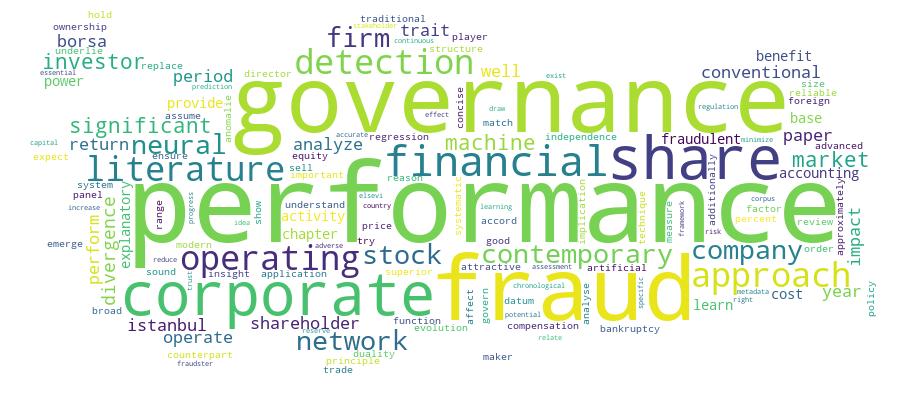
Book Part Citation - Scopus: 1From Conventional Methods to Contemporary Neural Network Approaches: Financial Fraud Detection(Springer Nature, 2021) Mustafa Reha Okur; Yasemin Zengin Karaibrahimoglu; Dilvin Taşkın; Zengin-Karaibrahimoglu, Yasemin; Taşkın, Dilvin; Okur, Mustafa RehaThis chapter provides insights on the underlying reasons to replace the conventional methods with contemporary approaches—the neural network-based machine learning methods—in financial fraud detection. To do this we perform a systematic literature review on the evolution of financial fraud detection literature over the years from traditional techniques toward more advanced approaches such as modern machine learning methods like artificial neural networks. Additionally this chapter provides concise chronological progress of the fraud literature and country-specific fraud-related regulations to draw a better framework and give the idea behind the corpus. Using the metadata in the existing literature we show both benefits and costs of using machine learning-based methods in financial fraud detection. An accurate prediction using contemporary approaches is essential to minimize the potential costs of fraudulent financial activities for stakeholders reduce the adverse effects of fraudsters’ and companies’ fraudulent activities and increase trust in capital markets via continuous fraud risk assessment of companies. © 2021 Elsevier B.V. All rights reserved.Doctoral Thesis Hileli finansal aktivitelerin sinir ağları algoritmaları ile öngörülmesi(2019) Okur, Mustafa Reha; Karaibrahimoğlu, Yasemin; Yeşilova, Fatma Dilvin TaşkınDespite worldwide regulatory efforts (e.g., Sarbanes – Oxley Act, Financial Security Law of France, Fraud Act 2006 of the United Kingdom), fraud is still a major concern of today's capital markets. This study aims to forecast the risk of fraudulent financial activities of cross-listed companies in US stock exchanges (NYSE, NASDAQ) by employing a Neural Network based algorithm. Data of financial fraud filings, financial statements, corporate governance variables, and macroeconomic indicators are collected to construct a comprehensive study. By this method, this study tries to develop a broader framework on fraud detection that does not focus only on firm-specific aspects, instead of covering a more comprehensive dataset, which incorporates country-specific institutional factors into consideration. This study employs four machine learning based classification algorithms. Random Forest and C4.5 algorithm outperformed others with superior classification power. Moreover, this study mostly exceeds the classification ability of the previous literature.Master Thesis Kurumsal yönetim uygulamalarının hisse performansına etkisi: Borsa İstanbul üretim sektörü üzerinde bir uygulama(2014) Okur, Mustafa Reha; Taşkın, Fatma DilvinAfter the decade of huge corporate scandals (1995-2005), corporate governance becomes the most vital legal procedure for companies to survive in a brutal global economy. Such that, some practices of corporate governance have direct effect on firms' management and financial performance. From this point of view, the aim of this study is to determine the effect of corporate governance practices on stock return of manufacturing companies in Borsa İstanbul. In the first part of the study, the concept and evolution of corporate governance are mentioned according to OECD principles of corporate governance. In the second part, national and international corporate governance regulations are explained. Third part of the study examines the stock price, stock return and the relationship between corporate governance and stock performance. Fourth part of the study constitute the main and empirical part of the study. Adhere to research question, 129 companies investigated, which are indexed in Borsa Istanbul and operating in manufacturing sector, over the period of 2007-2012 to observe the relationship between corporate governance and stock return. Empirical results revealed that there is no significant relationship between corporate governance practices and stock return. In conclusion, this study highlights the benefits and advantages of implementing successful corporate governance practices in Turkey and made some suggestions to policy makers and companies. Keywords: Corporate Governance, Stock Return, Borsa IstanbulArticle CORPORATE GOVERNANCE AND PERFORMANCE: THE DIVERGENCE OF OPERATING AND SHARE PERFORMANCE(INT JOURNAL CONTEMPORARY ECONOMICS & ADMINISTRATIVE SCIENCES, 2018) F. Dilvin Taskin Yesilova; Mustafa Reha Okur; Taskin Yesilova, F. Dilvin; Okur, Mustafa RehaCorporate governance principles are trying to ensure reliable and well-functioning firms and sound financial systems thus well-governed firms are expected to be performing better than their counterparts. The aim of this paper is to analyze the impact of corporate governance applications on operating performance and share performance of companies that are traded in Borsa Istanbul for the period 2007-2014. In order to understand the impact of corporate governance traits on share performance we assume that we buy and hold the stock for 1 year and sell it at the end of the accounting period to match it with the accounting data and panel regressions are run to analyze the factors that have significant explanatory power over operating and share performance. According to the results the corporate governance traits do not affect stock returns but have a significant explanatory power over operating performance measured by ROA and ROE. This divergence shows that good governance results with superior operating performance, however governance benefits are not priced by the investors. The paper has significant implications since it analyses one of the most attractive emerging equity markets namely Borsa Istanbul which has approximately sixty percent share of foreign investors. The results are important for both policy makers and for the broad range of investors that are players in the market.
