
Okur, Mehmet Cudi
Loading...

Name Variants
Mehmet Cudi Okur
Job Title
Prof.Dr.
Email Address
Main Affiliation
01.01.09.07. Yazılım Mühendisliği Bölümü
Status
Former Staff
Website
ORCID ID
Scopus Author ID
Turkish CoHE Profile ID
Google Scholar ID
WoS Researcher ID
Sustainable Development Goals
 1
1NO POVERTY
0
Research Products
 2
2ZERO HUNGER
0
Research Products
 3
3GOOD HEALTH AND WELL-BEING
0
Research Products
 4
4QUALITY EDUCATION
2
Research Products
 5
5GENDER EQUALITY
0
Research Products
 6
6CLEAN WATER AND SANITATION
0
Research Products
 7
7AFFORDABLE AND CLEAN ENERGY
0
Research Products
 8
8DECENT WORK AND ECONOMIC GROWTH
0
Research Products
 9
9INDUSTRY, INNOVATION AND INFRASTRUCTURE
0
Research Products
 10
10REDUCED INEQUALITIES
0
Research Products
 11
11SUSTAINABLE CITIES AND COMMUNITIES
0
Research Products
 12
12RESPONSIBLE CONSUMPTION AND PRODUCTION
0
Research Products
 13
13CLIMATE ACTION
0
Research Products
 14
14LIFE BELOW WATER
0
Research Products
 15
15LIFE ON LAND
0
Research Products
 16
16PEACE, JUSTICE AND STRONG INSTITUTIONS
0
Research Products
 17
17PARTNERSHIPS FOR THE GOALS
0
Research Products

Documents
12
Citations
112
h-index
6

Documents
8
Citations
58

Scholarly Output
27
Articles
12
Views / Downloads
0/2
Supervised MSc Theses
5
Supervised PhD Theses
4
WoS Citation Count
60
Scopus Citation Count
115
Patents
0
Projects
0
WoS Citations per Publication
2.22
Scopus Citations per Publication
4.26
Open Access Source
5
Supervised Theses
9
| Journal | Count |
|---|---|
| Gazi University Journal of Science | 4 |
| Computer Science | 2 |
| International Journal of Swarm Intelligence Research | 2 |
| Journal of Cognitive Science | 2 |
| Conference of the World-Academy-of-Science-Engineering-and-Technology | 2 |
Current Page: 1 / 2
Scopus Quartile Distribution
Quartile distribution chart data is not available
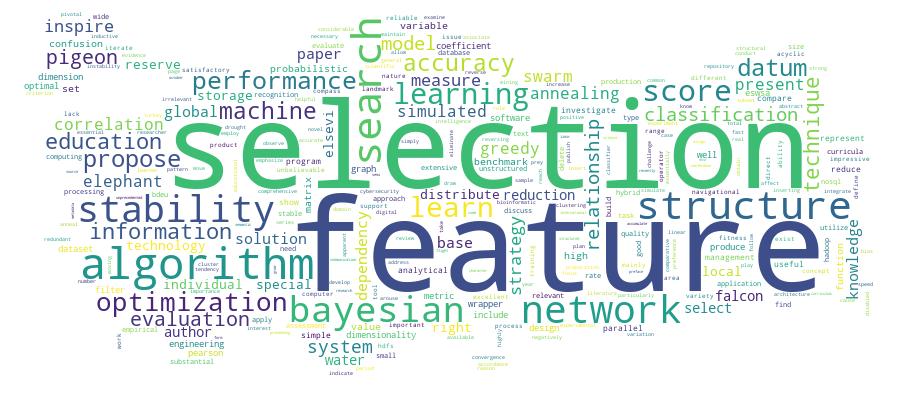
Competency Cloud
26 results
Scholarly Output Search Results
Now showing 1 - 10 of 26
Review A Comprehensive Review of Feature Selection and Feature Selection Stability in Machine Learning(Gazi Universitesi, 2023) Mustafa Büyükkeçeci; Mehmet Cudi OkurFeature selection is a dimension reduction technique used to select features that are relevant to machine learning tasks. Reducing the dataset size by eliminating redundant and irrelevant features plays a pivotal role in increasing the performance of machine learning algorithms speeding up the learning process and building simple models. The apparent need for feature selection has aroused considerable interest amongst researchers and has caused feature selection to find a wide range of application domains including text mining pattern recognition cybersecurity bioinformatics and big data. As a result over the years a substantial amount of literature has been published on feature selection and a wide variety of feature selection methods have been proposed. The quality of feature selection algorithms is measured not only by evaluating the quality of the models built using the features they select or by the clustering tendencies of the features they select but also by their stability. Therefore this study focused on feature selection and feature selection stability. In the pages that follow general concepts and methods of feature selection feature selection stability stability measures and reasons and solutions for instability are discussed. © 2023 Elsevier B.V. All rights reserved.Master Thesis Artırılmış gerçeklik teknolojilerinin kullanımı müzelerde artırılmış gerçeklik çalışması(2013) Aydoğdu, Deniz; Okur, Mehmet Cudi; Öztürk, AydınAugmented Reality (AR) technologies, developed since 1970's has evolved and advanced with today?s technological advances. This thesis aims to guide researchers who wants to engage in AR technologies and will provide about the current status and future of cultural information presentation innovation with augmented reality. Thesis, explains how AR technologies work, expresses and explains fields of application and gives a summary from history to present time. It discusses the AR technologies that can enhance how cultural presentation and experience is created in museums and how it can be modified and improved with AR technologies. ARGuide prototype application has been done and presented. As a conclusion thesis indicates, AR technologies are clearly moved on from infancy to maturity a beginning stage where many innovative opportunities for presenting information is possible and human kind will be witnessing more fantastic applications in near future for public masses.Article Pigeon inspired optimization of bayesian network structure learning and a comparative evaluation(Seoul National University Institute for Cognitive Science kscp2@kams.or.kr College of Medicine 28 Yeongeon-dong Jongno-gu Seoul 110-799, 2019) Shahab Wahhab Kareem; Mehmet Cudi OkurBayesian networks are useful analytical models for designing the structure of knowledge in machine learning. Probabilistic dependency relationships among the variables can be represented by Bayesian networks. One strategy of a structure learning Bayesian Networks is the score and search technique. In this paper we present a new method for structure learning of the Bayesian network which is based on Pigeon Inspired Optimization (PIO) Algorithm. The proposed algorithm is a simple one with fast convergence rate. In nature the navigational ability of pigeons is unbelievable and highly impressive. In accordance with the PIO search algorithm a set of directed acyclic graphs is defined. Every graph owns a score which shows its fitness. The algorithm is iterated until it gets the best solution or a satisfactory network structure using map and compass and landmark operator. In this work the proposed method compared with Simulated Annealing Bee optimization and Simulated Annealing as a hybrid algorithm Bee optimization and Greedy search as a hybrid algorithm and Greedy Search using BDeu score function. We also investigated the confusion matrix performances of the methods. The paper presents the results of extensive evaluations of these algorithms based on common benchmark data sets. The results indicate that the proposed algorithm has better performance than the other algorithms and produces higher scores and accuracy values. © 2020 Elsevier B.V. All rights reserved.Doctoral Thesis Veri madenciliğinde öznitelik seçim tekniklerinin kararlılıkları ve sınıflandırma performansları arasındaki ilişkinin değerlendirilmesi(2019) Büyükkeçeci, Mustafa; Okur, Mehmet CudiHer yıl üretilen ve depolanan veri miktarı üstel olarak artmaktadır. Hem veri kümeleri hem de veri kümesi boyutlarındaki yaşanan bu önemli artış, veri analizi tekniklerini ve algoritmalarını olumsuz yönde etkileyerek karmaşık modellerin üretilmesine, performans kayıplarına ve artan hesaplama maliyetlerine neden olmuştur. Bu problemlerin önlenmesi ve üstesinden gelinmesi için, Öznitelik seçimi gibi, çeşitli veri önişleme teknikleri geliştirilmiştir. Boyut küçültme (indirgeme) tekniği olan öznitelik seçimi, sınıflandırıcıların analiz kalitesini, verimliliğini ve genelleme kapasitesini geliştirmek, hesaplama maliyetlerini azaltmak ve yüksek sınıflandırma veya kümeleme doğruluğuna sahip basit ve anlaşılabilir modeller oluşturmak için kullanılır. Öznitelik seçim algoritmaları tarafından elde edilen öznitelik altkümelerinin sınıflandırma veya kümelenme performanslarının yanı sıra, öznitelik seçim algoritmasının kararlılığı veya sağlamlığı da test edilmelidir. Kararlılık, öznitelik seçim algoritmasının eğitim setinde yapılan değişikliklere karşı hassasiyetinin ölçüsüdür. Düşük hassasiyete sahip algoritma, yani kararlı bir algoritma, eğitim kümesinde yapılan her değişiklikten sonra aynı veya çok benzer sonuçlar (öznitelik altkümeleri veya sıraları) verirken, yüksek hassasiyete sahip algoritma, yani kararsız bir algoritma, her değişiklikten sonra farklı sonuçlar verir. Kararsız bir algoritma tarafından üretilen sonuçlar değişken olacağından, sınıflandırma modellerinin oluşturulmasında kullanılacak sonuçların (öznitelik kümesinin) seçilmesini ve girdi ve çıktılar arasındaki ilişkinin kurulmasını zorlaştırır. Öznitelik seçim algoritmasına olan güveni sarsar. Bu nedenle, algoritma kararlılığı öznitelik seçim algoritmaları için önemli bir başarı kriteridir. Bu tezde kararlılık ile sınıflandırma performansı arasındaki ilişkiyi belirlemek ve yorumlamak için toplam yedi filtreleyen (T-Testi, viiBhattacharyya, Wilcoxon, ROC, Entropi, ReliefF ve Karar Ağacı Topluluğu) ve iki ardışık seçim (Ardışık İleri Öznitelik Seçimi (SFS) ve Ardışık Geri Öznitelik Seçimi (SBS)), veya sarmalayan, öznitelik seçimi algoritması, on iki kararlılık ölçüsü, üç sınıflandırıcı ve yedi gerçek dünya veri kümesi kullanılmıştır.Article Citation - Scopus: 8Bayesian network structure learning based on pigeon inspired optimization(World Academy of Research in Science and Engineering, 2019) Shahab Wahhab Kareem; Mehmet Cudi Okur; Kareem, Shahab Wahhab; Okur, Mehmet CudiBayesian networks are useful analytical models for designing the structure of knowledge in machine learning. Probabilistic dependency relationships among the variables can be represented by Bayesian networks. One strategy of a structure learning Bayesian Networks is the score and search technique. In this paper present the proposed method for Bayesian network structure learning which is depended on Pigeon Inspired Optimization (PIO). The proposed method is a simple one among a firm concentration rate. In nature a navigational ability concerning pigeons is unbelievable and impressive. Under the PIO search algorithm we define a set of directed acyclic graphs. Every graph owns a score which shows its fitness. It iterates the algorithm until it gets the best solution or a satisfactory network structure using a landmark compass and map operator. During this work the proposed method compared with Simulated Annealing and Greedy Search using BDe score function. We also investigated the confusion matrix performances of the methods using various benchmark data sets. Specific effects show that a presented algorithm produces excellent performance than Simulated Annealing and Greedy algorithms and produces higher scores and accuracy values. © 2019 Elsevier B.V. All rights reserved.Article Citation - WoS: 4Citation - Scopus: 15Pigeon Inspired Optimization of Bayesian Network Structure Learning and a Comparative Evaluation(SEOUL NATL UNIV INST COGNITIVE SCIENCE, 2019) Shahab Wahhab Kareem; Mehmet Cudi Okur; Kareem, Shahab Wahhab; Okur, Mehmet CudiBayesian networks are useful analytical models for designing the structure of knowledge in machine learning. Probabilistic dependency relationships among the variables can be represented by Bayesian networks. One strategy of a structure learning Bayesian Networks is the score and search technique. In this paper we present a new method for structure learning of the Bayesian network which is based on Pigeon Inspired Optimization (PIO) Algorithm. The proposed algorithm is a simple one with fast convergence rate. In nature the navigational ability of pigeons is unbelievable and highly impressive. In accordance with the PIO search algorithm a set of directed acyclic graphs is defined. Every graph owns a score which shows its fitness. The algorithm is iterated until it gets the best solution or a satisfactory network structure using map and compass and landmark operator. In this work the proposed method compared with Simulated Annealing Bee optimization and Simulated Annealing as a hybrid algorithm. Bee optimization and Greedy search as a hybrid algorithm and Greedy Search using BDeu score function We also investigated the confusion matrix performances of the methods. The paper presents the results of extensive evaluations of these algorithms based on common benchmark data sets. The results indicate that the proposed algorithm has better performance than the other algorithms and produces higher scores and accuracy values.Doctoral Thesis Kayıp BRDF ölçümlerinin sıkıştırmalı örnekleme yöntemiyle tahmin edilmesi(2015) Seylan, Nurcan; Okur, Mehmet CudiSıkıştırmalı Örnekleme, büyük miktarlardaki ve/veya kayıp, gürültülü veya geçersiz değerler içeren verinin küçük bir kısmını kullanarak bu veriyi yeniden oluşturmayı sağlayan yeni bir metottur. Bu metot, verinin seyrek (sparse) olmasını kullanır ve çok etkin bir yeniden oluşturma işlemi gerçekleştirir. Verinin az sayıdaki örneklemelerinden sonra bir eniyileme algoritması kullanılarak veri yeniden elde edilir. Bu yöntem şimdiye kadar sinyal işleme, resim/video işleme, tıbbi görüntüleme gibi alanlarda yoğun olarak kullanılmıştır. Çift Yönlü Yansıma Dağılım Fonksiyonu (BRDF) verisi, gerçek materyallerin farklı yansıma özelliklerini tanımlamak için kullanılır. Bu çalışmada, sıkıştırmalı örnekleme yöntemi kullanılarak, büyük boyutlu ve seyrek yapıdaki BRDF verisinin yeniden oluşturulması işlemi gerçekleştirilmiştir. Ayrıca bu yöntemle bu verinin içerdiği kayıp, geçersiz, gürültülü değerler etkili bir şekilde yeniden oluşturulabilmektedir. Bunun dışında mevcut BRDF modellerinden ikisi kullanılarak BRDF verisi oluşturulmuş ve sıkıştırmalı örnekleme yöntemiyle başarılı bir şekilde yeniden oluşturulmuştur.Conference Object Citation - WoS: 4Citation - Scopus: 9Big data challenges in information engineering curriculum(IEEE Computer Society help@computer.org, 2014) Mehmet Cudi Okur; Mustafa Büyükkeçeci; Büyükkeçeci, Mustafa; Okur, Mehmet C.The amount of accumulated data is growing at unprecedented rates. This data is mainly unstructured or semi structured and comes from different sources in a variety of forms. Recently a range of supporting storage and distributed parallel computing technologies have been developed and put into use by the sector.The products and implementations include, Apache's Hadoop data processing framework Map Reduce distributed big data management system Cassandra and other NoSQL database and data storage systems. Among the major challenges are, data representation reliable shared storage efficient algorithms and scalable distributed HW/SW infrastructures. Surprisingly current curricula lack the necessary components to create awareness and a good understanding of these state of the art concepts and technologies. There is an urgent need for integrating the developments in big data technologies into the educational programs and computing curricula. This need not only is dictated by the industry but also by the employement dynamics in the related professions. This paper discusses fundemental big data issues and technologies that are considered to be necessary for the existing educational programs in computing information systems and information engineering areas. © 2014 IEEE. © 2014 Elsevier B.V. All rights reserved.Conference Object UML ile modellenen coʇrafi verilerin XSLT yardimiyla OWL'a dönüştürülmesi(Ceur-Ws, 2014) Önel, Sermet; Komesli, Murat; Okur, Mehmet CudiArticle Citation - WoS: 1Citation - Scopus: 1An Empirical Evaluation of Feature Selection Stability and Classification Accuracy(GAZI UNIV, 2024) Mustafa Buyukkececi; Mehmet Cudi Okur; Büyükkeçeci, Mustafa; Okur, MehmetThe performance of inductive learners can be negatively affected by high -dimensional datasets. To address this issue feature selection methods are used. Selecting relevant features and reducing data dimensions is essential for having accurate machine learning models. Stability is an important criterion in feature selection. Stable feature selection algorithms maintain their feature preferences even when small variations exist in the training set. Studies have emphasized the importance of stable feature selection particularly in cases where the number of samples is small and the dimensionality is high. In this study we evaluated the relationship between stability measures as well as feature selection stability and classification accuracy using the Pearson 's Correlation Coefficient (also known as Pearson 's Product -Moment Correlation Coefficient or simply Pearson's r ). We conducted an extensive series of experiments using five filter and two wrapper feature selection methods three classifiers for subset and classification performance evaluation and eight real -world datasets taken from two different data repositories. We measured the stability of feature selection methods using a total of twelve stability metrics. Based on the results of correlation analyses we have found that there is a lack of substantial evidence supporting a linear relationship between feature selection stability and classification accuracy. However a strong positive correlation has been observed among several stability metrics.

- «
- 1 (current)
- 2
- 3
- »