
Sözen, Mert Erkan
Loading...

Name Variants
Mert Erkan Sözen
Mert Erkan Sozen
Mert Erkan Sozen
Job Title
Dr.Öğrt.Gör.
Email Address
Main Affiliation
01. Yaşar Üniversitesi
Status
Current Staff
Website
ORCID ID
Scopus Author ID
Turkish CoHE Profile ID
Google Scholar ID
WoS Researcher ID
Sustainable Development Goals
 1
1NO POVERTY
0
Research Products
 2
2ZERO HUNGER
0
Research Products
 3
3GOOD HEALTH AND WELL-BEING
4
Research Products
 4
4QUALITY EDUCATION
2
Research Products
 5
5GENDER EQUALITY
0
Research Products
 6
6CLEAN WATER AND SANITATION
0
Research Products
 7
7AFFORDABLE AND CLEAN ENERGY
0
Research Products
 8
8DECENT WORK AND ECONOMIC GROWTH
2
Research Products
 9
9INDUSTRY, INNOVATION AND INFRASTRUCTURE
2
Research Products
 10
10REDUCED INEQUALITIES
0
Research Products
 11
11SUSTAINABLE CITIES AND COMMUNITIES
2
Research Products
 12
12RESPONSIBLE CONSUMPTION AND PRODUCTION
2
Research Products
 13
13CLIMATE ACTION
0
Research Products
 14
14LIFE BELOW WATER
4
Research Products
 15
15LIFE ON LAND
0
Research Products
 16
16PEACE, JUSTICE AND STRONG INSTITUTIONS
0
Research Products
 17
17PARTNERSHIPS FOR THE GOALS
4
Research Products

This researcher does not have a Scopus ID.

This researcher does not have a WoS ID.

Scholarly Output
16
Articles
14
Views / Downloads
0/1
Supervised MSc Theses
1
Supervised PhD Theses
1
WoS Citation Count
60
Scopus Citation Count
77
Patents
0
Projects
0
WoS Citations per Publication
3.75
Scopus Citations per Publication
4.81
Open Access Source
6
Supervised Theses
2
| Journal | Count |
|---|---|
| Discover Computing | 2 |
| Health Policy and Planning | 2 |
| International Journal of Mathematical, Engineering and Management Sciences | 2 |
| Journal of Business Research | 2 |
| Journal of Homeland Security and Emergency Management | 2 |
Current Page: 1 / 2
Scopus Quartile Distribution
Quartile distribution chart data is not available
Competency Cloud
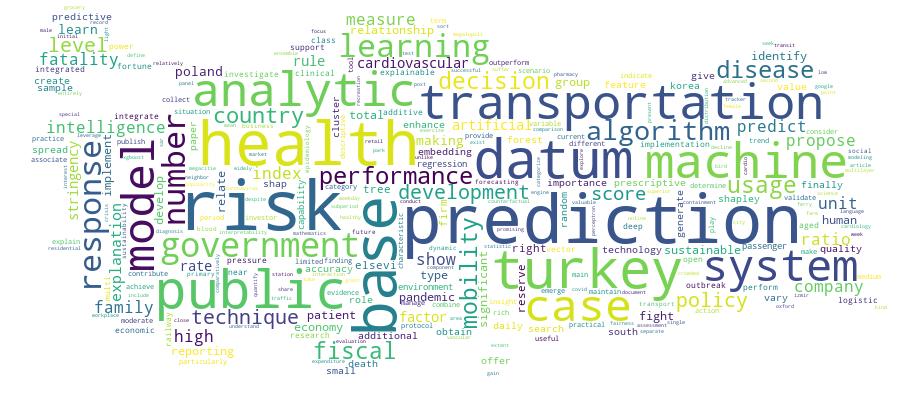
16 results
Scholarly Output Search Results
Now showing 1 - 10 of 16
Article Citation - WoS: 12Citation - Scopus: 16Big data analytics and COVID-19: investigating the relationship between government policies and cases in Poland- Turkey and South Korea(OXFORD UNIV PRESS, 2022) Mert Erkan Sozen; Gorkem Sariyer; Mustafa Gokalp Ataman; Ataman, Mustafa Gökalp; Sarlyer, Görkem; Sariyer, Gorkem; Sözen, Mert ErkanWe used big data analytics for exploring the relationship between government response policies human mobility trends and numbers of coronavirus disease 2019 (COVID-19) cases comparatively in Poland Turkey and South Korea. We collected daily mobility data of retail and recreation grocery and pharmacy parks transit stations workplaces and residential areas. For quantifying the actions taken by governments and making a fairness comparison between these countries we used stringency index values measured with the `Oxford COVID-19 government response tracker'. For the Turkey case we also developed a model by implementing the multilayer perceptron algorithm for predicting numbers of cases based on the mobility data. We finally created scenarios based on the descriptive statistics of the mobility data of these countries and generated predictions on the numbers of cases by using the developed model. Based on the descriptive analysis we pointed out that while Poland and Turkey had relatively closer values and distributions on the study variables South Korea had more stable data compared to Poland and Turkey. We mainly showed that while the stringency index of the current day was associated with mobility data of the same day the current day's mobility was associated with the numbers of cases 1 month later. By obtaining 89.3% prediction accuracy we also concluded that the use of mobility data and implementation of big data analytics technique may enable decision-making in managing uncertain environments created by outbreak situations. We finally proposed implications for policymakers for deciding on the targeted levels of mobility to maintain numbers of cases in a manageable range based on the results of created scenarios.Article Citation - WoS: 22Citation - Scopus: 29Predictive and prescriptive analytics for ESG performance evaluation: A case of Fortune 500 companies(Elsevier Inc., 2024) Gorkem Sariyer; Sachin Kumar Kumar Mangla; Soumyadeb Chowdhury; Mert Erkan Sozen; Yigit Kazancoglu; Erkan Sozen, Mert; Kumar Mangla, Sachin; Kazancoglu, Yigit; Sariyer, Gorkem; Sozen, Mert Erkan; Chowdhury, Soumyadeb; Mangla, Sachin KumarGiven the growing importance of organizations’ environmental social and governance (ESG) performance studies employing AI-based techniques to generate insights from ESG data for investors and managers are limited. To bridge this gap this study proposes an AI-based multi-stage ESG performance prediction system consolidating clustering for identifying patterns within ESG data association rule mining for uncovering meaningful relationships deep learning for predictive accuracy and prescriptive analytics for actionable insights. This study is grounded in the big data analytics capability view that has emerged from the dynamic capabilities theory. The model is validated using an ESG dataset of 470 Fortune listed 500 companies obtained from the Refinitiv database. The model offers practical guidance for decision-makers to maintain or enhance their ESG scores crucial in a business landscape where ESG metrics significantly affect investor choices and public image. © 2024 Elsevier B.V. All rights reserved.Article Leveraging explainable artificial intelligence in understanding public transportation usage rates for sustainable development(Elsevier Ltd, 2024) Gorkem Sariyer; Sachin Kumar Kumar Mangla; Mert Erkan Sözen; Guo Li; Yigit KazancogluPublic transportation usage prediction is valuable for the sustainable development of transportation systems particularly in crowded megacities. Machine learning technologies are of great interest for predicting public transportation usage. While these technologies outperform many other techniques they suffer from limited interpretability. Explainable artificial intelligence (XAI) tools and techniques that offer post-hoc explanations of the obtained predictions are gaining popularity. This paper proposes an advanced tree-based ensemble algorithm for public transportation usage rate prediction. We aim to explain the predictions both with the most widely used technique of XAI Shapley additive explanation (SHAP) and in the light of the rules presented. To predict the total public transportation usage the proposed model combines all types of public transportation categorized as ferry railway and bus unlike most existing studies focusing on a single kind of public transport. Besides the sort of transportation the day of the week whether the day is special and the daily ratio of passenger types were identified as model features for predicting the daily usage of each type of public transportation. We tested the proposed model using an open data set from Izmir City Turkey. While the model had superior prediction performance the explanations showed that the type of public transportation weekday and the ratio of full-fare passengers have the highest SHAP values and the model features have many interactions. We also validated our results using an online data set showing Google search trends. © 2024 Elsevier B.V. All rights reserved.Article Citation - WoS: 2Citation - Scopus: 2LLM-based embeddings for clustering and predicting integrated reporting quality levels of companies(Springer Science and Business Media B.V., 2025) Mert Sarioglu; Gorkem Sariyer; Mert Erkan Sözen; Sarioglu, Mert; Sariyer, Gorkem; Sozen, Mert ErkanArtificial Intelligence (AI) offers various useful functions and algorithms that provide numerous benefits for firms to enhance their decision-making process. Moreover with the adoption of Integrated Reporting (IR) reporting practices which are critical communication channels for companies have become more practical. Given the importance of subjects it is believed that addressing LLM embeddings based AI methodologies will contribute positively to IR quality (IRQ) to achieve better results. Additionally grouping companies according to their IRQ characteristics will lead time and cost efficiency in decision-making. So that the main purpose of this study is to cluster companies with respect to their IRQ characteristics based on LLM embeddings and to use this grouping in further decision-making. This paper therefore provides significant evidence whether LLM is useful tool of AI techniques in IR practices and LLM-based clustering is an efficient way of generating predictions for decision-making. To do so the sample size of the study consists of 260 published IR in 2019. This study also introduces a novelty to the literature on the applicability of LLM with small data sets considering that the number of integrated reports published in a year is low or when the sample considered will be small. The findings reveal the superiority of LLM while indicating the usefulness of LLM in prediction of IRQ regarding different indicators of firms. Given the empirical evidence shown the techniques and steps should be adapted by firms both in identifying ways to improve IRQ and in different AI applications in the future. © 2025 Elsevier B.V. All rights reserved.Article Citation - WoS: 2Citation - Scopus: 2The Power of Governments in Fight Against COVID-19: High-Performing Health Systems or Government Response Policies?(WALTER DE GRUYTER GMBH, 2023) Gorkem Sariyer; Mert Erkan Sozen; Mustafa Gokalp Ataman; Ataman, Mustafa Gokalp; Sariyer, Gorkem; Sozen, Mert ErkanDue to the pandemic situation caused by COVID-19 disease there have been tremendous efforts worldwide to keep the spread of the virus under control and protect the functioning of health systems. Although governments take many actions in fighting this pandemic it is well known that health systems play an undeniable role in this fight. This study aimed to investigate the role of health systems and government responses in fighting COVID-19. By purposively sampling Finland Denmark the UK and Italy and analyzing their health systems' performances governments' stringency indexes and COVID-19 spread variables this study showed that high-performing health systems were the main power of states in managing pandemic environments. This study also measured relations between short and medium-term measures and COVID-19 case and death numbers in all study countries. It showed that medium-term measures had significant effects on death numbers.Article LLM-based embeddings for clustering and predicting integrated reporting quality levels of companies(SPRINGER, 2025) Mert Sarioglu; Gorkem Sariyer; Mert Erkan SozenArtificial Intelligence (AI) offers various useful functions and algorithms that provide numerous benefits for firms to enhance their decision-making process. Moreover with the adoption of Integrated Reporting (IR) reporting practices which are critical communication channels for companies have become more practical. Given the importance of subjects it is believed that addressing LLM embeddings based AI methodologies will contribute positively to IR quality (IRQ) to achieve better results. Additionally grouping companies according to their IRQ characteristics will lead time and cost efficiency in decision-making. So that the main purpose of this study is to cluster companies with respect to their IRQ characteristics based on LLM embeddings and to use this grouping in further decision-making. This paper therefore provides significant evidence whether LLM is useful tool of AI techniques in IR practices and LLM-based clustering is an efficient way of generating predictions for decision-making. To do so the sample size of the study consists of 260 published IR in 2019. This study also introduces a novelty to the literature on the applicability of LLM with small data sets considering that the number of integrated reports published in a year is low or when the sample considered will be small. The findings reveal the superiority of LLM while indicating the usefulness of LLM in prediction of IRQ regarding different indicators of firms. Given the empirical evidence shown the techniques and steps should be adapted by firms both in identifying ways to improve IRQ and in different AI applications in the future.Article The Power of Governments in Fight Against COVID-19: High-Performing Health Systems or Government Response Policies?(De Gruyter Open Ltd, 2023) Gorkem Sariyer; Mert Erkan Sözen; Mustafa Gökalp AtamanDue to the pandemic situation caused by COVID-19 disease there have been tremendous efforts worldwide to keep the spread of the virus under control and protect the functioning of health systems. Although governments take many actions in fighting this pandemic it is well known that health systems play an undeniable role in this fight. This study aimed to investigate the role of health systems and government responses in fighting COVID-19. By purposively sampling Finland Denmark the UK and Italy and analyzing their health systems' performances governments' stringency indexes and COVID-19 spread variables this study showed that high-performing health systems were the main power of states in managing pandemic environments. This study also measured relations between short and medium-term measures and COVID-19 case and death numbers in all study countries. It showed that medium-term measures had significant effects on death numbers. © 2023 Elsevier B.V. All rights reserved.Article Fiscal responses to COVID-19 outbreak for healthy economies: Modelling with big data analytics(Elsevier B.V., 2023) Gorkem Sariyer; Serpil Kahraman; Mert Erkan Sözen; Mustafa Gökalp AtamanFiscal responses to the COVID-19 crisis have varied a lot across countries. Using a panel of 127 countries over two separate subperiods between 2020 and 2021 this paper seeks to determine the extent that fiscal responses contributed to the spread and containment of the disease. The study first documents that rich countries which had the largest total and health-related fiscal responses achieved the lowest fatality rates defined as the ratio of COVID-related deaths to cases despite having the largest recorded numbers of cases and fatalities. The next most successful were less developed economies whose smaller total fiscal responses included a larger health-related component than emerging market economies. The study used a promising big data analytics technology the random forest algorithm to determine which factors explained a country's fatality rate. The findings indicate that a country's fatality ratio over the next period can be almost entirely predicted by its economic development level fiscal expenditure (both total and health-related) and initial fatality ratio. Finally the study conducted a counterfactual exercise to show that had less developed economies implemented the same fiscal responses as the rich (as a share of GDP) then their fatality ratios would have declined by 20.47% over the first period and 2.59% over the second one. © 2023 Elsevier B.V. All rights reserved.Article Big data analytics and COVID-19: investigating the relationship between government policies and cases in Poland Turkey and South Korea(Oxford University Press, 2022) Mert Erkan Sözen; Gorkem Sariyer; Mustafa Gökalp AtamanWe used big data analytics for exploring the relationship between government response policies human mobility trends and numbers of coronavirus disease 2019 (COVID-19) cases comparatively in Poland Turkey and South Korea. We collected daily mobility data of retail and recreation grocery and pharmacy parks transit stations workplaces and residential areas. For quantifying the actions taken by governments and making a fairness comparison between these countries we used stringency index values measured with the 'Oxford COVID-19 government response tracker'. For the Turkey case we also developed a model by implementing the multilayer perceptron algorithm for predicting numbers of cases based on the mobility data. We finally created scenarios based on the descriptive statistics of the mobility data of these countries and generated predictions on the numbers of cases by using the developed model. Based on the descriptive analysis we pointed out that while Poland and Turkey had relatively closer values and distributions on the study variables South Korea had more stable data compared to Poland and Turkey. We mainly showed that while the stringency index of the current day was associated with mobility data of the same day the current day's mobility was associated with the numbers of cases 1 month later. By obtaining 89.3% prediction accuracy we also concluded that the use of mobility data and implementation of big data analytics technique may enable decision-making in managing uncertain environments created by outbreak situations. We finally proposed implications for policymakers for deciding on the targeted levels of mobility to maintain numbers of cases in a manageable range based on the results of created scenarios. © 2022 Elsevier B.V. All rights reserved.Article Citation - WoS: 11Citation - Scopus: 11Leveraging explainable artificial intelligence in understanding public transportation usage rates for sustainable development(PERGAMON-ELSEVIER SCIENCE LTD, 2024) Gorkem Sariyer; Sachin Kumar Mangla; Mert Erkan Sozen; Guo Li; Yigit Kazancoglu; Sariyer, Gorkem; Sozen, Mert Erkan; Li, Guo; Mangla, Sachin Kumar; Kazancoglu, YigitPublic transportation usage prediction is valuable for the sustainable development of transportation systems particularly in crowded megacities. Machine learning technologies are of great interest for predicting public transportation usage. While these technologies outperform many other techniques they suffer from limited interpretability. Explainable artificial intelligence (XAI) tools and techniques that offer post -hoc explanations of the obtained predictions are gaining popularity. This paper proposes an advanced tree-based ensemble algorithm for public transportation usage rate prediction. We aim to explain the predictions both with the most widely used technique of XAI Shapley additive explanation (SHAP) and in the light of the rules presented. To predict the total public transportation usage the proposed model combines all types of public transportation categorized as ferry railway and bus unlike most existing studies focusing on a single kind of public transport. Besides the sort of transportation the day of the week whether the day is special and the daily ratio of passenger types were identified as model features for predicting the daily usage of each type of public transportation. We tested the proposed model using an open data set from Izmir City Turkey. While the model had superior prediction performance the explanations showed that the type of public transportation weekday and the ratio of full-fare passengers have the highest SHAP values and the model features have many interactions. We also validated our results using an online data set showing Google search trends.
