
Doğan, Murat Ertan
Loading...

Name Variants
Murat Ertan Dogan
Job Title
Dr.Öğr.Üyesi
Email Address
Main Affiliation
01.01.08.01. Çizgi Film ve Animasyon Bölümü
Status
Former Staff
Website
ORCID ID
Scopus Author ID
Turkish CoHE Profile ID
Google Scholar ID
WoS Researcher ID
Sustainable Development Goals
 1
1NO POVERTY
0
Research Products
 2
2ZERO HUNGER
0
Research Products
 3
3GOOD HEALTH AND WELL-BEING
0
Research Products
 4
4QUALITY EDUCATION
4
Research Products
 5
5GENDER EQUALITY
1
Research Products
 6
6CLEAN WATER AND SANITATION
0
Research Products
 7
7AFFORDABLE AND CLEAN ENERGY
0
Research Products
 8
8DECENT WORK AND ECONOMIC GROWTH
1
Research Products
 9
9INDUSTRY, INNOVATION AND INFRASTRUCTURE
1
Research Products
 10
10REDUCED INEQUALITIES
1
Research Products
 11
11SUSTAINABLE CITIES AND COMMUNITIES
1
Research Products
 12
12RESPONSIBLE CONSUMPTION AND PRODUCTION
1
Research Products
 13
13CLIMATE ACTION
0
Research Products
 14
14LIFE BELOW WATER
1
Research Products
 15
15LIFE ON LAND
0
Research Products
 16
16PEACE, JUSTICE AND STRONG INSTITUTIONS
0
Research Products
 17
17PARTNERSHIPS FOR THE GOALS
3
Research Products

This researcher does not have a Scopus ID.

Documents
4
Citations
144

Scholarly Output
5
Articles
5
Views / Downloads
0/0
Supervised MSc Theses
0
Supervised PhD Theses
0
WoS Citation Count
144
Scopus Citation Count
243
Patents
0
Projects
0
WoS Citations per Publication
28.80
Scopus Citations per Publication
48.60
Open Access Source
2
Supervised Theses
0
| Journal | Count |
|---|---|
| Applied Sciences | 2 |
| Turkish Online Journal of Distance Education | 2 |
| Sustainability | 1 |
Current Page: 1 / 1
Scopus Quartile Distribution
Quartile distribution chart data is not available
Competency Cloud
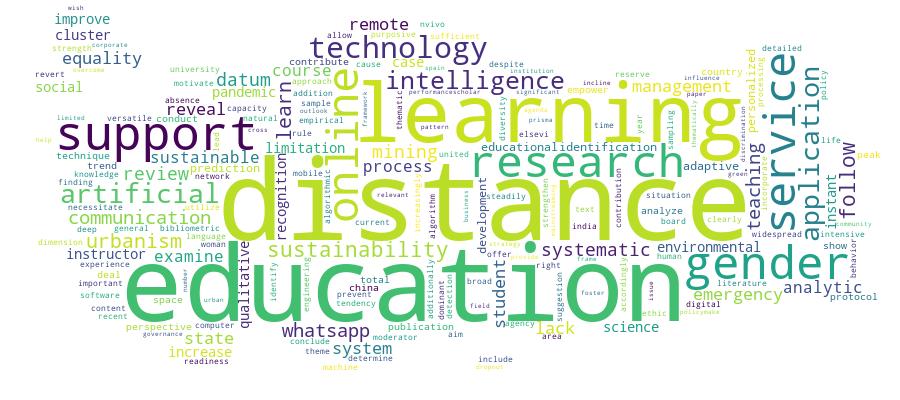
5 results
Scholarly Output Search Results
Now showing 1 - 5 of 5
Review The Use of Artificial Intelligence (AI) in Online Learning and Distance Education Processes: A Systematic Review of Empirical Studies(MDPI, 2023) Murat Ertan Dogan; Tulay Goru Dogan; Aras BozkurtArtificial intelligence (AI) technologies are used in many dimensions of our lives including education. Motivated by the increasing use of AI technologies and the current state of the art this study examines research on AI from the perspective of online distance education. Following a systematic review protocol and using data mining and analytics approaches the study examines a total of 276 publications. Accordingly time trend analysis increases steadily with a peak in recent years and China India and the United States are the leading countries in research on AI in online learning and distance education. Computer science and engineering are the research areas that make the most of the contribution followed by social sciences. t-SNE analysis reveals three dominant clusters showing thematic tendencies which are as follows: (1) how AI technologies are used in online teaching and learning processes (2) how algorithms are used for the recognition identification and prediction of students' behaviors and (3) adaptive and personalized learning empowered through artificial intelligence technologies. Additionally the text mining and social network analysis identified three broad research themes which are (1) educational data mining learning analytics and artificial intelligence for adaptive and personalized learning, (2) algorithmic online educational spaces ethics and human agency, and (3) online learning through detection identification recognition and prediction.Article THE WHATSAPP APPLICATION USE AS A SUPPORT SERVICE IN DISTANCE EDUCATION: A CASE ANALYSIS(Anadolu Universitesi, 2023) Gaye Topa Ciftci; Murat Ertan Dogan; Burcin UnalThis study aims to reveal the strengths and limitations of the WhatsApp application as a support service in distance education conducted through a learning management system during the Covid-19 pandemic and make suggestions on improving its use in this capacity. Despite the lack of readiness on the part of the students and the lack of sufficient knowledge regarding distance education during the pandemic many universities had to revert to emergency remote teaching. This situation necessitated the intensive use of various support services for the students to get the most out of their emergency remote teaching However their lack of experience with distance education prevented them from using the support services offered by learning management systems. Due to the increasingly widespread use of mobile technologies one of the support services used by course instructors became the WhatsApp application. The following research is a qualitative case study. The sample for the study was determined through purposive sampling. The data was analyzed using the content analysis method. Nvivo qualitative data analysis software was used to contribute to the detailed and versatile data analysis. The most important results of the study were that the application supported and strengthened distance learning by allowing instant communication but that the absence of a moderator caused various limitations in this communication. In addition it was concluded that incorporating natural language processing techniques into learning management systems and clearly stated rules by course instructors improved the use of such instant communication applications as a support service for distance education © 2023 Elsevier B.V. All rights reserved.Review Citation - WoS: 10Gender Sustainability and Urbanism: A Systematic Review of Literature and Cross-Cluster Analysis(MDPI, 2023) Aysad Gudekli; Murat Ertan Dogan; Tulay Goru Dogan; Duygu Gudekli; Gudekli, Aysad; Dogan, Murat Ertan; Gudekli, Duygu; Goru Dogan, TulayGender diversity and equality have a significant influence on policymaking regarding sustainable development environmental issues and urbanism. This study examines the general bibliometric outlook and research patterns of publications on gender equality urbanism and sustainability to provide a general perspective on the relevant literature and trends for institutions and scholars who wish to conduct research within the framework of gender sustainability and urbanism. The findings of this study show that there are a limited number of studies dealing with gender equality sustainability and urbanism. The study analyzed 308 papers in total utilizing data mining and analytics techniques such as t-SNE and SNA for a systematic review process. The study utilized the PRISMA protocol as the research method. The results showed that research on the frame of gender sustainability and urbanism peaked in 2021 and the top countries for studying gender sustainability and urbanism are the USA the UK Spain and China. The research fields that contributed the most were those dealing with environmental studies and green and sustainable technologies followed by those dealing with business and women's studies. The following three thematically inclined clusters were revealed by the t-SNE analysis: (1) Gender Diversity Corporate Sustainability and Board Governance, (2) Gender Environmental Sustainability Sustainable Development and Policy Agenda, and (3) Gender Sustainable Urbanism and Community Development. The findings of the study revealed that fostering gender equality with policies such as gender mainstreaming as in SDG 5 and SDG 11 and gender equality strategies of the EU or UN will help to overcome discrimination against women in the urban space and empower sustainable development.Article Citation - Scopus: 1THE WHATSAPP APPLICATION USE AS A SUPPORT SERVICE IN DISTANCE EDUCATION: A CASE ANALYSIS(ANADOLU UNIV, 2023) Gaye Topa Ciftci; Murat Ertan Dogan; Burcin Unal; Unal, Burcin; Topa Ciftci, Gaye; Dogan, Murat Ertan; Ciftci, Gaye TopaThis study aims to reveal the strengths and limitations of the WhatsApp application as a support service in distance education conducted through a learning management system during the Covid-19 pandemic and make suggestions on improving its use in this capacity. Despite the lack of readiness on the part of the students and the lack of sufficient knowledge regarding distance education during the pandemic many universities had to revert to emergency remote teaching. This situation necessitated the intensive use of various support services for the students to get the most out of their emergency remote teaching However their lack of experience with distance education prevented them from using the support services offered by learning management systems. Due to the increasingly widespread use of mobile technologies one of the support services used by course instructors became the WhatsApp application. The following research is a qualitative case study. The sample for the study was determined through purposive sampling. The data was analyzed using the content analysis method. Nvivo qualitative data analysis software was used to contribute to the detailed and versatile data analysis. The most important results of the study were that the application supported and strengthened distance learning by allowing instant communication but that the absence of a moderator caused various limitations in this communication. In addition it was concluded that incorporating natural language processing techniques into learning management systems and clearly stated rules by course instructors improved the use of such instant communication applications as a support service for distance education.Article Citation - WoS: 134Citation - Scopus: 242The Use of Artificial Intelligence (AI) in Online Learning and Distance Education Processes: A Systematic Review of Empirical Studies(MDPI, 2023) Murat Ertan Dogan; Tulay Goru Dogan; Aras Bozkurt; Dogan, Murat Ertan; Goru Dogan, Tulay; Bozkurt, ArasArtificial intelligence (AI) technologies are used in many dimensions of our lives including education. Motivated by the increasing use of AI technologies and the current state of the art this study examines research on AI from the perspective of online distance education. Following a systematic review protocol and using data mining and analytics approaches the study examines a total of 276 publications. Accordingly time trend analysis increases steadily with a peak in recent years and China India and the United States are the leading countries in research on AI in online learning and distance education. Computer science and engineering are the research areas that make the most of the contribution followed by social sciences. t-SNE analysis reveals three dominant clusters showing thematic tendencies which are as follows: (1) how AI technologies are used in online teaching and learning processes (2) how algorithms are used for the recognition identification and prediction of students’ behaviors and (3) adaptive and personalized learning empowered through artificial intelligence technologies. Additionally the text mining and social network analysis identified three broad research themes which are (1) educational data mining learning analytics and artificial intelligence for adaptive and personalized learning, (2) algorithmic online educational spaces ethics and human agency, and (3) online learning through detection identification recognition and prediction. © 2023 Elsevier B.V. All rights reserved.
