
Karaman Kabadurmuş, Fatma Nur
Loading...

Name Variants
Fatmanur Karaman Kabadurmus
Fatma Nur Karaman Kabadurmuş
Fatma Nur Karaman Kabadurmuş
Job Title
Dr.Öğr.Üyesi
Email Address
Main Affiliation
01.01.06.01. Ekonomi Bölümü
Status
Former Staff
Website
ORCID ID
Scopus Author ID
Turkish CoHE Profile ID
Google Scholar ID
WoS Researcher ID
Sustainable Development Goals
 1
1NO POVERTY
2
Research Products
 2
2ZERO HUNGER
0
Research Products
 3
3GOOD HEALTH AND WELL-BEING
5
Research Products
 4
4QUALITY EDUCATION
0
Research Products
 5
5GENDER EQUALITY
0
Research Products
 6
6CLEAN WATER AND SANITATION
0
Research Products
 7
7AFFORDABLE AND CLEAN ENERGY
1
Research Products
 8
8DECENT WORK AND ECONOMIC GROWTH
2
Research Products
 9
9INDUSTRY, INNOVATION AND INFRASTRUCTURE
6
Research Products
 10
10REDUCED INEQUALITIES
2
Research Products
 11
11SUSTAINABLE CITIES AND COMMUNITIES
0
Research Products
 12
12RESPONSIBLE CONSUMPTION AND PRODUCTION
1
Research Products
 13
13CLIMATE ACTION
0
Research Products
 14
14LIFE BELOW WATER
2
Research Products
 15
15LIFE ON LAND
0
Research Products
 16
16PEACE, JUSTICE AND STRONG INSTITUTIONS
1
Research Products
 17
17PARTNERSHIPS FOR THE GOALS
2
Research Products

Documents
5
Citations
76
h-index
5

Documents
6
Citations
71

Scholarly Output
17
Articles
14
Views / Downloads
0/1
Supervised MSc Theses
0
Supervised PhD Theses
0
WoS Citation Count
94
Scopus Citation Count
104
Patents
0
Projects
0
WoS Citations per Publication
5.53
Scopus Citations per Publication
6.12
Open Access Source
1
Supervised Theses
0
| Journal | Count |
|---|---|
| Applied Economics Letters | 2 |
| INQUIRY: The Journal of Health Care Organization, Provision, and Financing | 2 |
| Journal of Minimally Invasive Gynecology | 2 |
| Handbook of Research on Comparative Economic Development Perspectives on Europe and the MENA Region | 1 |
| Innovation Management and Growth in Emerging Economies | 1 |
Current Page: 1 / 3
Scopus Quartile Distribution
Quartile distribution chart data is not available
Competency Cloud
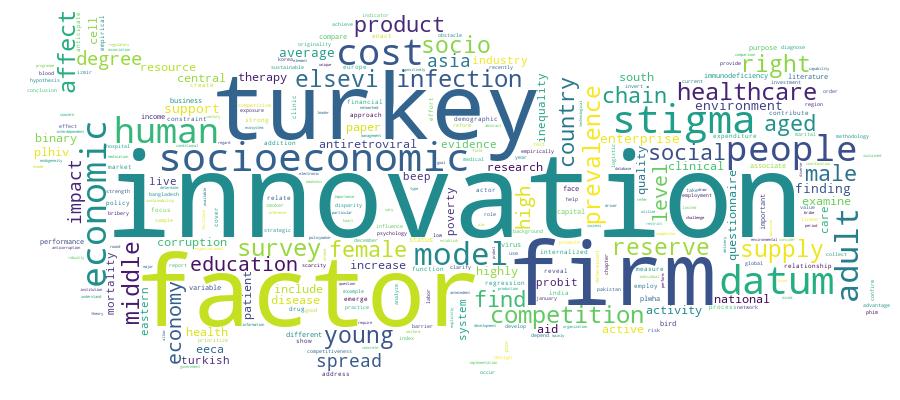
17 results
Scholarly Output Search Results
Now showing 1 - 10 of 17
Book Part Competition and product innovation by Turkish firms(IGI Global, 2016) Fatma Nur Karaman Kabadurmuş; Sajal Lahiri; Lahiri, Sajal; Karaman Kabadurmus, Fatma NurThis chapter examines empirically the determinants of research and development (R&D) activities by Turkish firms. It focuses on the question of how competition affects product innovation and not process innovation in Turkey. In particular we test if there is a non-linear relationship between R&D activities of a firm and the degree of competition in that industry. We use Turkish firm-level data from the Business Environment and Enterprise Performance Survey (BEEPS) and find strong support for an inverted-U relationship between the two variables. © 2016 Elsevier B.V. All rights reserved.Article Do socioeconomic inequalities increase the spread of COVID-19 in Turkey?(ROUTLEDGE JOURNALS TAYLOR & FRANCIS LTD, 2023) Alpay Ari; Hulya Ozkan Ozdemir; Fatmanur Karaman Kabadurmus; Selma Tosun; Durmus OzdemirThis paper clarifies the medical and socio-economic factors affecting the prevalence of COVID-19 by using clinical and survey data in a binary probit model. Socio-economic factors are associated with risk of infection and can increase exposure to and mortality from COVID-19. Inequalities in socio-economic variables affect the prevalence to different degrees. Disparities in education and poverty are more important than being employed or being a smoker for the spread of COVID-19 we find evidence that confirms the hypothesis.Article Citation - WoS: 11Citation - Scopus: 15Which Should Be the Preferred Technique during Laparoscopic Ovarian Cystectomy: Hemostatic Sutures or Bipolar Electrocoagulation? A Randomized Controlled Prospective Study of Long-Term Ovarian Reserve(SAGE Publications Inc. claims@sagepub.com, 2017) Cagdas Sahin; Ali Osman Akdemir; Ahmet Mete Ergenoǧlu; Banu Ozgurel; Ahmet Özgür Yeniel; Dilek Taşkiran; Fatih Şendaǧ; Ergenoglu, Ahmet Mete; Sahin, Cagdas; Akdemir, Ali; Yeniel, Ahmet Ozgur; Ozgurel, Banu; Taskiran, Dilek; Sendag, FatihThe aim of the present study was to determine the long-term effects of different laparoscopic hemostatic techniques on ovarian reserve after ovarian cystectomy. Ninety patients with unilateral ovarian cysts were recruited and randomly distributed into 2 groups. Laparoscopic stripping cystectomy was performed in all patients. Afterward cystectomy hemostasis was achieved via hemostatic suture or bipolar electrocoagulation. Serum levels of anti-Müllerian hormone (AMH) were determined preoperatively and postoperatively at 1 3 and 12 months and patients were evaluated for residual ovarian volume antral follicle count and pregnancy. The statistical difference was determined between the 2 groups in terms of AMH levels at 3 months (hemostatic suture group = 3.17 ± 3.40 vs bipolar electrocoagulation group = 2.38 ± 2.57 P =.006) and 12 months (hemostatic suture group = 3.71 ± 3.09 vs bipolar electrocoagulation group = 2.78 ± 2.85 P =.005). In addition in the hemostatic suture group there was no statistically significant difference between preoperative and postoperative AMH levels (P =.165) and between the postoperative antral follicle count (P =.779) and the residual ovarian volume (P =.248) whereas in the bipolar electrocoagulation group postoperative AMH levels were lower than preoperative levels (P =.028) and postoperative residual ovarian volumes at 3 and 12 months were lower than those at 1 month (P =.001). Nonetheless pregnancy rates were not significantly different (P =.546). Bipolar electrocoagulation is more destructive compared with hemostatic suture. However the ovarian reserve does not decrease further during the follow-up period. © 2017 Elsevier B.V. All rights reserved.Article Innovation Challenges in South Asia: Evidence from Bangladesh Pakistan and India(Sage Publications India Pvt. Ltd, 2021) Fatma Nur Karaman KabadurmuşIn literature the implications of resource constraints for innovation outcomes are conflicting. A broad body of empirical research focuses on the negative impacts of such constraints most of which use data from advanced economies. However recently some scholars argue that in emerging economies innovation occurs in spite of and even because of the poor investment environment. Using firm-level data from South Asia which provides a good natural example for such poor investment environment and where innovation tigers like India continue to thrive we investigate whether internal barriers such as lack of human capital and financial capital are indeed barriers for firms in the region. Our findings for India provide empirical support for the literature on resource-constrained innovation while results for Pakistan support earlier contributions within the conventional innovation literature. For Bangladesh however neither human nor financial resources but firm-characteristics such as size and foreign ownership promote innovation more. Findings are validated across sub-samples of small and medium-sized enterprises and non-exporters which are more likely to face such constraints. © 2021 Elsevier B.V. All rights reserved.Article Citation - WoS: 2Citation - Scopus: 3Do socioeconomic inequalities increase the spread of COVID-19 in Turkey?(Routledge, 2023) Alpay A. Ari; Hulya Ozkan Ozdemir; Fatma Nur Karaman Kabadurmuş; Selma Yegane Tosun; Durmuş Özdemir; Ari, Alpay; Ozdemir, Hulya Ozkan; Özkan Özdemir, Hülya; Ozdemir, Durmus; Tosun, Selma; Kabadurmus, Fatmanur KaramanThis paper clarifies the medical and socio-economic factors affecting the prevalence of COVID-19 by using clinical and survey data in a binary probit model. Socio-economic factors are associated with risk of infection and can increase exposure to and mortality from COVID-19. Inequalities in socio-economic variables affect the prevalence to different degrees. Disparities in education and poverty are more important than being employed or being a smoker for the spread of COVID-19 we find evidence that confirms the hypothesis. © 2023 Elsevier B.V. All rights reserved.Article Citation - WoS: 8Citation - Scopus: 10Competition and innovation in product quality: Theory and evidence from Eastern Europe and Central Asia(Walter de Gruyter GmbH, 2014) Fatma Nur Karaman Kabadurmuş; Sajal Lahiri; Lahiri, Sajal; Karaman, Fatma NurThis paper examines how the degree of competition affects incentives to innovate in product quality in a symmetric Cournot oligopolistic model. We model product quality in a quality-ladder framework and find an inverted-U shaped relationship between the number of firms in an industry and R&D efforts in innovation. We test this theoretical prediction using firm-level data for Eastern European and Central Asian countries from the Business Environment and Enterprise Performance Survey and find strong support for it. © 2021 Elsevier B.V. All rights reserved.Article Citation - WoS: 1The Impact of Socioeconomic Factors on the HIV-Related Stigma of People Living With HIV in Turkey(SAGE PUBLICATIONS INC, 2025) Hulya Ozkan Ozdemir; Fatma Nur Karaman Kabadurmus; Durmus Ozdemir; Özdemir, Hülya Özkan; Karaman Kabadurmuş, Fatma Nur; Özdemir, Durmuş; Kabadurmus, Fatma Nur KaramanThis study includes clinical cohort data on 202 People Living with HIV/AIDS (PLWHA) in Izmir Turkey. Study is conducted at the Izmir Bozyaka Education and Training Hospital Department of Infectious Diseases and Clinical Microbiology and analyzes the impact of demographic socio-economic and clinical factors of HIV stigma which includes three dimensions of stigma: internalized anticipated and enacted. This paper uses clinic data recorded by patients and healthcare professionals of the outpatient clinic. In order to obtain socio-economic measures patients were interviewed face-to-face. We employ a logistics regression model that aligns with our binary stigma variables. Robustness checks include Ordinary Least Squares and Ordered Logistics models. Our results show that age and marital status are the 2 important demographic factors that affect stigmatized attitudes. Divorced PLWHA have a higher degree of both internalized and anticipated stigma. We find that educated people have a lower degree of internalized stigma. In addition a higher-income level is found to be inversely associated with enacted stigma. Our results also reveal that LGBTs drug users and people who have chronic illnesses have experienced higher stigma levels. This paper explores the complex ways socioeconomic factors contribute to stigma in the Turkish context addressing a significant gap in the literature since the cultural and social dynamics of stigma in Turkey are frequently overlooked. Recognizing the protective influence of education and income policies such as integrating HIV education into school curricula and offering financial assistance to PLWHA especially those from low-income backgrounds can help reduce stigma.Article Citation - WoS: 4Citation - Scopus: 5The Impact of Carbon Dioxide Pneumoperitoneum on Ovarian Ischemia-Reperfusion Injury during Laparoscopic Surgery: A Preliminary Study(ELSEVIER SCIENCE INC, 2018) Ali Akdemir; Enes Taylan; Cagdas Sahin; Banu Ozgurel; Ayfer Karlitepe; Osman Zekioglu; Gulinnaz Ercan; Taylan, Enes; Sahin, Cagdas; Karlitepe, Ayfer; Ercan, Gulinnaz; Akdemir, Ali; Zekioglu, Osman; Ozgurel, BanuStudy Objective: To investigate whether carbon dioxide pneumoperitoneum causes ischemia-reperfusion injury to the ovaries during laparoscopic surgery. Design: A prospective controlled clinical study (Canadian Task Force classification II-1). Setting: A tertiary academic center. Patients: Premenopausal women who underwent hysterectomy with bilateral salpingo-oophorectomy (HSO) via open abdominal and laparoscopic approaches between 2014 and 2015. Interventions: In both surgical approaches unilateral oophorectomy was performed immediately after abdominal entry and the remaining contralateral ovary was excised at the end of the hysterectomy in order to compare the effect of these surgical procedures on ovarian tissue. Additionally plasma samples were collected at the following time points: (1) before abdominal entry (2) at the end of hysterectomy and (3) before contralateral oophorectomy. Plasma samples were assessed for biochemical oxidative stress markers malondialdehyde (MDA) and 8-hydroxy-2'-deoxyguanosine (8-OHdG). Ovarian tissue samples were assessed for MDA and further evaluated for ischemia-reperfusion injury using a histologic scoring method. Measurements and Main Results: Twenty premenopausal women undergoing HSO via open abdominal surgery (n = 10) and laparoscopy (n = 10) were included. Baseline characteristics (age body mass index parity and gravida) and operative data (operative time estimated blood loss and intraoperative complication) were similar between groups. Perioperative plasma MDA levels histologic scores and tissue oxidative stress markers did not show a significant difference in either group or between groups. However plasma 8-OHdG levels were significantly different when the second sample in the abdominal HSO group was compared with the first sample in the abdominal HSO group and the third sample in the laparoscopic HSO group (p =.012 and .001 respectively). Conclusion: Carbon dioxide pneumoperitoneum does not cause ischemia-reperfusion injury in the human ovaries at clinically safe levels of intra-abdominal pressure. (C) 2017 AAGL. All rights reserved.Article Citation - WoS: 20Citation - Scopus: 23The impact of salpingectomy and single-dose systemic methotrexate treatments on ovarian reserve in ectopic pregnancy(ELSEVIER SCIENCE BV, 2016) Cagdas Sahin; Enes Taylan; Ali Akdemir; Banu Ozgurel; Dilek Taskiran; Ahmet M. Ergenoglu; Akdemir, Ali; Ergenoglu, Ahmet M.; Ozgurel, Banu; Taylan, Enes; Taskiran, Dilek; Sahin, CagdasObjective: To investigate the effects of salpingectomy and methotrexate treatments on ovarian reserve in ectopic pregnancy. Study design: In this prospective study a total of 131 patients with ectopic pregnancy were divided into 3 groups of methotrexate (MTX) only (Group-1 n: 55) salpingectomy only (Group-2 n: 61) and salpingectomy following MTX (Group-3 n: 15). Pretreatment and post-treatment anti-Mullerian hormone (AMH) levels were evaluated. Results: Significant differences in AMH levels were detected between group 1 and group 2 (2.52 +/- 1.28 vs. 1.96 +/- 1.66 p = 0.043) and group 1 and group 3 (2.52 +/- 1.28 vs. 1.77 +/- 0.76 p = 0.035) at one month postoperative. However these differences disappeared at the 3rd postoperative month. When AMH levels were compared within the same group postoperative one month AMH levels were significantly lower than the preoperative AMH levels only in group 3 (p = 0.03). However this difference also disappeared at the 3rd postoperative month. Conclusion: Systemic single-dose methotrexate treatment unilateral salpingectomy and salpingectomy following methotrexate administration in ectopic pregnancy were reassuring based on pretreatment and post-treatment AMH levels. Current medical and surgical treatment approaches do not have an obvious negative effect on ovarian reserve. (C) 2016 Elsevier Ireland Ltd. All rights reserved.Article Citation - WoS: 15Citation - Scopus: 15Corruption and innovation: the importance of competition(Emerald Group Holdings Ltd., 2022) Fatma Nur Karaman Kabadurmuş; Kevin Sylwester; Karaman Kabadurmus, Fatma Nur; Sylwester, Kevin; Kabadurmus, Fatma Nur KaramanPurpose: The purpose of this study is to examine how corruption affects the prevalence of product and process innovation by firms. Design/methodology/approach: This study uses firm-level data from the 2012–2016 Business Environment Enterprise Performance Surveys and utilizes a conditional mixed process model to address endogeneity concerns taking bribery as a measure of corruption. Findings: The study shows that measures of bribery are positively and robustly associated with innovation but mainly for firms reporting many competitors. The results are stronger for firms reporting more obstacles. Both findings support the inference that bribes facilitate innovation by allowing firms to evade regulatory obstacles. Originality/value: The current research on corruption's effect on innovation restricts the association to be uniform across the sample but this study shows that the impact depends on the degree of competition faced by a firm. In addition the data used in this study cover 30 economies in Eastern Europe and Central Asia and thus contributes to determining the effects of anticorruption practices in emerging countries. © 2022 Elsevier B.V. All rights reserved.
