
Safari, Mir Jafar Sadegh
Loading...
Name Variants
Mir Jafar Sadegh Safari
Job Title
Doç.Dr.
Email Address
Main Affiliation
01.01.09.05. İnşaat Mühendisliği Bölümü
Status
Current Staff
Website
ORCID ID
Scopus Author ID
Turkish CoHE Profile ID
Google Scholar ID
WoS Researcher ID
Sustainable Development Goals
 1
1NO POVERTY
0
Research Products
 2
2ZERO HUNGER
9
Research Products
 3
3GOOD HEALTH AND WELL-BEING
2
Research Products
 4
4QUALITY EDUCATION
0
Research Products
 5
5GENDER EQUALITY
0
Research Products
 6
6CLEAN WATER AND SANITATION
35
Research Products
 7
7AFFORDABLE AND CLEAN ENERGY
4
Research Products
 8
8DECENT WORK AND ECONOMIC GROWTH
5
Research Products
 9
9INDUSTRY, INNOVATION AND INFRASTRUCTURE
8
Research Products
 10
10REDUCED INEQUALITIES
0
Research Products
 11
11SUSTAINABLE CITIES AND COMMUNITIES
31
Research Products
 12
12RESPONSIBLE CONSUMPTION AND PRODUCTION
7
Research Products
 13
13CLIMATE ACTION
21
Research Products
 14
14LIFE BELOW WATER
4
Research Products
 15
15LIFE ON LAND
8
Research Products
 16
16PEACE, JUSTICE AND STRONG INSTITUTIONS
0
Research Products
 17
17PARTNERSHIPS FOR THE GOALS
3
Research Products

Documents
100
Citations
2011
h-index
27

Documents
94
Citations
1755

Scholarly Output
166
Articles
152
Views / Downloads
0/15
Supervised MSc Theses
0
Supervised PhD Theses
0
WoS Citation Count
1433
Scopus Citation Count
1651
Patents
0
Projects
0
WoS Citations per Publication
8.63
Scopus Citations per Publication
9.95
Open Access Source
29
Supervised Theses
0
| Journal | Count |
|---|---|
| Journal of Hydrology | 17 |
| Pure and Applied Geophysics | 14 |
| Environmental Science and Pollution Research | 10 |
| Sustainability | 8 |
| Teknik Dergi | 6 |
Current Page: 1 / 11
Scopus Quartile Distribution
Quartile distribution chart data is not available
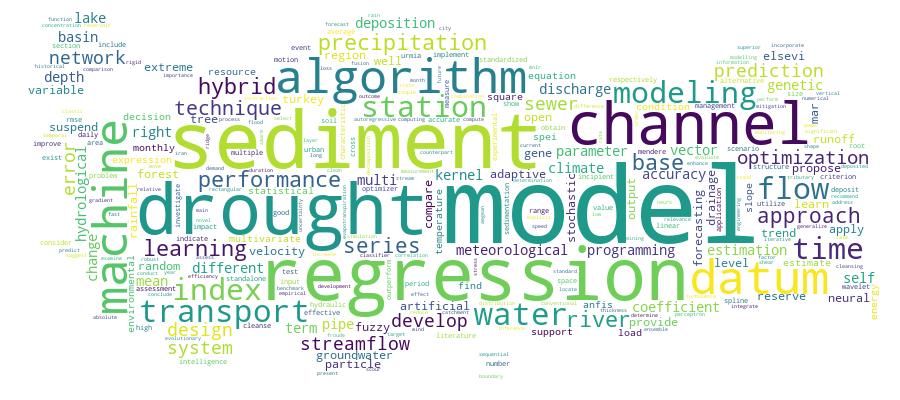
Competency Cloud
166 results
Scholarly Output Search Results
Now showing 1 - 10 of 166
Article Citation - WoS: 5Citation - Scopus: 7Evaluation of the Static and Pseudo-Static Stability and Effectiveness of an Improvement Technique for Slopes of the Vanyar Dam Reservoir(KOREAN SOCIETY OF CIVIL ENGINEERS-KSCE, 2021) Amirhossein Ahbab; Tohid Akhlaghi; Mir Jafar Sadegh Safari; Eyubhan Avci; Ahbab, Amirhossein; Safari, Mir Jafar Sadegh; Akhlaghi, Tohid; Avci, EyubhanExcavation on the inclined surfaces on the dam reservoir and rising water level may also affect the slope stability of the inclined surfaces in the dam reservoir under static and dynamic conditions. In this study it is aimed to present a three-dimensional (3D) model to analyze slope stability of access road to the dam's crest and calculates the value of FOS in process of instructing and exploitation of dam and estimating the possibility of landslide occurrence during excavations and impounding of the dam. To this end analysis of the slope stability has been implemented based on the information obtained from the field inspections investigations geological surveys manual and mechanical borings in laboratory and field experiments. For acquiring the value of factor of safety (FOS) an explicit-finite-difference code is implemented. Effects of excavations in different levels of slope and fluctuation of water table in instability of the slope have been analyzed. The outcomes reveal that through increasing the level of water FOS is decreased and large amounts of soil were entered in the dam's reservoir blocking the entrance of the drainage valve and disrupt access way to the dam crest. Therefore piles in the different distance have been used for controlling the slope stability and the best distribution of piles based on acceptable values for factor of safety in different regulations have been determined. It was observed that the excavation on the slope and increment of the water level in the dam reservoir influence the slope stability.Article Rainfall-runoff modeling through regression in the reproducing kernel Hilbert space algorithm(Elsevier B.V., 2020) Mir Jafar Sadegh Safari; Shervin Rahimzadeh Arashloo; Ali Danandeh MehrIn this study Regression in the Reproducing Kernel Hilbert Space (RRKHS) technique which is a non-linear regression approach formulated in the reproducing kernel Hilbert space (RRKHS) is applied for rainfall-runoff (R-R) modeling for the first time. The RRKHS approach is commonly applied when the data to be modeled is highly non-linear and consequently the common linear approaches fail to provide satisfactory performance. The calibration and verification processes of the RRKHS for one- and multi-day ahead forecasting R-R models were demonstrated using daily rainfall and streamflow measurement from a mountainous catchment located in the Black Sea region Turkey. The efficacy of the new approach in each forecasting scenario was compared with those of other benchmarks namely radial basis function artificial neural network and multivariate adaptive regression splines. The results illustrate the superiority of the RRKHS approach to its counterparts in terms of different performance indices. The range of relative peak error (PE) is found as 0.009–0.299 for the best scenario of the RRKHS model which illustrates the high accuracy of RRKHS in peak streamflow estimation. The superior performance of the RRKHS model may be attributed to its formulation in a very high (possibly infinite) dimensional space which facilitates a more accurate regression analysis. Based on the promising results of the current study it is expected that the proposed approach would be applied to other similar environmental modeling problems. © 2020 Elsevier B.V. All rights reserved.Article Meteorological Drought Assessment and Trend Analysis in Puntland Region of Somalia(MDPI, 2023) Nur Mohamed Muse; Gokmen Tayfur; Mir Jafar Sadegh SafariDrought assessment and trend analysis of precipitation and temperature time series are essential in the planning and management of water resources. Long-term precipitation and temperature historical records (monthly for 41 years from 1980 to 2020) are used to investigate annual drought characteristics and trend analysis in Somalia's northern region. Six drought indices of the normal Standardized Precipitation Index (normal-SPI) the log normal Standardized Precipitation Index (log-SPI) the Standardized Precipitation Index using the gamma distribution (Gamma-SPI) the Percent of Normal Index (PNI) the Discrepancy Precipitation Index (DPI) and the Deciles Index (DI) are used in this study for the annual drought assessment. The log-SPI the gamma-SPI the PNI and the DPI could capture historical extreme and severe droughts that occurred in the early 1980s and over the last two decades. The results indicate that Somalia has gone through extended drought periods over the past quarter century exacerbating the existing humanitarian situation. The normal-SPI gamma-SPI and PNI indicate less and moderate drought conditions whereas log-SPI DPI and DI accurately capture historical extreme and severe drought periods, thus these methods are recommended as annual drought assessment tools in the studied region. Not only are the PNI and DPI less correlated to each other but their correlation coefficient (CC) with SPI-based drought indices are not as high as SPI-based indices which are close to unity. For the purpose of the trend analysis the Mann Kendall (MK) test the Spearman's rho (SR) test and the Sen test are used. Furthermore the Pettitt test is implemented to detect the change points and the Thiel-Sen approach is used to estimate the magnitude of trend in the precipitation and temperature time series. The results indicate that there is overall warming in the region which has experienced a significant shift in trend direction since 2000. The trend analysis of annual precipitation data time series shows that Bossaso and Garowe stations have significant positive trends while the Qardho station has no trend. In 1997 and 1998 respectively abrupt changes in annual precipitation are detected at Qardho and Garowe stations. Due to the civil war of more than three decades in Somalia and the non-institutionalized governance to inform historical drought conditions in the country determining the most appropriate meteorological drought index would help to develop a drought monitoring system for states and the entire country.Article Citation - WoS: 2Citation - Scopus: 2Robust low-rank learning multi-output regression for incipient sediment motion in sewer pipes(Elsevier B.V., 2023) Mir Jafar Sadegh Safari; Shervin Rahimzadeh Arashloo; Arashloo, Shervin Rahimzadeh; Rahimzadeh Arashloo, Shervin; Safari, Mir Jafar SadeghThe existing incipient sediment motion models typically apply conventional regression methods considering either velocity or shear stress. In the current study incipient sediment motion is analyzed through a simultaneous and joint analysis of velocity and shear stress using the robust low-rank learning (RLRL) multi-output regression technique. Moreover the experimental data compiled from five different channels are utilized to develop a generic incipient sediment motion model valid for a channel of any cross-sectional shape. The efficiency of the developed method is examined and compared against the available conventional regression models. The experimental results indicate that the RLRL model yields better results than its counterparts. In particular while cross-section specific models fail to provide accurate estimates for shear stress or velocity for other cross sections the proposed model provides satisfactory results for all channel shapes. The better performance of the recommended approach can be attributed to the joint modeling of the shear stress and the velocity which is realized by capturing the correlation between these parameters in terms of a low rank output mixing matrix which enhances the prediction performance of the approach. © 2023 Elsevier B.V. All rights reserved.Article Citation - WoS: 9Citation - Scopus: 10A collaborative numerical simulation-soft computing approach for earth dams first impoundment modeling(ELSEVIER SCI LTD, 2023) Behzad Shakouri; Mirali Mohammadi; Mir Jafar Sadegh Safari; Mohammad Amin Hariri-Ardebili; Hariri-Ardebili, Mohammad Amin; Shakouri, Behzad; Safari, Mir Jafar Sadegh; Mohammadi, MiraliUncertainty quantification plays a crucial role in the design monitoring and risk assessment of earth dams. To reduce the computational burden we employ a combination of finite difference method and soft computing techniques to investigate material uncertainties in earth dams during the initial impoundment stage. The findings of sensitivity analysis with the Tornado diagram indicate that key material properties such as dry density elasticity modulus friction angle and Poisson's ratio significantly influence the displacements and stress analysis. In our study we explore four variants of extreme learning machines (ELMs): the standalone ELM hybridized versions with the improved grey wolf optimizer algorithm ant colony optimization for continuous domains and artificial bee colony. These methods are assessed across various training sizes to predict multiple parameters including horizontal and vertical displacements stresses and the factor of safety (FoS). The hybridized ELM with the improved grey wolf optimizer algorithm emerges as the superior choice for most of the response variables. A minimum of 200 numerical simulations is required to establish a stable and accurate meta-model with an average prediction error of less than 3% for responses and the FoS.Article Citation - WoS: 50Citation - Scopus: 57Sediment transport modeling in rigid boundary open channels using generalize structure of group method of data handling(Elsevier B.V., 2019) Mir Jafar Sadegh Safari; Isa Ebtehaj; Hossein Bonakdari; Mohammad Sadegh Es-haghi; Es-haghi, Mohammad Sadegh; Bonakdari, Hossein; Safari, Mir Jafar Sadegh; Ebtehaj, IsaSediment transport in open channels has complicated nature and finding the analytical models applicable for channel design in practice is a quite difficult task. To this end behind theoretical consideration of the open channel sediment transport through incorporating of four fundamental characteristics of fluid flow sediment and channel recently machine learning techniques are used for modeling of sediment transport in open channels. However most of the studies in the literature used limited number of data for model development neglecting some effective parameters involved which may affect their performances. Moreover most of this studies had not provided a comprehensive explicit equation for future use. Accordingly this study applied four machine learning techniques of Gene Expression Programming (GEP) Extreme Learning Machine (ELM) Generalized Structure Group Method of Data Handling (GS-GMDH) and Fuzzy c-means based Adaptive Neuro-Fuzzy Inference System (FCM-ANFIS) to model sediment transport in open channels. Four existing data sets in the literature with wide ranges of pipe size sediment size sediment volumetric concentration channel bed slope and flow depth are used for the model development. The recommended models are compared with their corresponding conventional regression models taken from the literature in terms of different statistical performance indices. Results indicate superiority of the machine leaning techniques to the conventional multiple non-linear regression models. Although developed GEP ELM GS-GMDH and FCM-ANFIS models have almost same performances GS-GMDH gives slightly better performance which can be linked to the generalized structure of this approach. A MATLAB code is provided to calculate the sediment transport in open channel for practical engineering. © 2019 Elsevier B.V. All rights reserved.Article Citation - Scopus: 1Non-Linear Output Structure Learning: A Novel Multi-Target Technique for Multi-Station and Multi-Index Drought Modelling(WILEY, 2025) Mir Jafar Sadegh Safari; Shervin Rahimzadeh Arashloo; Babak Vaheddoost; Rahimzadeh Arashloo, Shervin; Vaheddoost, Babak; Safari, Mir Jafar Sadegh; Arashloo, Shervin RahimzadehExiting artificial intelligence-based drought models estimate a single drought index in a single station. This study advances drought modelling by proposing Non-linear Output Structure Learning (NOSL) for simultaneously estimating two drought indices at eight stations. A multi-target drought model provides insights for a better understanding of the meteorological and hydrological impacts of drought. Hydro-meteorological data including precipitation evaporation and streamflow are used for a joint estimation of Streamflow Drought Index (SDI) and Standardized Precipitation Evapotranspiration Index (SPEI). The efficacy of the NOSL algorithm is examined against single-target Kernel Ridge Regression (KRR) and Fast Multi-output Relevance Vector Regression (FMRVR) models. The data during October 1981 to September 2015 at a monthly scale (408 Months) from eight different stations in Buyuk Menderes Basin (BMB) located (BMB) in Western T & uuml,rkiye are used in this study. The effects of 1- 3- and 6-month Moving Average (MA) are also considered for drought estimation. Results show that NOSL can effectively estimate the SPEI and SDI indices and outperforms KRR and FMRVR benchmarks. The effectiveness of the NOSL technique can be linked to a structural modelling mechanism based on vector-valued functions where the dependencies among output variables are captured utilising a non-linear function for enhanced performance. The developed multi-target drought model based on the NOSL technique not only helps in incorporating multiple variables in the model for a better estimation but it enhances our understanding of various aspects of droughts and building adaptive strategies and resilience map counter to drought hazard.Article Citation - WoS: 8Citation - Scopus: 12Performance evaluation of machine learning algorithms for the prediction of particle Froude number (Frn) using hyper-parameter optimizations techniques(PERGAMON-ELSEVIER SCIENCE LTD, 2024) Deepti Shakya; Vishal Deshpande; Mir Jafar Sadegh Safari; Mayank Agarwal; Shakya, Deepti; Deshpande, Vishal; Safari, Mir Jafar Sadegh; Agarwal, MayankThe sewer system is a critical component of urban infrastructure responsible for transporting wastewater and stormwater away from populated areas. Proper design and management of sewer systems are essential to prevent flooding reduce environmental pollution and ensure public health and safety. One crucial parameter in sewer system design and management is the particle Froude number (F-rn). The goal of this study is to develop a predictive algorithm that takes into account the relevant input parameters such as volumetric sediment concentration (C-v) dimensionless grain size of particles (D-gr) the ratio of sediment median size to the hydraulic radius (d/R) pipe friction factor (lambda) to accurately predict the F-rn using an ablation study for the condition of non-deposition with clean bed data. The proposed approach is based on hyper-parameter optimization techniques i.e. Babysitting method (BSM) GridSearchCV (GS) random search (RS) Bayesian optimization with Gaussian process (BO-GP) Bayesian optimization with tree-structures Parzen estimator (BO-TPE) and particle swarm optimization (PSO) which are applied to the four machine learning algorithms such as random forest (RF) gradient boosting (GB) K-nearest neighbor (KNN) and support vector regression (SVR). The proposed algorithms are compared with the existing algorithms in terms of coefficient of determination (R-2) root mean square error-observations standard deviation ratio (RSR) and normalized mean absolute error (NMAE) to assess the performance of the proposed algorithms. The results show that the proposed algorithms yield superior outcomes across all performance metrics. Among the proposed algorithms GB+PSO predicted F-rn with significant accuracy and has the highest prediction accuracy (R-2 = 0.996 RSR = 0.068 and NMAE = 0.009 respectively) followed by RF+BO-GP SVR+RS and KNN+PSO. We have provided a comparison with the existing state-of-the-art methods and beat them. We evaluate these proposed algorithms against several widely recognized empirical equations found in the existing literature.Article Citation - WoS: 2Citation - Scopus: 2Projected Drought Intensification in the Büyük Menderes Basin Under CMIP6 Climate Scenarios(Multidisciplinary Digital Publishing Institute (MDPI), 2025) Farzad Rotbeei; Mustafa Nuri Balov; Mir Jafar Sadegh Safari; Babak Vaheddoost; Vaheddoost, Babak; Rotbeei, Farzad; Safari, Mir Jafar Sadegh; Nuri Balov, MustafaThe amplitude and interval of drought events are expected to enhance in upcoming years resulting from global warming and climate alterations. Understanding future drought events’ potential impacts is important for effective regional adaptation and mitigation approaches. The main goal of this research is to study the impacts of climate change on drought in the Büyük Menderes Basin located in the Aegean region of western Türkiye by using the outcomes of three general circulation models (GCMs) from CMIP6 considering two different emission scenarios (SSP2-4.5 and SSP5-8.5). Following a bias correction using a linear scaling method daily precipitation and temperature projections are used to compute the Standardized Precipitation Evapotranspiration Index (SPEI). The effectiveness of the GCMs in projecting precipitation and temperature is evaluated using observational data from the reference period (1985–2014). Future drought conditions are then assessed based on drought indices for three periods: 2015–2040 (near future) 2041–2070 (mid-term future) and 2071–2100 (late future). Consequently the number of dry months is projected and expected to elevate informed by SSP2-4.5 and SSP5-8.5 scenarios during the late-century timeframe (2071–2100) in comparison to the baseline period (1985–2014). The findings of this study offer an important understanding for crafting adaptation strategies aimed at reducing future drought impacts in the Büyük Menderes Basin in the face of changing climate conditions. © 2025 Elsevier B.V. All rights reserved.Article Application of Signal Processing in Tracking Meteorological Drought in a Mountainous Region(Birkhauser, 2021) Babak Vaheddoost; Mir Jafar Sadegh SafariThis study addresses the application of signal processing in the evaluation of meteorological drought associated with monthly precipitation time series. Several drought indices and a Haar wavelet decomposition (WD) with ten components are implemented in the evaluation of the monthly precipitation of a mountainous region called Mount Uludag in Turkey. Monthly precipitation time series in three meteorological stations at the summit and foothills are used. The Standardized Precipitation Index (SPI) is used at monthly annual and 12- and 48-month moving average time frames as the benchmark to investigate the drought patterns. The results obtained by the WD and SPI are then confirmed using the Z-score index (ZSI) at monthly and annual scales together with the modified China Z-index (MCZI) and rainfall anomaly index (RAI) at a monthly scale. Changes in the moments of the distribution correlation analysis mutual information and power spectrum are applied to investigate the nature of the relationship between the sequences of precipitation events in time and space. The temporal correlation analysis together with the mutual information showed that the system has a short-term memory with strong seasonality. Similarly the power spectra depicted major seasonality at 1 3 5 6 12 22 and 60 months in the precipitation time series. It is concluded that the recent drought events have an infrequent nature which altered the sinusoidal patterns of the large-scale events. The SPI-48 and the WD showed that declines are strongly related to the large-scale cycles but the decline patterns are more related to the station located at the mountain summit. © 2021 Elsevier B.V. All rights reserved.
