
Peker, Sinem
Loading...

Name Variants
Peker Sinem
Job Title
Dr.Öğr.Üyesi
Email Address
Main Affiliation
01.01.02.02. Matematik Bölümü
Status
Former Staff
Website
ORCID ID
Scopus Author ID
Turkish CoHE Profile ID
Google Scholar ID
WoS Researcher ID
Sustainable Development Goals
 1
1NO POVERTY
0
Research Products
 2
2ZERO HUNGER
0
Research Products
 3
3GOOD HEALTH AND WELL-BEING
0
Research Products
 4
4QUALITY EDUCATION
0
Research Products
 5
5GENDER EQUALITY
0
Research Products
 6
6CLEAN WATER AND SANITATION
0
Research Products
 7
7AFFORDABLE AND CLEAN ENERGY
0
Research Products
 8
8DECENT WORK AND ECONOMIC GROWTH
0
Research Products
 9
9INDUSTRY, INNOVATION AND INFRASTRUCTURE
0
Research Products
 10
10REDUCED INEQUALITIES
1
Research Products
 11
11SUSTAINABLE CITIES AND COMMUNITIES
0
Research Products
 12
12RESPONSIBLE CONSUMPTION AND PRODUCTION
0
Research Products
 13
13CLIMATE ACTION
0
Research Products
 14
14LIFE BELOW WATER
0
Research Products
 15
15LIFE ON LAND
0
Research Products
 16
16PEACE, JUSTICE AND STRONG INSTITUTIONS
0
Research Products
 17
17PARTNERSHIPS FOR THE GOALS
1
Research Products

Documents
9
Citations
198
h-index
4

Documents
17
Citations
284

Scholarly Output
16
Articles
13
Views / Downloads
0/0
Supervised MSc Theses
1
Supervised PhD Theses
0
WoS Citation Count
181
Scopus Citation Count
199
Patents
0
Projects
0
WoS Citations per Publication
11.31
Scopus Citations per Publication
12.44
Open Access Source
5
Supervised Theses
1
| Journal | Count |
|---|---|
| 8th International Scientific Conference on Business and Management | 1 |
| Afyon Kocatepe University Journal of Sciences and Engineering | 1 |
| Applied and Computational Mathematics | 1 |
| Computational Intelligence and Soft Computing Applications in Healthcare Management Science | 1 |
| Entrepreneurship and Sustainability Issues | 1 |
Current Page: 1 / 3
Scopus Quartile Distribution
Quartile distribution chart data is not available
Competency Cloud
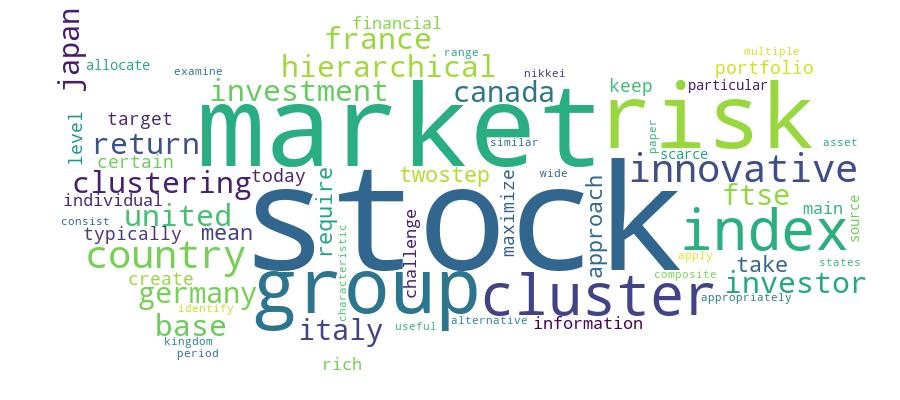
16 results
Scholarly Output Search Results
Now showing 1 - 10 of 16
Article Aralık Tip II Genelleştirilmiş Çan Şekilli Bulanık Sayının Aralık Yakınsaması(2019) SİNEM PEKER; Efendi NASİBOV; Peker, Sinem; Nasibov, EfendiÜyelik derecelerinin bulanık olduğu durumlarda Tip II bulanık sayıları kullanılır. Ancak bu sayılar bazı yöntemlerde uygulanamayabilir ve bunların yakınsamaları oluşturulmak istenebilir. Bu çalışmada aralık Tip II genelleştirilmiş çan şekilli bulanık sayısının aralık yaklaşımı dikkate alınmış ve özel bir hal için aralığın bilinmeyen parametrelerinin formülleri bulunmuştur.Article Citation - WoS: 4Citation - Scopus: 3COMPARISON OF FUZZY NUMBERS USING LEFT/RIGHT SIDES OF LEVEL SETS(MINISTRY COMMUNICATIONS & HIGH TECHNOLOGIES REPUBLIC AZERBAIJAN, 2020) S. Peker; R. Shikhlinskaya; E. Nasibov; Shikhlinskaya, R.; Peker, S.; Nasibov, E.Comparison is the most important operation in Decision Making (DM) problems. In case of crisp numbers there is not a problem but comparison of Fuzzy Numbers (FN) involves many problems. This study handles a level set approach to compare fuzzy numbers. The level sets are compared in accordance with all - all all some some all and some some quantifiers. This case reflects the optimistic/pessimistic approaches of a decision maker. This four approaches handle the left/left left/right right/left right/right sides of alpha-cuts level of two fuzzy numbers. The proposed relations are investigated in accordance with the ranking of fuzzy numbers and all relations are analyzed whether they satisfy or not the reflexive transitive symmetric antisymmetric partial ordering properties of relations. In addition basic rules for the comparison of two fuzzy numbers are given.Book Part Interval Type II Fuzzy Number Generation From Data Set Applied to Sedation Stage Classification(IGI Global, 2020) Efendi N. Nasibov; Sinem Peker; Nasibov, Efendi; Peker, SinemThere are several ways to summarize the data.set by using measures of locations dispersions charts and so on. But how can the data set be represented or shown when uncertainty exists in the environment process? Usage of the fuzzy number can be a way to handle the uncertainty in the representation of the data set. This chapter focuses on the membership function construction from the data set and introduces the formulas for the interval Type-2 generalized bell-shaped fuzzy number generation based on the data set. The bispectral index scores (BIS) are processed to see the ability of the offered methods in the construction of the interval Type -2 generalized bell-shaped membership function in the real data set. The obtained membership functions are used for a classification problem of sedation stages according to BIS data sets. Classification accuracies are calculated. © 2022 Elsevier B.V. All rights reserved.Article Citation - WoS: 4CLUSTERING IN KEY G-7 STOCK MARKET INDICES: AN INNOVATIVE APPROACH(SUMY STATE UNIV DEPT MARKETING & MANAGEMENT INNOVATIVE ACTIVITY, 2017) Peker Sinem; Aktan Bora; Tvaronaviciene Manuela; Bora, Aktan; Sinem, Peker; Manuela, TvaronavicieneInvestment in stock market requires taking risk. Investors typically buy several stocks to create a portfolio which targets to maximize the return while keeping a certain level of risk. In today's information-rich financial markets one of the main challenges for individual investors in particular is to allocate the scarce sources appropriately within the wide range of investment alternatives that grouping the multiple assets based on their similar characteristics would be useful to take it out. In this paper stock markets of the Group of 7 (G-7) countries consisting of France United Kingdom Germany Italy United States Canada and Japan are examined over the period of 2011 and 2016 and some hierarchical clustering methods are applied on key indices namely CAC 40 (France) FTSE 100 (UK) DAX (Germany) FTSE MIB (Italy) S& P TSX Composite (Canada) S& P 500 (USA) NIKKEI 225 (Japan) to identify the groups based on risk and return characteristics.1Conference Object CLUSTERING IN EUROPEAN STOCK INDICES IN CRISIS AND NON-CRISIS PERIODS(VILNIUS GEDIMINAS TECHNICAL UNIV PRESS TECHNIKA, 2014) Sinem Peker; Bora Aktan; Peker, Sinem; Aktan, Bora; J Stankeviciene; R Ginevicius; AV RutkauskasGrouping the major indices of stock markets based on their homogeneities may facilitate the selection period for investors especially today's information rich financial world. This paper attempts to detect and group the homogenous stock indices in Europe both throughout the crisis and non-crisis periods. The daily index returns of leading stock exchanges over the period 03.01.2007-09.04.2013 are considered, one of the hierarchical clustering techniques so-called Ward's Method is applied and similar cases are evaluated respectively. Then Wilcoxon signed rank test is employed for the same periods on daily index returns and meaningful differences are found.Article Citation - WoS: 5Citation - Scopus: 4Time series labeling algorithms based on the K-nearest neighbors' frequencies(Pergamon-Elsevier Science Ltd, 2011) Efendi N. Nasibov; Sinem Peker; Nasibov, Efendi N.; Peker, SinemIn the current paper time series labeling task is analyzed and some solution algorithms are presented. In these algorithms fuzzy c-means clustering which is one of the unsupervised learning methods is used to obtain the labels of the time series. Then K-nearest neighborhood (KNN) rule is performed on the labels to obtain more relevant smooth intervals. As an application the handled labeling algorithms are performed on bispectral index (BIS) data which are time series measures of brain activity. Finally smoothing process is found useful in the estimation of sedation stage labels. © 2010 Elsevier Ltd. All rights reserved. © 2011 Elsevier B.V. All rights reserved.Article Citation - WoS: 9Citation - Scopus: 10The marketing department's reputation in the firm(ELSEVIER SCI LTD, 2015) Osman Gok; Sinem Peker; Gungor Hacioglu; Hacioglu, Gungor; Gok, Osman; Peker, SinemThe role effectiveness and credibility of the marketing function within a firm have been the focus of scholarly research and practitioners' attention in marketing and both researchers and practitioners argue that the marketing department's reputation has been besmirched in recent years. This study makes an initial attempt to empirically investigate antecedents and consequences of the marketing department's reputation within the firm. We put forward the notion that the marketing department's reputation is a key factor in the junction of the departmental influence and power-oriented research streams. The results indicate that the customer connection capability accountability and status of the marketing department are positively related to its reputation in the firm. Conversely the variable of the resources controlled by marketing is negatively associated with the department's reputation. The results further show that a reputable marketing department is associated with improved market performance regardless of the generic strategy pursued by the firm. Development of departmental capabilities is vital for marketing to be a respected department in the organization. Marketers also have to build favorable perceptions on and beyond their capabilities within the firm and upper echelons. (C) 2015 Elsevier Ltd. All rights reserved.Article Citation - WoS: 9Citation - Scopus: 11THE IMPACT OF MARKETING'S INNOVATION-RELATED CAPABILITIES ON A FIRM'S INNOVATION PERFORMANCE(WORLD SCIENTIFIC PUBL CO PTE LTD, 2020) Osman Gok; Sinem Peker; Gok, Osman; Peker, SinemInnovation performance is a potential source of competitive advantage for any firm. A capable marketing department (MD) can contribute significantly to the market success of the new products and services offered. Therefore understanding the impact of marketing's innovation-related capabilities in the innovation process is an important area of inquiry to achieve a more innovative and competitive company. This study examines the relations among relevant MD capabilities marketing's decision influence on innovation development and a firm's innovation performance. The results indicate that the capabilities of the MD are strongly associated with the firm's innovation performance. Our findings also demonstrate that marketing capabilities have a positive relationship with the department's influence on innovation development. However the department's influence on innovation decisions has no effect on the firm's innovation performance. We proposed a moderated mediation model considering a set of firm-level and environmental contingency variables. Results reveal that the proposed model relationships are indifferent for all the sub-groups of moderators.Article Beklenen Aralığa Dayanan Aralık Tip II Üssel Bulanık Sayının Aralık Tip II Parametrik Yamuk Bulanık Sayı Yakınsaması(2021) Efendi Nasibov; Sinem Peker; Nasibov, Efendi; Peker, SinemTip I bulanık sayıları belirsizliği ele almak için bazı karar verme problemlerinde kullanılmaktadır. Tip I bulanık sayılarının üyelik dereceleri adi sayılardır. Ancak gerçek yaşam problemlerinde üyelik derecelerinin bulanık sayılar ile gösterilebileceği olaylar var olabilir. Bu gibi durumlarda Tip II bulanık sayıları kullanılabilir. Bulanık sayının daha basit bir formunun kullanılması bazı çalışmalarda karmaşık hesaplamalardan kaçınmak için bir avantaj olarak görülmektedir. Bu durum dikkate alınarak bu çalışmada aralık Tip II üssel bulanık sayının aralık Tip II parametrik yamuk bulanık sayı yakınsaması beklenen aralıkların eşitliklerinin kullanıldığı bir kısıtlı optimizasyon problemi ile bulunmuş ve formüller verilmiştir.Article Citation - WoS: 86Citation - Scopus: 102Understanding the links among innovation performance market performance and financial performance(Springer Verlag service@springer.de, 2017) Osman Gök; Sinem Peker; Gök, Osman; Peker, SinemInnovation and its impacts on business performance are strategically vital deliberations for modern business organizations. In this study we examine how innovation performance affects two different facets of firm performance: market performance and financial performance. Many studies address the relationship between innovation and business performance but few empirical studies analyze the interplay between those variables. Research results reveal a suppression effect of market performance on the innovation–financial performance relationship. We find a negative direct relationship between innovation and financial performance, however market performance reverses this negative effect to a positive total influence through its suppression effect. This result indicates the vital role of market performance in converting innovation to positive financial outcomes. The proposed mediation model is relevant regardless of the set of firm-level and environmental contingency variables. © 2017 Elsevier B.V. All rights reserved.
