
Erdem, Mustafa Ruhan
Loading...
Name Variants
Mustafa Ruhan ERDEM
Job Title
Prof.Dr.
Email Address
Main Affiliation
02.11. Kamu Hukuku Programları
Status
Current Staff
Website
ORCID ID
Scopus Author ID
Turkish CoHE Profile ID
Google Scholar ID
WoS Researcher ID
Sustainable Development Goals
SDG data is not available

This researcher does not have a Scopus ID.

This researcher does not have a WoS ID.

Scholarly Output
27
Articles
7
Views / Downloads
0/0
Supervised MSc Theses
16
Supervised PhD Theses
2
WoS Citation Count
0
Scopus Citation Count
0
Patents
0
Projects
0
WoS Citations per Publication
0.00
Scopus Citations per Publication
0.00
Open Access Source
7
Supervised Theses
18
| Journal | Count |
|---|---|
| Ceza Hukuku Dergisi | 2 |
| Dokuz Eylül Üniversitesi Hukuk Fakültesi Dergisi | 2 |
| İstanbul Kültür Üniversitesi Hukuk Fakültesi Dergisi | 1 |
| İzmi̇r Barosu Dergi̇si̇ | 1 |
| Yargıtay Dergisi | 1 |
Current Page: 1 / 1
Scopus Quartile Distribution
Quartile distribution chart data is not available
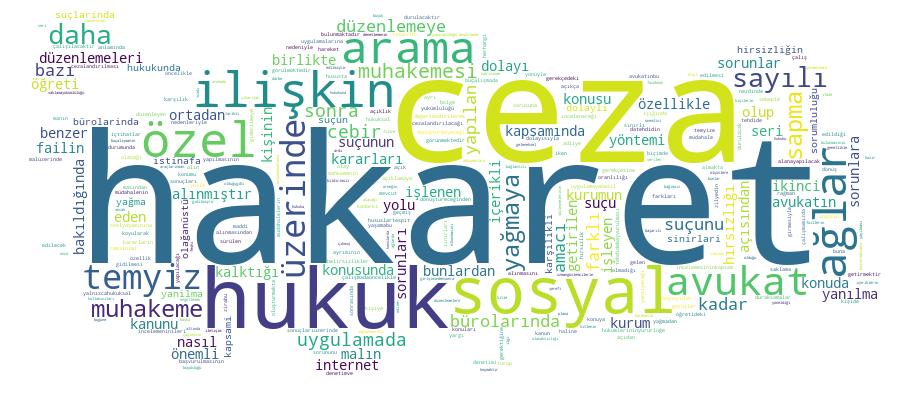
Competency Cloud
27 results
Scholarly Output Search Results
Now showing 1 - 10 of 27
Master Thesis Criminal Liability for Social Media Posts(2024) Denizli, Mürvet Elif; Erdem, Mustafa RuhanWith the advancement of technology and the new developments it has brought, new oncepts such as social media have entered our lives. The fact that social media has become a part of every moment of my life and is seen as a domain where everyone can easily access and share anything they want has brought about various issues both socially and legally. Unfortunately, since the laws have remained silent on these emerging issues, the way to resolve them in practice has remained somewhat unclear for a while. Subsequently, efforts have been made to address these issues through Supreme Court rulings and scholarly work. One of the unclear areas that is the focus of our study is the criminal responsibility of individuals for posts made on social media. In the first part of our study, we briefly discussed the concept of social media, which has been present in our lives for a relatively short time, including its history, sub-concepts, related terms, social media platforms, and its differences from traditional media. In the second part, we evaluated two crimes that have not been extensively studied in this field, as well as two crimes that are most frequently committed via social media, under the headings of general theory of crime, general criminal law, and special criminal law. We assessed the characteristics and specific features of these crimes when committed via social media, paying particular attention to crimes that exhibit distinct features in this context. In the third and final part, we conducted a more general evaluation of crimes that can be committed through social media, rather than focusing on specific crime types as in the second part. We examined how criminal responsibility arises in the context of social media platforms' characteristics and discussed aspects such as erroneous belief, intent, negligent behavior, and the place and time of the crime under separate headings. In conclusion, our study, by examining the issues, specific features, and our own opinions on the topics of social media and criminal responsibility within the continuously evolving and changing field of information law, has provided an overview of the problems arising in this area.Article HIRSIZLIĞIN YAĞMAYA DÖNÜŞMESİ (DOLAYLI YAĞMA)(2017) Candide Senturk; Mustafa Ruhan ERDEM; Senturk, Candide; Erdem, Mustafa Ruhan765 sayılı TCK m. 495/2’de malın alınmasından sonra cebir ve tehdidebaşvurulması durumunda da failin yağmadan dolayı cezalandırılacağı açıkça öngörül-müş iken 5237 sayılı TCK’da buna karşılık gelen bir düzenlemeye yer verilmemiştir.Yağma suçunu düzenleyen 5237 sayılı TCK m. 148’in gerekçesine bakıldığında malüzerinde “zilyedin tasarruf olanağı ortadan kalktığı ana kadar” başvurulan cebir ya datehdidin “hırsızlığı yağmaya dönüştüreceğinden” söz edildiği görülmektedir. Bu çalış-manın amacı gerekçedeki bu açıklamaya rağmen hırsızlık suçu anlamında malın alın-masından sonra cebir ya da tehdide başvurulmasının işlenen hırsızlığı yağmaya dönüş-türüp dönüştürmeyeceği ve dolayısıyla bu konuda ayrı bir düzenlemeye gidilmesi ge-reksinimi olup olmadığı sorusuna açıklık getirmektir.Article CEZA MUHAKEMESİNDE TEMYİZ İNCELEMESİNİN KAPSAMI VE SINIRLARI(2018) Cihan KAVLAK; Mustafa Ruhan ERDEM; Kavlak, Cihan; Erdem, Mustafa RuhanCMK’nın (Ceza Muhakemesi Kanunu) istinafa ilişkin hükümlerininyürürlüğe girmesiyle birlikte temyiz BAM (Bölge Adliye Mahkemesi)denetiminden geçmiş ve temyiz yolu açık olan kararların yalnızcahukuksal yönüyle inceleneceği bir kanun yolu haline gelmiştir.CMK’nın temyize ilişkin düzenlemeleri kapsamında hukuksal denetimve maddi olay denetimi ayrımının nasıl yapılacağı incelemeninileri sürülen temyiz nedenleriyle sınırlı olarak yapılmasının uygulamayanasıl yansıyacağı önemli sorunlar olarak görünmektedir. Buçalışmada öğretideki görüşler ve içtihatlar ışığında temyiz incelemesininkapsam ve sınırları ele alınmıştır.Master Thesis Ceza muhakemesinde kanun yararına bozma (CMK m. 309-310)(2024) Durmuş, Onur; Erdem, Mustafa RuhanCeza muhakemesinin amacı maddi gerçeğin araştırılıp bulunması, hukuki barışın tesisi ve adaletin sağlanmasıdır. Ancak bu amaçlar arasında bir denge olması gerekmektedir. Bu dengenin bozulması durumunda ceza muhakemesi işlevsiz kalacaktır. Muhakeme sonuncunda verilen kararın da hukuka uygun olması gerekmektedir. Fakat hukuki barışın sağlanması için de ceza muhakemesinin bir noktada son bulması elzemdir. Muhakemeyi sonlandıran kesin ve değerliliği olan nihai karara kesin hüküm otoritesi denilmektedir. Kesin hüküm otoritesini ortadan kaldırdığından ancak hükme etkili ve başka türlü giderilmesi mümkün olmayan hukuka aykırılıkların varlığı halinde gidilebilecek bir yol olan kanun yararına bozma, her türlü hukuka aykırılığın öne sürülüp incelenmesine elverişli bir kanun yolu olmayıp dar kapsamlıdır. Çalışmamızın ilk bölümünde, temel olarak ceza muhakemesinin tanım ve amacına ve bu bağlamda ceza muhakemesi içinde kanun yollarının önemine yer verilmiştir. Bu bölümde kanun yollarının başvuru koşulları irdelenmiş, kanun yolları başvurusunda hata, vazgeçme ve başvurunun geri alınması ele alınmıştır. Akabinde kanun yollarına başvurunun etkileri üzerinde durulmuş, kanun yararına bozma kanun yolu ve ceza muhakemesi hukukumuzda bulunan diğer olağanüstü kanun yolları karşılaştırılmıştır. Çalışmamızın ikinci bölümünde ise öncelikle kanun yararına bozma yolunun ceza muhakemesindeki yeri, tanımı ve amacı açıklanmaya çalışılmıştır. Sonrasında kanun yararına bozma yoluna başvuru koşulları, inceleme usulü, başvurudan vazgeçilmesi ile kanun yararına başvurmanın etkileri alt başlıklar halinde incelenmiştir. Kanun yararına bozma nedenlerinin tahdidi olarak yer aldığı CMK m.309/4'te yer alan dört bent öğreti ve Yargıtay kararları ışığında değerlendirilmiştir. Çalışmamızın son alt başlığında ise kanun yararına bozma kanun yolu özelindeki tartışmalı konular değerlendirilmiştir. Anahtar Kelimeler: Ceza Muhakemesi, olağanüstü kanun yolu, kesin hüküm otoritesi, kanun yararına bozma, kanun yararına bozma nedenleriMaster Thesis Avrupa İnsan Hakları Mahkemesi Kararları ışığında delil yasakları(2014) Şenol, Gökçe Uzunali; Erdem, Mustafa Ruhan'Evidence' which carries us to the reality, is the building block of the trial law, from the begining to the end of trial. Hence relaiblity of evidences bring into safety public; by the way that provides fair trial and state of law rules. Obtaining methods of evidences in crime law is quite important and that effects the fairness of trial. In this contest the thesis inclueds firstly 'evidence' as a notion and then the color of Turkish Crime Law theory and practice. Even if the basic origin of thesis is the judgement of Eouropean Court of Human Rights.Publication SUÇUN KONUSUNDA YANILMA VE SAPMA(2019) Erdem, Mustafa RuhanThe study will be focused on the subjects of error and abberance. . Because, there are problems about how to implement the law in doctrine and practice and how to punish the perpetrator. For this reason, in this study, firstly the error and its results, then the abberance and its consequences will be discussed. The differences between two subjects will be determined and the specific issues will be determined and court’s decisions which are related to the subject will be evaluated. Lastly, in this scope the problems that exist in doctrine and practice will be tried to be eliminated.Master Thesis Obli̇gati̇on to Investi̇gate the Torture in an Effective Manner Wi̇thi̇n the Scope of ECHR Article 3(2015) Dursun, Gizem; Avcıoğlu, Mehmet Çağrı; Erdem, Mustafa Ruhan; Uzunallı, Sevilayİşkenceyi etkili biçimde soruşturma yükümlülüğü açık bir biçimde AİHS metninde yer almayan, Sözleşme'nin birinci, üçüncü ve on üçüncü maddeleri doğrultusunda AİHM'nin yapmış olduğu incelemeler sonucu ortaya çıkmış bir yükümlülüktür. AİHM'ne bu yükümlülüğün ihlal edildiği iddiasıyla yapılmış oldukça fazla sayıda başvuru bulunmakta olup, ne yazık ki Mahkeme'nin bu yükümlülüğün ihlali yönünde vermiş olduğu kararların büyük çoğunluğu Türkiye aleyhinedir. Çalışmamızın ilk bölümünde, işkence yasağı kavramına, Türk hukukunda bu yasak kapsamında yapılmış olan düzenlemelere ve özellikle işkence suçu ile işkence yasağına ilişkin düzenlemelere yer verilen ve işkence görmeme hakkını koruma altına alınan sözleşmelere yer verilmiş, bu kapsamda yasağın sağladığı koruma alanı tespit edilmiştir. Çalışmamızın ikinci bölümünde ise AİHS ile oluşturulan koruma mekanizması ve bu koruma mekanizmasının Türk hukukuna etkisi değerlendirilmiş ardından da ayrıntılı biçimde işkence yasağı ile yasaklanmış olan aşağılayıcı ve insanlık dışı muamele ve ceza ile işkence kavramları AİHM kararları ışığında ele alınmış, bu yükümlülük ile birlikte devletlerin yerine getirmeyi taahhüt ettikleri yükümlülükler açıklanmıştır. Çalışmamızın esas konusunun değerlendirildiği son bölümümüzde ise, işkence yasağı kapsamında devletlerin yüklenmiş oldukları usuli yükümlülük yani işkenceyi etkili biçimde soruşturma yükümlülüğü ele alınmış, bu yükümlülük kapsamında devletlerin yükümlülükleri tespit edilmiş ve ardından da bu yükümlülükler doğrultusunda AİHM kararları değerlendirilerek uygulamamızdaki aksak noktalar tespit edilerek bu aksaklıklara çözüm önerilerinde bulunulmuştur.Master Thesis Deliberate Injury(2017) Aydın, Zümer; Erdem, Mustafa RuhanThe most recent Turkish Criminal Code Number 5237 enacted on 1 June 2005 and stems from a contemporary Criminal Law conception. The objective of this study is to adopt this new Criminal Law theory and to reflect its new emphasis on the crime of malicious injury. The act of inflicting injury to the person might be committed by inflicting actual or grievous bodily harm, causing the victims to suffer from physical health problems or from perceptual defects. In a society governed by law everybody has right to bodily integrity and the state is obliged to protect the body immunity of persons with the constitution and laws in the light of international law. It is the main purpose to protect each individual from bodily and psychiatric injury. Although deliberately guilty of the crime of the Turkish Penal Code No. 5237 86-88. although articles 86 and 87 were explained in detail in this study, article 88 was also tried not to be shown in general. In this respect, in the first part of the study, the general information about the crime of deliberate injury and the development of the crime in the history of Turkish law are explained in terms of similar crimes. In the second part, deliberate elements of the criminal offense and the situations that are becoming more severe due to the fact that they are qualified together with them are given in detail, and reasons for compliance with the law are clarified under the element of contradiction to law. In the third chapter, as a crime under the heading of special forms of appearance, crime has been committed with negligence behavior. In addition, cases of illegal occupation, as well as cases of undertaking, participation and participation have been examined. In the fourth chapter, the deliberate investigation and prosecution procedure for deliberate criminal offense and the court of competent and competent court were ended by examining the statute of limitations and lastly sanctions.Master Thesis Tüzel kişilerin ceza sorumluluğu(2018) Alsharo, Muhammed Akif; Erdem, Mustafa RuhanÇalışmanın özünde tüzel kişilerin ceza sorumluluğu incelenmiştir. Tüzel kişilerin ceza sorumluluğunun incelenebilmesi için öncelikle tüzel kişinin tarihsel gelişimine yer verilerek tüzel kişiyi açıklayan teoriler ele alınmıştır. Ardından tüzel kişilerin ehliyetleri, tüzel kişinin hareket kabiliyeti ve hukuka aykırı eylemlerdeki sorumluluk kavramı değerlendirilerek tüzel kişilerin sona ermesi ve sona ermenin sonuçları ele alınmıştır. Çalışmanın devamında tüzel kişilerin ceza sorumluluğunun var olup olmadığı, karşılaştırmalı hukuk ve iç hukukta tüzel kişilerin sorumluluğunun hangi kriterlere dayandığı, tüzel kişileri temsile yetkili olan organın sorumluluğunun sınırları ve tüzel kişilerin ceza sorumluluğu incelenmiştir. Ardından tüzel kişilerin ceza sorumluluğu genel ve özel kanunlar çerçevesinde incelenerek, genel anlamda güvenlik tedbirleri ve tüzel kişilere uygulanabilecek güvenlik tedbirlerinin neler olduğu ele alınmıştır. Anahtar Kelimeler: Tüzel kişi, ceza sorumluluğu, organ kavramı, tüzel kişilerin unsurlarıMaster Thesis Bilgisayarlarda, bilgisayar programlarında ve kütüklerinde arama, kopyalama ve elkoyma(2017) Şarsel, Betül Gül; Şimşek, Öykü Deniz; Erdem, Mustafa Ruhan; Akaner, Candide ŞentürkDespite the fact that the fast development in computer technology and the realization of a vast number of computer operations nowadays facilitated great easiness in the tasks that are done and the increase in efficiency, it resulted in widespread use of computers in the crimes committed. On the other hand, it has been seen that the classical methods of obtaining evidence has been insufficient for crimes committed by the use of computer technology. The seeking of evidence and its seizure inside a computer or inside a system wherein computers are connected to each other in the form of a network is a separate transaction. It is for this reason that the measure of 'Search, Copy and Seizure in Computers, Computer Programs and Their Files' has been arranged in Article 134 of CCP (Code of Criminal Procedure), which expresses a special way of the search and seizure measures in general terms. The aforementioned arrangement is of great importance due to the intervention it has on fundamental rights and freedoms. Even though this measure has completed 11 years since its entry into our legal world, it is still up to date thanks to the ever-developing information technologies. By handling Article 134 of CCP, which is still up-to-date, in detail and together with the subjects to which it relates to, we will try, in this thesis, to contribute to this subject by declaring our thoughts on controversial topics in order for the measure to be applied in the most correct form in our legal world. In the first part of this study, basic concepts related to computers and terminology related to the concepts of Computer Forensics and Electronic Evidence have been discussed. Following the related terminologies, Computer Forensics Expertise and Phases of Computer Forensics have been explained; points of attention that is required while obtaining electronic evidence and the position of electronic evidence in criminal procedure have been mentioned. In the second part of this study, 'Search and Seizure' protection measures have been analyzed; definitions, legal qualities, historical developments, purposes, varieties and circumstances of these measures have been touched upon; principles possessing these measures have been explained; legal way/ways to be applied against these measures and the fate of evidence obtained by coincidence during application of these measures have been mentioned. The last part, being the third part, where the main subject of this study is evaluated, the purpose and content of Article 134 of CCP, its legal quality, historical development, conditions and method of application has been touched upon; the measure has been evaluated from the view point of basic rights and freedoms; the position of European Cyber Crime Convention in general and in our country has been mentioned; the way how search and seizure operations are realized in comparative law information systems has been explained ; legal way/ways to be applied against this measure , the characteristic of the data that is obtained as a result of the measure being the evidence and the way to compensate for the damages that could result in the case when the measure is realized against law has been mentioned. Besides, in relevant parts examples are given from the decisions of Supreme Court and ECHR (European Court of Human Rights). Key Words : Computer, Search, Copy, Seizure, Computer Forensics, Electronic Evidence

- «
- 1 (current)
- 2
- 3
- »