
Ek, Fatma İpek
Loading...
Name Variants
E. K. Fatma İpek
Fatma Ipek Ek
Fatma İpek Ek
Fatma İpek EK
Fatma Ipek Ek
Fatma İpek Ek
Fatma İpek EK
Job Title
Doç.Dr.
Email Address
Main Affiliation
01.01.10.02. Mimarlık Bölümü
Status
Current Staff
Website
ORCID ID
Scopus Author ID
Turkish CoHE Profile ID
Google Scholar ID
WoS Researcher ID
Sustainable Development Goals
 1
1NO POVERTY
0
Research Products
 2
2ZERO HUNGER
0
Research Products
 3
3GOOD HEALTH AND WELL-BEING
1
Research Products
 4
4QUALITY EDUCATION
0
Research Products
 5
5GENDER EQUALITY
0
Research Products
 6
6CLEAN WATER AND SANITATION
0
Research Products
 7
7AFFORDABLE AND CLEAN ENERGY
0
Research Products
 8
8DECENT WORK AND ECONOMIC GROWTH
0
Research Products
 9
9INDUSTRY, INNOVATION AND INFRASTRUCTURE
0
Research Products
 10
10REDUCED INEQUALITIES
0
Research Products
 11
11SUSTAINABLE CITIES AND COMMUNITIES
2
Research Products
 12
12RESPONSIBLE CONSUMPTION AND PRODUCTION
0
Research Products
 13
13CLIMATE ACTION
0
Research Products
 14
14LIFE BELOW WATER
0
Research Products
 15
15LIFE ON LAND
0
Research Products
 16
16PEACE, JUSTICE AND STRONG INSTITUTIONS
0
Research Products
 17
17PARTNERSHIPS FOR THE GOALS
3
Research Products

Documents
11
Citations
57
h-index
3

Documents
8
Citations
40

Scholarly Output
24
Articles
18
Views / Downloads
0/0
Supervised MSc Theses
6
Supervised PhD Theses
0
WoS Citation Count
3
Scopus Citation Count
5
Patents
0
Projects
0
WoS Citations per Publication
0.13
Scopus Citations per Publication
0.21
Open Access Source
10
Supervised Theses
6
| Journal | Count |
|---|---|
| Digital Creativity | 2 |
| ITU Press, Press of the Istanbul Technical University | 2 |
| A|Z ITU Mimarlık Fakültesi Dergisi | 2 |
| Philosophy East and West | 2 |
| Studies in the History of Gardens & Designed Landscapes | 2 |
Current Page: 1 / 3
Scopus Quartile Distribution
Quartile distribution chart data is not available
Competency Cloud
24 results
Scholarly Output Search Results
Now showing 1 - 10 of 24
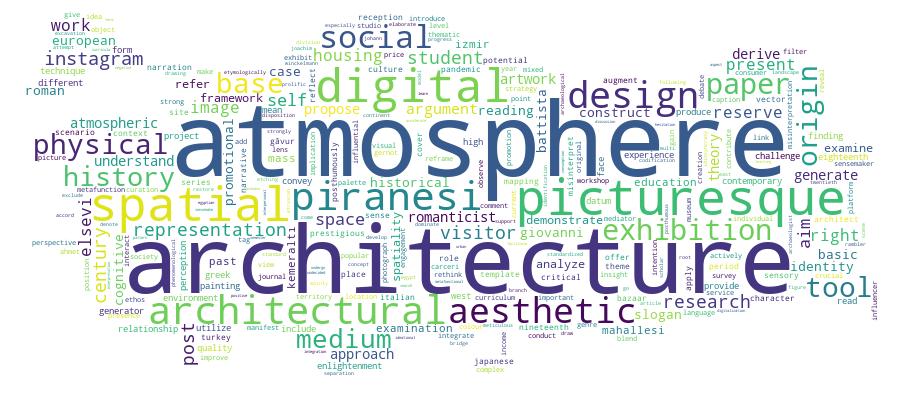
Article Kültürel Üretim Mekânlarında Kenti Üreten Kadınlar: Kadifekale Örneği(2023) FATMA IPEK EK; Nupelda Sibel Acat; Ek, Fatma Ipek; Acat, Nupelda SibelGöç sırasında genellikle pasif durumda olan göçmen kadınlar göç alanlarının kullanılması ve dö- nüştürülmesi söz konusu olduğunda aktif birer özneye dönüşmektedir. Kimlik toplumsal cinsiyet sosyokültürel normlar ve ekonomik kaygılar kadınların mekânla ilişkisini anlamlandırmada değer- lendirilmesi gereken unsurlardandır. Bu unsurlar kadınlar için pek çok yaşamsal zorluğa yol açar- ken mekânsal yeniden üretimleri de beraberinde getirmektedir. Bu bağlamda İzmir kent merkezinde önemli bir göç bölgesi olan Kadifekale kentsel dönüşüm politikaları ile birçok akademik ve yerel yö- netim temelli araştırmaya da konu olmuştur. Önceden yapılan tüm çalışmalara ek olarak bu makale iç göçün yaşam/üretim mekânları üzerindeki etkisini ele almakta Kadifekale ve çevresi odağında in- celemektedir. İlgili yerleşimin mevcut mekânsal durumunu anlamak için kültürel kodların kökenine karşılık gelen Mardin'in özgün dokusundaki mekânsal kodlar da incelenmiş Mardin’de yaşanılan mekânsal dilin İzmir’de yaşanılan mekânsal dile nasıl dönüştüğü ve özellikle kadınlar tarafından nasıl aktarıldığı araştırılmıştır. Yöntem olarak etnografik temele oturan incelemelerde yerinde göz- lem tekniğinin yanı sıra İzmir ve Mardin’in ilgili mahallelerinde yaşamakta olan kadınlarla yarı yapılandırılmış görüşmeler gerçekleştirilmiştir. Görüşmelerin en önemli çıktısı göçmen kadınların “varış” noktasındaki mekânları yeniden örgütleme ve tasarlama konusundaki örtük fakat etken rol- lerine dairdir. Bu çerçevede varış ve menşe mekânların/mekânsal elemanların birbiriyle gösterdiği benzerlik ve farklılıklar göçmenlerin kültürlerini mekânlara yansıtabilme esnekliklerine dair de önemli verilere işaret etmektedir.Article Citation - WoS: 1Examination of Prestigious Mass-Housing Identity via The Slogans: Cases in Izmir Turkey(KONYA TECHNICAL UNIV FAC ARCHITECTURE & DESIGN, 2021) Oguzcan Nazmi Kuru; Fatma Ipek Ek; Ek, Fatma Ipek; Kuru, Oguzcan NazmiPurpose The paper aims to make a critical examination of the current prestigious mass-housing projects through the promotional slogans to understand the relationships between the promotional and architectural strategies. Design/Methodology/Approach In the research the archive-based surveys were conducted by utilizing the framework of the case study method. The data were collected from the websites and electronic catalogues of the cases and analysed comparatively to reveal the messages given by the promotions and manifested in the architectural formations. Findings The study makes categorizations for the slogans and architectural services of the cases and proposes that the promotional and architectural identities of the projects refer to a template that provides the sale guarantee and therefore cannot be broken easily to present the alternative living manners. Research Limitations/Implications The study is limited with the 20 similar-scale projects with independent sections of more than 50 households addressing to the high-income level with the prestigious or luxurious qualities and built used or under construction in the period covering 2015-2021 in Izmir city-centre and peripheries. Social/Practical Implications In social respect the findings point out the common interdisciplinary genes creating the templates of the consumer society by manifesting that the high price is related to the services provided within the housing settlement but not the quality of architectural solutions. Originality/Value The paper tries to uncover the possible effects of the slogans in shaping the mass-housing identity for the high-income level and reveal the close relationship between the consumer society and promotion of architecture which results in selling housing projects at high prices with the same promotional and architectural templates.Master Thesis Atmosphere as Spatial Language: Semiotics of Atmospheric Aesthetics in Sci-Fi Dystopian Films(2025) Üge, Talha; Ek, Fatma İpekThis thesis investigates the ways in which sci-fi cinema constructs meaning through spatial atmosphere, sensory expression, and architectural design, particularly within the framework of dystopian architecture. Drawing on Gernot Böhme's theory of atmospheric aesthetics and Michael A. K. Halliday's systemic functional linguistics, the study formulates a dual-axis analytical model that integrates object-oriented analysis of cinematic space with subject-oriented audience reception. Through close analysis of Blade Runner (1982), Dark City (1998), and The Matrix Reloaded (2003) and The Matrix Revolutions (2003), the research reveals how spatial composition, lighting, acoustic layering, and architectural motifs function as a linguistic system, conveying complex themes of control, resistance, surveillance, and existential fragmentation across the filmic environment. Böhme's atmospheric generators are expanded and recalibrated for the specific demands of cinematic representation, while Halliday's ideational, interpersonal, and textual (reconceptualized in this thesis as [con]textual) metafunctions of language inform the analysis of audience interpretation and emotional response. Empirical data, collected through film screenings, reflective writing, discussion-based sessions, and sketch-based analysis conducted with architecture students, provide a layered perspective on how dystopian atmospheres are cognitively processed and effectively internalized. Rather than treating atmosphere as an aesthetic supplement to narrative, the study reframes it as a communicative structure embedded in the aesthetics of fictional urban space. In doing so, it positions cinematic space, and the architectural configurations that define it, as an active agent of ideological articulation. This interdisciplinary investigation contributes to ongoing debates in film studies, spatial theory, and semiotics, offering a theoretically grounded and methodologically coherent approach to understanding how sensory and spatial codes shape meaning in sci-fi cinema.Article Atmospheric image of the exhibited self: Gâvur Mahallesi exhibition on Instagram(ROUTLEDGE JOURNALS TAYLOR & FRANCIS LTD, 2025) Ahenk Yilmaz; Ezgi Uygun; Fatma Ipek Ek; Ek, Fatma İpek; Yılmaz, Ahenk; Uygun, EzgiThis paper examines how individuals interact with the spatial atmospheres of artworks in exhibitions as reflected in their social media posts. Understanding this relationship is crucial for exhibitions to gain insights into visitor reception and meaning co-creation. The study introduces a new framework to analyze visitor-generated Instagram posts from Ahmet G & uuml,ne & scedil,tekin's G & acirc,vur Mahallesi exhibition. Applying Gernot B & ouml,hme's atmosphere generators (reframed as selves objects vectors and mediators in digital atmospheric images) a mixed-methods approach analyzes 438 Instagram posts linked to 71 artworks and tagged at the location. The analysis includes colour palettes filters generator presence/position and thematic analysis of captions/comments. Findings show that popular artworks generate strong spatial atmospheres and visitors actively construct digital selves by adding narratives sometimes challenging original intentions. This research contributes to digital curation museum studies and social media research by offering a method to understand visitor engagement with complex exhibition atmospheres via digital platforms.Article Estetik Etki Olarak Zıtlıkların Simbiyozu ve Japon Mekân Atmosferi Tasarımındaki Rolü(2024) FATMA IPEK EK; Ek, Fatma IpekGünümüz mimari tasarım eğiliminde estetik duyusal deneyim ve duyum temelinde ilerlerken bu deneyim ve duyumun ardında beliren duygulanım kavramını da içermektedir. Böylelikle mekân atmosferi mimarlığın estetik nesnesi haline gelirken karşılık geldiği olgunun çok katmanlı mimari bileşenlerden oluşan bir yapıya ve bu yapıdan fazlası denebilecek deneyimciyi ve geçmişini de kapsayan ve dolayısıyla sürekli değişen bir organizmaya karşılık geldiği söylenebilir. Mekânlaşan/anlatılaşan mekânın deneyimsel devinimi amaçlayan doğasına ait izler tarih içinde kültürler temelinde takip edildiğinde karşımıza derin bir etki olarak Japon mekân estetiği çıkmaktadır. Japon kültürüne ait özellikle din ve coğrafya temelli olgular gerek mekânda gerekse sözde yer edinmiş kültürün tarihsel aktarımını sağlayan genetik kodları haline gelmiştir. Dolayısıyla Japon kültüründe bir mekân ile bir şiir karşılaştırıldığında bu iki aracı şekillendiren yaratım niyetleri aktarılan olgular ve sunulan mesajların birbirine koşut olduğu görülebilir. Mekân tasarımını şekillendiren söz ve şiir üzerinden aktarılan mekânsal deneyim Japon kültürünün genlerinde yer alan farklı estetik kodlarla okunabilir. Bu kodlardan biri birbirine zıt kavramların simbiyotik ilişkisine işaret eden ve literatüre Kurokawa Kisho’nun kazandırdığı hanasuki estetik etkisidir. Mekânı yaratan kavramlar/dil ile dilde/söz’de yaratılan mekân hanasuki estetik etki temelinde ele alındığında her iki bağlamda da okunabilirlik kazanır. Bu çalışma mekânı kodlayan / var eden estetik etkiyi öncelikle Japon mimarların mekân tasarımında estetiğe odaklanan açıklamaları üzerinden ardından Japon şairlerin eserlerinde karşımıza çıkan mekânsal tarifleri/göndermeleri aracılığıyla okumayı planlamaktadır. Mekândaki söz olan Japon mimarlığı ile söz’de mekânlaşan Japon mimarlığında zıt kavramların simbiyotik bir aradalığından doğan estetik etkinin deneyimleyen ve deneyimlenen arasında özel köprülerle bağladığı mekânsal yapı incelenecek yer yer Batılı izlekte bulduğu karşılıklara değinilecektir.Master Thesis Sosyal medyada kent imgesi: İzmir Konak ve Bayraklı kent merkezleri(2022) Acar, Mine; Ek, Fatma İpekGünümüzde sosyal medya, fiziksel çevremizi algılama biçimimizi değiştiren önemli bir olgu haline gelmiş durumda. Ayrıca kentin imgesini dijital ortamda yeniden üretme gücüne sahip bir araca da karşılık geliyor. Instagram gibi görsel tabanlı ve konum tabanlı sosyal medya platformları, kent imgesinin yeniden üretim sürecinde önemli bir rol oynuyor. Kent imgesinin öznel algısı sosyal medya platformları sayesinde ön plana çıkmış ve yeni bir okunaklılık algısı oluşmaya başlamıştır. Diğer bir deyişle sosyal medyanın yaygınlaşması, insanların kent imgesini düşündükleri biçimde sergilemelerine olanak tanımış ve bizatihi bu olanağın kentin imgesini yeniden şekillendirme gücüne sahip olduğu ortaya çıkmıştır. Bu noktadan hareketle, mevcut çalışma, kentsel mekânın algılanan kimliğini yansıtmada sosyal medyanın rolünün yanı sıra kentin ruhunu sosyal medya platformları aracılığıyla algılama ve yansıtma biçimlerimiz açısından araştırmayı ve anlamayı amaçlamaktadır. Dolayısıyla bu araştırma şu soruların cevaplarını bulmayı amaçlamaktadır: Sosyal medya platformlarına sıklıkla yansıyan İzmir kent merkezlerinin görüntülerinin katmanları nelerdir? Bir kentin anlamını sosyal bir ortam aracılığıyla nasıl algılar ve yeniden üretiriz? Sosyal medya, kentin imgesinin inşasında nasıl bir okunaklılık sağlıyor? Bu bağlamda, sosyal medyanın kullanımı ve kentsel imgenin (yeniden) inşasındaki rolü hakkında fikir oluşturmak amacıyla, İzmir yeni ve eski kent merkezlerinde konum tabanlı bir araştırma ile çevrimiçi anketler ve sosyal medya içerik analizi gerçekleştirilmiştir. Konak ve Bayraklı ilçeleri, İzmir'in eski ve yeni kent merkezlerini temsil eden konumlar olarak bu araştırmanın temel odak noktası olmuştur. Bu seçimin arkasındaki neden, iki ilçenin de büyük ölçüde, sosyal medya araçlarını etkin bir şekilde kullanan daha genç bir nüfusa hizmet etmesidir. Instagram, görsel içeriğin metinsel içerik eklenerek kolayca paylaşılması bağlamında Türkiye'de ikinci en sık kullanılan platform olması nedeniyle analiz edilmek üzere seçilen sosyal medya aracı olmuştur. Özetle bu tez, gelişen dijital teknolojilerin kent imgesi kuramına katkısını ortaya koymaktadır. Gelişen Bilişim ve İletişim Teknolojileri, kent imgesini kullanıcı odaklı bir yapıya dönüştürmüştür. Böylece kent imgesi, Kevin Lynch'in klasikleşen bakış açısı yerine daha öznel odaklı bir yorumla yeniden şekillenmeye başlamıştır. Bu noktadan hareketle bu tez, Lynch'in kuramsal mantığından esinlenerek sosyal medyadaki dijital kent imgesinin üretimine yönelik yeni bir kategorizasyon sistemi sunmaktadır. Sonuç olarak bu çalışma, internet üzerinden dinamik olarak akan görselleri ile kentsel mekânların fizikselliğini anlamaya yönelik yeni perspektifler açmanın yanı sıra, sosyal medyada kentsel kullanıma dair öznel eğilimlerin dijital kentin imgesel inşasındaki önemine de işaret etmektedir. Anahtar Kelimeler: dijital kentin imgesi, sosyal medya, öznel kent imgesi, kent imgesinin dijital bileşenleriArticle THE NARRATION OF ARCHITECTURAL SPACE AS A WAY OF CONSTRUCTING THE SPATIAL ATMOSPHERE: TWO READINGS OF CONTEMPORARY JAPANESE ARCHITECTURE(University of Hawaii Press, 2022) Fatma İpek Ek[No abstract available]Article Search for a new metafunctional education pattern in basic design studios after the COVID-19 pandemic(Istanbul Teknik Universitesi Faculty of Architecture, 2025) Fatma İpek Ek; Deniz Engin; Gülçin Öçel; Aysu Püskülcü Aydin; Zeynep Bavunoğlu; Öçel, Gülçin; Ek, Fatma İpek; Püskülcü Aydin, Aysu; Engin, Deniz; Bavunoğlu, ZeynepAfter the COVID-19 pandemic basic design studios given in the first year of architectural education in Turkey have undergone a new accelerating process based on using physical design techniques with digitalization. The current study proposes a new curriculum that integrates the ideational interpersonal and (con)textual metafunctions of language into basic design learning to facilitate the integration of physical and digital tools. It was applied in the first semester of the basic design curriculum through face-to-face education. At the end of the term we surveyed first-year students to learn about the positive and negative aspects of making designs in physical and digital environments. The results demonstrated that they are undecided and have some hesitations in representing their design ideas physically while they are relatively confident of the advantages of designing in the digital environment. However although 3D representation has become easier with the use of digital tools and students’ digital representation skills have improved it has also been observed that students’ perceptions and understanding of 3D and spatiality have not improved at the same rate. © 2025 Elsevier B.V. All rights reserved.Master Thesis Kadınların günlük mekansal pratikleri ile göç arasındaki ilişki: Kadifekale örneği(2024) Acat, Nupelda Sibel; Ek, Fatma İpekGöç sırasında var olan duruma uyum sağlamaya çalışan göçmen kadınlar, göç alanlarının kullanımında ve dönüştürülmesinde aktif özneler haline gelmektedir. Kimlik, toplumsal cinsiyet, sosyokültürel normlar ve ekonomik kaygılar kadınların mekânla ilişkisini anlamlandırmada değerlendirilmesi gereken unsurlardandır. Bu unsurlar, kadınlar için pek çok yaşamsal zorluğa yol açarken mekânsal yeniden üretimleri de beraberinde getirmektedir. Bu bağlamda, İzmir kent merkezinde önemli bir göç bölgesi olan Kadifekale ve çevresi, kentsel dönüşüm politikaları ile birçok akademik ve yerel yönetim temelli araştırmaya da konu olmuştur. Önceden yapılan tüm çalışmalara ek olarak bu tez, iç göçün yaşam/üretim mekânları üzerindeki etkisini ele almakta, Kadifekale ve çevresi odağında incelemektedir. İlgili yerleşimin mevcut mekânsal durumunu anlamak için kültürel kodların kökenine karşılık gelen Mardin'in özgün dokusundaki mekânsal kodlar da incelenmiş, Mardin'de yaşanılan mekânsal dilin, İzmir'de yaşanılan mekânsal dile nasıl dönüştüğü ve özellikle kadınlar tarafından nasıl aktarıldığı araştırılmıştır. Yöntem bağlamında nitel araştırma yöntemleri takip edilerek, yerinde gözlem tekniğinin yanı sıra, İzmir ve Mardin'in ilgili mahallelerinde yaşamakta olan kadınlarla yarı yapılandırılmış derinlemesine görüşmeler gerçekleştirilmiştir. Analizlerin en önemli çıktısı, göçmen kadınların, dilleri ve sosyokültürel alışkanlıkları aracılığıyla, varış noktasındaki mekânları yeniden örgütleme ve tasarlama konusundaki örtük fakat etken rollerine dairdir. Bu çerçevede, varış ve menşe mekânların/mekânsal elemanların birbiriyle gösterdiği benzerlik ve farklılıklar, göçmenlerin kültürlerini mekânlara yansıtabilme esnekliklerine dair de önemli verilere işaret etmektedir.Article Piranesi’s challenge: Rethinking the origins of European architecture(Istanbul Teknik Universitesi Faculty of Architecture, 2024) E. K. Fatma İpekItalian architect archaeologist and scholar Giovanni Battista Piranesi was a prolific Enlightenment figure who produced an elaborate series of drawings and etchings to support his following argument on the origins of European architecture: Roman architecture derived not from the Greek but from the Etruscan which according to him derived from Egypt. Based on his meticulous archaeological examinations in excavations he developed a history of architecture that was not based on the East-West division and the separation of the continents. However Johann Joachim Winckelmann’s approach rooting the origin of Roman architecture in the Greek came to dominate the standard history of architecture and Piranesi was misinterpreted both in his day and posthumously. The posthumous codification of architectural history excluded Piranesi from the standardized progress of architectural history in the West and resulted in his identification by idiosyncrasy. Therefore this work is an attempt to restore his argument to architectural history. © 2025 Elsevier B.V. All rights reserved.

- «
- 1 (current)
- 2
- 3
- »