
Türsel Eliiyi, Deniz
Loading...

Name Variants
Deniz Tursel Eliiyi
Job Title
Prof.Dr.
Email Address
Main Affiliation
01.01.09.03. Endüstri Mühendisliği Bölümü
Status
Former Staff
Website
ORCID ID
Scopus Author ID
Turkish CoHE Profile ID
Google Scholar ID
WoS Researcher ID
Sustainable Development Goals
 1
1NO POVERTY
0
Research Products
 2
2ZERO HUNGER
0
Research Products
 3
3GOOD HEALTH AND WELL-BEING
0
Research Products
 4
4QUALITY EDUCATION
0
Research Products
 5
5GENDER EQUALITY
0
Research Products
 6
6CLEAN WATER AND SANITATION
0
Research Products
 7
7AFFORDABLE AND CLEAN ENERGY
2
Research Products
 8
8DECENT WORK AND ECONOMIC GROWTH
1
Research Products
 9
9INDUSTRY, INNOVATION AND INFRASTRUCTURE
0
Research Products
 10
10REDUCED INEQUALITIES
0
Research Products
 11
11SUSTAINABLE CITIES AND COMMUNITIES
1
Research Products
 12
12RESPONSIBLE CONSUMPTION AND PRODUCTION
0
Research Products
 13
13CLIMATE ACTION
0
Research Products
 14
14LIFE BELOW WATER
0
Research Products
 15
15LIFE ON LAND
0
Research Products
 16
16PEACE, JUSTICE AND STRONG INSTITUTIONS
0
Research Products
 17
17PARTNERSHIPS FOR THE GOALS
0
Research Products

This researcher does not have a Scopus ID.

Documents
55
Citations
876

Scholarly Output
21
Articles
13
Views / Downloads
0/0
Supervised MSc Theses
0
Supervised PhD Theses
0
WoS Citation Count
161
Scopus Citation Count
189
Patents
0
Projects
0
WoS Citations per Publication
7.67
Scopus Citations per Publication
9.00
Open Access Source
4
Supervised Theses
0
| Journal | Count |
|---|---|
| Maritime Policy & Management | 3 |
| Promet - Traffic&Transportation | 3 |
| 19th European-Operational-Research-Societies Working Group on Transportation Meeting (EWGT) | 2 |
| 14th International Conference on Intelligent Computing (ICIC) | 2 |
| Computers & Operations Research | 1 |
Current Page: 1 / 3
Scopus Quartile Distribution
Quartile distribution chart data is not available
Competency Cloud
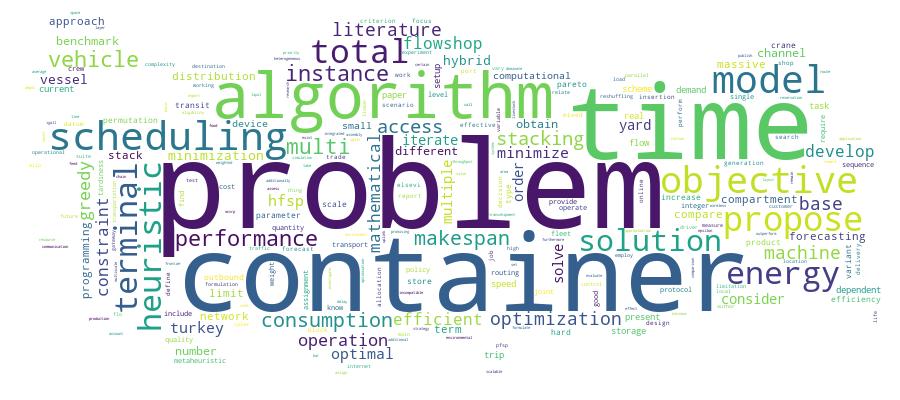
21 results
Scholarly Output Search Results
Now showing 1 - 10 of 21
Conference Object Citation - WoS: 14Citation - Scopus: 17Green Permutation Flowshop Scheduling: A Trade- off- Between Energy Consumption and Total Flow Time(SPRINGER INTERNATIONAL PUBLISHING AG, 2018) Hande Oztop; M. Fatih Tasgetiren; Deniz Tursel Eliiyi; Quan-Ke Pan; Tasgetiren, M. Fatih; Fatih Tasgetiren, M.; Oztop, Hande; Pan, Quan-Ke; Türsel Eliiyi, Deniz; Eliiyi, Deniz Tursel; DS Huang; MM Gromiha; K Han; A HussainPermutation flow shop scheduling problem (PFSP) is a well-known problem in the scheduling literature. Even though many multi-objective PFSPs are presented in the literature with the objectives related to production efficiency and customer satisfaction studies considering energy consumption and environmental effects in scheduling is very seldom. In this paper the trade-off between total energy consumption (TEC) and total flow time is investigated in a PFSP environment where the machines are assumed to operate at varying speed levels. A multi-objective mixed integer linear programming model is proposed based on a speed-scaling strategy. Due to the NP-complete nature of the problem an efficient multi-objective iterated greedy (IGALL) algorithm is also developed. The performance of IGALL is compared with model performance in terms of quality and cardinality of the solutions.Article Citation - WoS: 79Citation - Scopus: 94Metaheuristic algorithms for the hybrid flowshop scheduling problem(PERGAMON-ELSEVIER SCIENCE LTD, 2019) Hande Oztop; M. Fatih Tasgetiren; Deniz Tursel Eliiyi; Quan-Ke Pan; Tasgetiren, M. Fatih; Fatih Tasgetiren, M.; Öztop, Hande; Pan, Quan-Ke; Eliiyi, Deniz TürselThe hybrid flowshop scheduling problem (HFSP) has been widely studied in the literature as it has many real-life applications in industry. Even though many solution approaches have been presented for the HFSP with makespan criterion studies on HFSP with total flow time minimization have been rather limited. This study presents a mathematical model four variants of iterated greedy algorithms and a variable block insertion heuristic for the HFSP with total flow time minimization. Based on the well-known NEH heuristic an efficient constructive heuristic is also proposed and compared with NEH. A detailed design of experiment is carried out to calibrate the parameters of the proposed algorithms. The HFSP benchmark suite is used for evaluating the performance of the proposed methods. As there are only 10 large instances in the current literature further 30 large instances are proposed as new benchmarks. The developed model is solved for all instances on CPLEX under a time limit and the performances of the proposed algorithms are assessed through comparisons with the results from CPLEX and the two best-performing algorithms in literature. Computational results show that the proposed algorithms are very effective in terms of solution time and quality. Additionally the proposed algorithms are tested on large instances for the makespan criterion which reveal that they also perform superbly for the makespan objective. Especially for instances with 30 jobs the proposed algorithms are able to find the current incumbent makespan values reported in literature and provide three new best solutions. (C) 2019 Elsevier Ltd. All rights reserved.Article Optimisation and heuristic approaches for assigning inbound containers to outbound carriers(ROUTLEDGE JOURNALS TAYLOR & FRANCIS LTD, 2017) Cemalettin Ozturk; F. Zeynep Sargut; M. Arslan Ornek; Deniz Tursel EliiyiDue to economical and/or geographical constraints most of the time overseas containers cannot be directly shipped to their destinations. These containers visit transhipment ports where they are first unloaded and temporarily stored and then loaded onto smaller vessels (feeders) to be transported to their final destinations. The assignment of these containers to outbound vessels necessitates several factors to be taken into account simultaneously. In this paper we develop a mathematical model to reflect multiple objectives with priorities and to assign these containers to different vessels at the transit container port terminal. Although we solve a single-objective (with the weighted sum of objectives) mathematical model to optimality we also propose two heuristic approaches to solve this complex problem for a transit agency. The first heuristic is shipment based and has four variants differing in how the opportunity costs of the assignments are calculated. The second greedy heuristic is trip based where the goal is to maximise the capacity utilisation of the vessels. The heuristics return very promising solutions in ignorable computational times. We also provide real-life cases and present our conclusions.Conference Object Trip allocation and stacking policies at a container terminal(ELSEVIER SCIENCE BV, 2014) Ceyhun Guven; Deniz Tursel Eliiyi; FG Benitez; R RossiThere are three crucial resources at container terminals, the yard cranes and the vehicles. The main objective of the terminal is the efficient use of these resources while performing different operations. The yard is a temporary storage area where containers remain until transported to their next location by truck train or vessel. Containers are stacked on top of each other in order to utilize the yard space efficiently. However stacking cranes can only directly access those containers at the top of the stack. As a result reshuffling/shifting occurs defined as an unproductive move of a container required to access another container stored underneath. We focus on increasing the efficiency of the yard via consideration of the container stacking optimization problem for transshipment inbound and outbound containers at a container terminal. The objective of the problem is to minimize container storage and retrieval times through avoidance of reshuffles resulting in more efficient loading/unloading operations and in turn minimizing the dwell time of containers. The main inputs are the type weight discharge port/location destined vessel/vehicle of the container and the expected departure time. Different stacking policies are proposed in this study and we also investigate the problem of allocating the transit container to outbound vessels to minimize dwell time at the terminal. Transit containers require multiple sea-trips to reach their final destination. Vessels departing from the terminal and destined for the same port may provide exchangeable trips for this type of container based on their several attributes and capacity restrictions. We consider this problem taking into account several factors that affect container/trip allocation decisions. The solution of this problem also has implications for the stacking problem. (C) 2014 The Authors. Published by Elsevier B.V.Article Citation - WoS: 4Citation - Scopus: 6ROUTE OPTIMIZATION FOR THE DISTRIBUTION NETWORK OF A CONFECTIONARY CHAIN(SVENCILISTE U ZAGREBU FAKULTET PROMETNIH ZNANOSTI, 2015) Anil Inanli; Basak Unsal; Deniz Tursel Eliiyi; Ünsal, Başak; İnanli, Anil; Eliiyi, Deniz TürselThis study considers the distribution network of a well-known perishable food manufacturer and its franchises in Turkey. As the countrywide number of stores is increasing fast the company is facing problems due to its central distribution of products from a single factory. The objective is to decrease the cost of transportation while maintaining a high level of customer satisfaction. Hence the focus is on the vehicle routing problem (VRP) of this large franchise chain within each city. The problem is defined as a rich VRP with heterogeneous fleet site-dependent and compartmentalized vehicles and soft/hard time windows. This NP-hard problem is modelled and tried with real data on a commercial solver. A basic heuristic procedure which can be used easily by the decision makers is also employed for obtaining quick and high-quality solutions for large instances.Conference Object A reward-based algorithm for the stacking of outbound containers(ELSEVIER SCIENCE BV, 2017) Sel Ozcan; Deniz Tursel Eliiyi; HB Celikoglu; AH Lav; MA SilguAs global trade increases container transshipment activities increase rapidly. Therefore high competition among container terminals has emerged. The decision for good stacking positions for containers plays a critical role on the performance of a container terminal since it influences the productivity of the terminal in a strong sense. In this study we focus on the minimization of the berthing time of vessels by improving the stacking operations through minimization of non-value-added handling operations of containers which is called reshuffling as well as the traveling time of the cranes operating at the storage yard. Most of the containers in the container terminal we focus are outbound which are transported into the container terminal via external trucks and stored in the stacking yard until they are loaded onto vessels. We propose a reward-based algorithm for the stacking of outbound containers by taking the following four components into consideration, container's distance to the closest RTGC RTGC's workload the number of stacked containers at the neighborhood bays and the current height of the stacks at the storage yard. The inputs of the algorithm include the relevant information of the container to be stacked that are just entered into the terminal gate current usage information of the storage yard and the current positions of the yard cranes. The proposed stacking strategy is in implementation phase to one of the container terminals in Izmir. The results seem to be promising when compared to the current randomized stacking strategy in the container terminal. (C) 2017 The Authors. Published by Elsevier B.V.Article A Multiscale Algorithm for Joint Forecasting-Scheduling to Solve the Massive Access Problem of IoT(IEEE-INST ELECTRICAL ELECTRONICS ENGINEERS INC, 2020) Volkan Rodoplu; Mert Nakip; Deniz Tursel Eliiyi; Cuneyt GuzelisThe massive access problem of the Internet of Things (IoT) is the problem of enabling the wireless access of a massive number of IoT devices to the wired infrastructure. In this article we describe a multiscale algorithm (MSA) for joint forecasting-scheduling at a dedicated IoT gateway to solve the massive access problem at the medium access control (MAC) layer. Our algorithm operates at multiple time scales that are determined by the delay constraints of IoT applications as well as the minimum traffic generation periods of IoT devices. In contrast with the current approaches to the massive access problem that assume random arrivals for IoT data our algorithm forecasts the upcoming traffic of IoT devices using a multilayer perceptron architecture and preallocates the uplink wireless channel based on these forecasts. The multiscale nature of our algorithm ensures scalable time and space complexity to support up to 6650 IoT devices in our simulations. We compare the throughput and energy consumption of MSA with those of reservation-based access barring (RAB) priority based on average load (PAL) and enhanced predictive version burst-oriented (E-PRV-BO) protocols and show that MSA significantly outperforms these beyond 3000 devices. Furthermore we show that the percentage control overhead of MSA remains less than 1.5%. Our results pave the way to building scalable joint forecasting-scheduling engines to handle a massive number of IoT devices at IoT gateways.Article Citation - WoS: 12Citation - Scopus: 18Multi-Channel Joint Forecasting-Scheduling for the Internet of Things(IEEE-INST ELECTRICAL ELECTRONICS ENGINEERS INC, 2020) Volkan Rodoplu; Mert Nakip; Roozbeh Qorbanian; Deniz Tursel Eliiyi; Rodoplu, Volkan; Qorbanian, Roozbeh; Nakip, Mert; Eliiyi, Deniz TurselWe develop a methodology for Multi-Channel Joint Forecasting-Scheduling (MC-JFS) targeted at solving the Medium Access Control (MAC) layer Massive Access Problem of Machine-to-Machine (M2M) communication in the presence of multiple channels as found in Orthogonal Frequency Division Multiple Access (OFDMA) systems. In contrast with the existing schemes that merely react to current traffic demand Joint Forecasting-Scheduling (JFS) forecasts the traffic generation pattern of each Internet of Things (IoT) device in the coverage area of an IoT Gateway and schedules the uplink transmissions of the IoT devices over multiple channels in advance thus obviating contention collision and handshaking which are found in reactive protocols. In this paper we present the general form of a deterministic scheduling optimization program for MC-JFS that maximizes the total number of bits that are delivered over multiple channels by the delay deadlines of the IoT applications. In order to enable real-time operation of the MC-JFS system first we design a heuristic called Multi-Channel Look Ahead Priority based on Average Load (MC-LAPAL) that solves the general form of the scheduling problem. Second for the special case of identical channels we develop a reduction technique by virtue of which an optimal solution of the scheduling problem is computed in real time. We compare the network performance of our MC-JFS scheme against Multi-Channel Reservation-based Access Barring (MC-RAB) and Multi-Channel Enhanced Reservation-based Access Barring (MC-ERAB) both of which serve as benchmark reactive protocols. Our results show that MC-JFS outperforms both MC-RAB and MC-ERAB with respect to uplink cross-layer throughput and transmit energy consumption and that MC-LAPAL provides high performance as an MC-JFS heuristic. Furthermore we show that the computation time of MC-LAPAL scales approximately linearly with the number of IoT devices. This work serves as a foundation for building scalable JFS schemes at IoT Gateways in the near future.Conference Object Citation - WoS: 9A Multi-compartment Vehicle Routing Problem for Livestock Feed Distribution(SPRINGER INTERNATIONAL PUBLISHING AG, 2017) Levent Kandiller; Deniz Tursel Eliiyi; Bahar Tasar; Kandiller, Levent; Tasar, Bahar; Eliiyi, Deniz Tursel; KF Doerner; I Ljubic; G Pflug; G TraglerIn the well-known Vehicle Routing Problem (VRP) customer demands from one or more depots are to be distributed via a fleet of vehicles. Various objectives of the problem are considered in literature including minimization of the total distance/time traversed by the fleet during distribution the total cost of vehicle usage or minimizing the maximum tour length/time. In this study we consider a multi-compartment VRP with incompatible products for the daily solution of a livestock feed distribution network where each livestock farm requests one type of feed from a single depot and the vehicles have several compartments. The objective is to minimize the total cost of distribution. Although VRP is a well-studied problem in literature multi-compartment VRP is considered only by few authors and our problem differs from the existing ones due to special operational constraints imposed by the situation on hand. We formulate a basic mathematical model for the problem and present possible extensions. We design a computational experiment for testing the effects of uncontrollable parameters over model performance on a commercial solver and report the results. The proposed model can easily be adapted to other distribution networks such as food and fuel/chemicals.Conference Object Iterated greedy algorithms for the hybrid flowshop scheduling with total flow time minimization(ASSOC COMPUTING MACHINERY, 2018) Hande Oztop; M. Fatih Tasgetiren; Deniz Tursel Eliiyi; Quan-Ke Pan; H AguirreThe hybrid flosshop scheduling problem (HFSP) has been extensively studied in the literature due to its complexity and reallife applicability. Various exact and heuristic algorithms have been developed for the HFSP and most consider makespan as the only criterion. The studies on HFSP sith the objective of minimizing total flos time have been rather limited. This paper presents a mathematical model and efficient iterated greedy algorithms IG and IGALL for the HFSP sith total flos time criterion. In order to evaluate the performance of the proposed IG algorithms the sellknosn HFSP benchmark suite from the literature is used. As the problem is NP-hard the proposed mathematical model is solved for all 87 instances under a time limit on CPLEX. Optimal results are obtained for some of these instances. The performance of the IG algorithms is measured by comparisons sith these time-limited CPLEX results of the mathematical model. Computational results shos that the proposed IG algorithms perform very sell in terms of solution time and quality. To the best of our knosledge for the first time in the literature the results of flos time criterion have been reported for the HFSP benchmark suite.

- «
- 1 (current)
- 2
- 3
- »