
Toy, Ayhan Özgür
Loading...
Name Variants
Ayhan Özgür TOY
Ayhan Özgür Toy
Ayhan Özgür Toy
Job Title
Prof.Dr.
Email Address
Main Affiliation
01.01.09.03. Endüstri Mühendisliği Bölümü
Status
Current Staff
Website
ORCID ID
Scopus Author ID
Turkish CoHE Profile ID
Google Scholar ID
WoS Researcher ID
Sustainable Development Goals
 1
1NO POVERTY
0
Research Products
 2
2ZERO HUNGER
0
Research Products
 3
3GOOD HEALTH AND WELL-BEING
1
Research Products
 4
4QUALITY EDUCATION
0
Research Products
 5
5GENDER EQUALITY
0
Research Products
 6
6CLEAN WATER AND SANITATION
0
Research Products
 7
7AFFORDABLE AND CLEAN ENERGY
0
Research Products
 8
8DECENT WORK AND ECONOMIC GROWTH
0
Research Products
 9
9INDUSTRY, INNOVATION AND INFRASTRUCTURE
1
Research Products
 10
10REDUCED INEQUALITIES
0
Research Products
 11
11SUSTAINABLE CITIES AND COMMUNITIES
1
Research Products
 12
12RESPONSIBLE CONSUMPTION AND PRODUCTION
0
Research Products
 13
13CLIMATE ACTION
0
Research Products
 14
14LIFE BELOW WATER
1
Research Products
 15
15LIFE ON LAND
0
Research Products
 16
16PEACE, JUSTICE AND STRONG INSTITUTIONS
0
Research Products
 17
17PARTNERSHIPS FOR THE GOALS
0
Research Products

Documents
23
Citations
86
h-index
5

Documents
19
Citations
69

Scholarly Output
27
Articles
7
Views / Downloads
0/3
Supervised MSc Theses
5
Supervised PhD Theses
0
WoS Citation Count
19
Scopus Citation Count
29
Patents
0
Projects
0
WoS Citations per Publication
0.70
Scopus Citations per Publication
1.07
Open Access Source
3
Supervised Theses
5
| Journal | Count |
|---|---|
| International Conference on Intelligent and Fuzzy Systems INFUS 2022 | 5 |
| 22nd International Symposium for Production Research ISPR 2022 | 2 |
| Pamukkale University Journal of Engineering Sciences | 2 |
| 4th International Conference on Intelligent and Fuzzy Systems (INFUS) | 2 |
| IISE Transactions | 1 |
Current Page: 1 / 3
Scopus Quartile Distribution
Quartile distribution chart data is not available
Competency Cloud
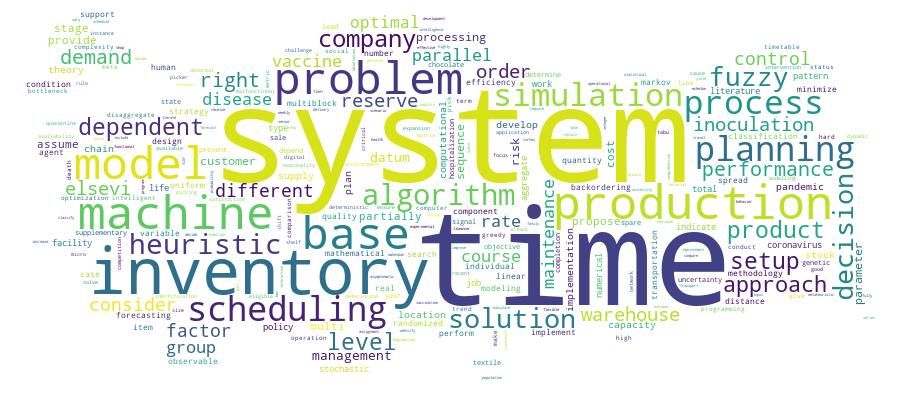
27 results
Scholarly Output Search Results
Now showing 1 - 10 of 27
Conference Object Uniform Parallel Machine Scheduling with Sequence Dependent Setup Times: A Randomized Heuristic(Springer Science and Business Media Deutschland GmbH, 2022) Beste Yıldız; Levent Kandiller; Ayhan Özgür Toy; N.M. Durakbasa , M.G. GençyılmazWe consider the uniform parallel machine scheduling problem with sequence-dependent setup times to minimize the total completion times. This problem is known to be NP-hard. We propose a simple randomized heuristic with an improvement subroutine. We analyze the performance of the proposed heuristic through a computational study. Our computational study indicates that the heuristic performs well in terms of optimality gap and solution time. © 2022 Elsevier B.V. All rights reserved.Article Hizmet lojistiğinde iş atama ve rotalama politikaları tasarımı(2019) Ayhan Özgür TOY; Zehra DÜZGİT; Simge ÇOBAN; Zeynep ALİBAŞOĞLU; Özlem TOK ÖZKESKİN; Mert KARAKAYA; Yücel BAYRAKBu çalışmada ev aletleri endüstrisinde satış sonrası teknik servisin verimliliğini arttırmayı ele almaktayız. Verimlilik ölçütü müşteri taleplerini karşılamak üzere harcanan toplam süredir. Böylece amaç satış sonrası teknik hizmetlerinde harcanan toplam çalışma saatinin en küçüklenmesidir. Öncelikle işlerin tamamlanmasındaki gecikmenin nedenlerini belirtmek üzere sistemi analiz ettik. Analiz bulgularımız neticesinde verimliliği arttırmak üzere iş atama ve iş sıralamaya odaklanmayı seçtik. Teknisyenleri işlere atayan ve her teknisyen için bir günde harcanan toplam zamanı en aza indirgeyecek şekilde rota belirleyen karışık bir tamsayı programlama modeli önerilmiştir. Bu model ile iş sürelerinin beklenen değeri için problemi çözmekteyiz. Önerdiğimiz çözüm yöntemini gösterecek bir sayısal çalışma da sunmaktayız.Master Thesis Rüzgar türbini verimliliğinin analizi için bulanık çıkarım sistemi ve uyarlamalı ağ tabanlı bulanık çıkarım sisteminin uygulanması(2023) Özcan, Gülcan İncu; Toy, Ayhan Özgür; Ulutagay, GözdeBu çalışma rüzgar türbinlerinin performansını değerlendirmek için bir bulanık çıkarım sistemi (FIS) ve uyarlanabilir bir nöro-bulanık çıkarım sistemi (ANFIS) kullanılmasını önermektedir. Rüzgar hızı, kanat uzunluğu ve diğer türbinlere olan mesafe gibi rüzgar türbini performansını etkileyen temel faktörler, veri analizi yoluyla belirlenir. Bu faktörlerin anlaşılması, türbin işletimi ve tasarımına ilişkin bilinçli karar vermeye olanak tanıyarak genel verimliliğin ve maliyet etkinliğinin iyileştirilmesine katkıda bulunur. Yazarlar, rüzgar türbinlerinin birden çok girdi ve çıktıya sahip karmaşık sistemler olduğunu ve bunun da geleneksel analiz yöntemlerini doğru sonuçlar vermede yetersiz kıldığını ileri sürüyorlar. FIS ve ANFIS, rüzgar türbini verilerindeki belirsizliği modellemek ve türbin verimliliğinin daha doğru bir şekilde değerlendirilmesini sağlamak için tasarlanmıştır. Bu çalışma, yaklaşımın etkinliğini Türkiye'deki bir rüzgar santralinden gerçek dünya verilerini kullanarak göstermektedir. Çalışma sonucunda FIS'in rüzgar türbini verimliliğini analiz etmek için umut verici bir araç olduğu ve rüzgar türbini sahlarının performansını iyileştirme potansiyeline sahip olduğu sonucuna varılıyor. Bu konuda çalışmamızdaki temel motivasyonumuz, müşterinin iki türbini daha fazla enerji üreteceği için değiştirme talebidir. Veri eksikliğinden dolayı bu durumu matematiksel olarak ifade edemesek de bu kararda kullanılacak değerli bilgiler paylaşılmıştır. Keywords: rüzgar türbini, bulanık çıkarım sistemi, uyarlamalı ağ tabanlı bulanık çıkarım sistemi, yenilenebilir enerji, verimlilikMaster Thesis Sıraya bağımlı kurulum süreleri ile tek tip paralel makine çizelgelemesi üzerine bir çalışma(2022) Yıldız, Beste; Toy, Ayhan Özgür; Kandiller, LeventScheduling problems are essential for decision-making in many academic disciplines, including operations management, computer science, and information systems. Since many scheduling problems are NP-hard in the strong sense, there is only limited research on exact algorithms and their efficiency when implemented on parallel computing architectures. This master's thesis considers the uniform parallel machine scheduling problem with sequence-dependent setup times to minimize the maximum completion time (makespan). We present an IP formulation, which clearly describes our problem and can be used to obtain optimal solutions for small-sized problems. As our problem is NP-hard, we propose a randomized heuristic with an improvement subroutine. The performance of the proposed heuristic through a computational study was tested with 320 instances. We created these instances using the full factorial design of experiment (DOE) with five different factors. Our computational study indicates that the proposed mathematical model takes 22.88 minutes on average, and the heuristic algorithm achieves these results only in 0.062 minutes. The average solutions obtained with the heuristic have an approximately 4% Gap value for average CPLEX solutions. Also, the contribution of the improvement subroutine step to the overall performance of the heuristic is 73.34%. Keywords: parallel machine scheduling, sequence-dependent setup time, full factorial design, randomized heuristic, uniform machines, total completion timesConference Object A Comparative Study of Artificial Intelligence Based Methods for Abnormal Pattern Identification in SPC(Springer Science and Business Media Deutschland GmbH, 2022) Umut Avci; Önder Bulut; Ayhan Özgür Toy; C. Kahraman , S. Cevik Onar , B. Oztaysi , I.U. Sari , A.C. Tolga , S. CebiStatistical process control techniques have been used to detect any assignable cause that may result in a lower quality. Among these techniques is the identification of any abnormal patterns that may indicate the presence of an assignable cause. These abnormal patterns may be in the form of steady movement in one direction i.e. trends, an instantaneous change in the process mean i.e. sudden shift, a series of high observations followed by a series of low observations i.e. cycles. As long as we can classify the observed data the decision maker can decide on actions to be performed to ensure quality standards and planning for interventions. In identification of these abnormal patterns rather than relying on human element intelligent tools have been proposed in the literature. We attempt to provide a comparative study of various classification algorithms used for pattern identification in statistical process control. We specifically consider six different types of patterns to classify. These different types are: (1) Normal (2) Upward trend (3) Downward trend (4) Upward shift (5) Downward shift (6) Cyclic. A recent trend in classification is to use deep neural networks (DNNs). However due to the design complexity of DNNs alternative classification methods should also be considered. Our focus on this study is to compare traditional classification methods to a recent DNN solution in the literature in terms of their efficiencies. Our numerical study indicates that basic classification algorithms perform relatively well in addition to their structural advantages. © 2022 Elsevier B.V. All rights reserved.Article Citation - Scopus: 2Analysis of inoculation strategies during COVID-19 pandemic with an agent-based simulation approach(Elsevier Ltd, 2025) Oray Kulaç; Ayhan Özgür Toy; Kamil Erkan Kabak; Toy, Ayhan Özgür; Kabak, Kamil Erkan; Kulaç, OrayBackground: The severity of recent Coronavirus (COVID-19) pandemics has revealed the importance of development of inoculation strategies in case of limited vaccine availability. Authorities have implemented inoculation strategies based on perceived risk factors such as age and existence of other chronic health conditions for survivability from the disease. However various other factors can be considered for identifying the preferred inoculation strategies depending on the vaccine availability and disease spread levels. This study explores the effectiveness of inoculating different groups of population in case of various vaccine availabilities and disease spread levels by means of some performance metrics namely: Attack Rate (AR) Death Rate (DR) and Hospitalization Rate (HR). Method: In this study we have implemented a highly detailed Agent-Based Simulation (ABS) model that extends classical SEIR Model by including five more additional states: Asymptomatic (A) Quarantine (Q) Hospitalized (H) Dead (D) and Immune (M) which can be used as a decision support tool to prioritize the groups of the population inoculated. The approach employs the modelling of daily mobility of individuals their interactions and transmission of virus among individuals. The population is heterogeneously clustered according to age family size work status transportation and leisure preferences with 17 different groups in order to find the most appropriate one to inoculate. Three different Disease Spread Levels (DSL) (low mid high) are experimented with four different Vaccine Available Percentages (VAP) (25% 50% 75% and 85%) with a total of 84 scenarios. Results: As the benchmark under the No Vaccine case Attack Rate Hospitalization Rate and Death Rate goes as high as 99.53% 16.96% and 1.38% respectively. Corresponding highest performance metrics (rates) are 72.33% 15.95% and 1.35% for VAP = 25%, 50.25% 9.55% and 0.94% for VAP = 50%, 24.53% 2.62% and 0.25% for VAP = 75%, and 11.51% 0.002% and 0.08% for VAP = 85%. The results of our study shows that the common practice of inoculation based on the age of individual does not yield the best outcome in terms of performance metrics across all DSL and VAP values. The groups containing workers and students that represent highly interactive individuals i.e. Group (9 10) Group (9 11 10‾) and Group (9 10 11 12‾) emerge as a commonly recommended choice for inoculation in the majority of cases. As expected we observe that the higher is the VAP levels the more is the number of alternative inoculation groups. Conclusions: Findings of this study present that: (i) inoculation considerably decreases the number of infected individuals the number of deaths and the number of hospitalized individuals due to the disease (ii) the best inoculation group/groups with respect to performance metrics varies depending on the vaccine availability percentages and disease spread levels (iii) simultaneous implementation of both inoculation and precautions like lock-down social distances and quarantines yields a stronger impact on disease spread and its consequences. © 2025 Elsevier B.V. All rights reserved.Conference Object A Comparative Study of Artificial Intelligence Based Methods for Abnormal Pattern Identification in SPC(SPRINGER INTERNATIONAL PUBLISHING AG, 2022) Umut Avci; Onder Bulut; Ayhan Ozgur Toy; Toy, Ayhan Ozgur; Bulut, Onder; Avci, Umut; C Kahraman; AC Tolga; SC Onar; S Cebi; B Oztaysi; IU SariStatistical process control techniques have been used to detect any assignable cause that may result in a lower quality. Among these techniques is the identification of any abnormal patterns that may indicate the presence of an assignable cause. These abnormal patterns may be in the form of steady movement in one direction i.e. trends, an instantaneous change in the process mean i.e. sudden shift, a series of high observations followed by a series of low observations i.e. cycles. As long as we can classify the observed data the decision maker can decide on actions to be performed to ensure quality standards and planning for interventions. In identification of these abnormal patterns rather than relying on human element intelligent tools have been proposed in the literature. We attempt to provide a comparative study of various classification algorithms used for pattern identification in statistical process control. We specifically consider six different types of patterns to classify. These different types are: (1) Normal (2) Upward trend (3) Downward trend (4) Upward shift (5) Downward shift (6) Cyclic. A recent trend in classification is to use deep neural networks (DNNs). However due to the design complexity of DNNs alternative classification methods should also be considered. Our focus on this study is to compare traditional classification methods to a recent DNN solution in the literature in terms of their efficiencies. Our numerical study indicates that basic classification algorithms perform relatively well in addition to their structural advantages.Conference Object Quantitative Methods for Agri-Food Supply Chain Resilience: A Systematic Literature Review Using Text Mining(Elsevier, 2025) Çali, Sedef; Toy, Ayhan Özgür; Ekren, Banu YetkinAgri-food Supply Chains (AFSCs) face increasing disruptions from natural disasters, pandemics, and economic crises, necessitating robust quantitative analysis for resilience. This study conducts a Systematic Literature Review (SLR) using text mining and Latent Dirichlet Allocation (LDA) to identify six key research themes, including risk management, pandemic effects, simulation-based resilience, climate change, market price volatility, and optimization models. Findings reveal that multi-criteria decision-making, simulation, optimization, and machine learning are widely used, yet gaps remain in Artificial Intelligence (AI)-driven risk prediction, real-time data integration, and adaptive decision-making This review offers insights for researchers and practitioners, emphasizing the need for AI, digital twins, and blockchain to enhance AFSC resilience. Copyright (C) 2020 The Authors. Published by Elsevier B.V. This is an open access article under the CC BY-NC-ND license (http://creativecommons.org/licenses/by-nc-nd/4.0/)Master Thesis Elektrikli araçların sürdürülebilirlik açısından benimsenmesinin analizi(2025) Şenocak, Gökcem Mısra; Öztürkoğlu, Yücel; Toy, Ayhan ÖzgürUlaşım küresel kalkınmanın en temel unsurlarından biri olup,insanları birbirine bağlayan ve yerel ile küresel pazarlar arasında köprü kuran bir yapıya sahiptir. Tüm bu olumlu özelliklerine rağmen, çevreye en fazla zarar veren unsurlardan biri olarak da öne çıkmaktadır. Bu nedenle, ulaşımda sürdürülebilir yaklaşımların benimsenmesi büyük önem taşımaktadır. Elektrikli araçların yaygınlaşması, sürdürülebilirlik açısından kritik bir rol oynamaktadır. Literatür taramasında elektrikli araçların yaygın olarak benimsenmesini etkileyen çeşitli ekonomik, çevresel ve sosyal faktörler tespit edilmiştir. Bu çalışma, elektrikli araçların benimsenmesini sürdürülebilirlik perspektifinden değerlendirmek için Best Worst Method kullanarak temel kriterleri belirlemektedir. Ekonomik faktörlerin, yüksek başlangıç maliyetleri ve batarya maliyetlerinin, elektrikli araçların benimsenmesinde en önemli engeller olduğunu göstermektedir. Çevresel faktörler arasında ise batarya üretiminin ekolojik etkileri ve elektrikli araçların yaşam döngüsü boyunca ortaya çıkan çevresel etkiler önemli zorluklar oluşturmaktadır. Bunun yanı sıra, elektrikli araçlar hakkında bilgi eksikliği, düşük model çeşitliliği gibi sosyal faktörler de elektrikli araçlara geçişi engellemektedir. Çalışma, elektrikli araçların benimsenmesini hızlandırmak için ekonomik engellerin azaltılması, sürdürülebilir üretim uygulamalarının geliştirilmesi ve tüketici farkındalığını arttırmaya yönelik stratejilerin uygulanması gerektiğini vurgulamaktadır.Conference Object The Facility Location Problem with Fuzzy Parameters(Springer Science and Business Media Deutschland GmbH, 2022) Gamze Erdem; Ayhan Özgür Toy; Adalet Oner; Toy, A. Özgür; Öner, Adalet; Erdem, Gamze; C. Kahraman , S. Cevik Onar , B. Oztaysi , I.U. Sari , A.C. Tolga , S. CebiThere is a variety of studies about Facility Location Problems (FLP) in Operations Research (OR) literature. The studies in the literature generally assume a deterministic environment. However studies relaxing the deterministic assumption are not rare. One way of incorporating uncertainties in these problems is through fuzzy parameters. While incorporating uncertainties into the problem Fuzzy set theory has some advantages over the other popular approach to handle uncertainties which is probabilistic theory. Unlike probabilistic theory the fuzzy set theory yields a logical manner to model uncertainties without the need for any historical data. Our focus in this work is to survey the collection of the recent publications on FLP with fuzzy parameters. Uncertain demands variable costs and travel durations as well as some subjective factors that are scaled in linguistic values can be given as examples for fuzzy parameters. As a methodology of this work firstly we start by listing parameters of the classical FLP and then present studies which consider these parameters as fuzzy sets and classify them accordingly. Secondly we group these studies based on the solution methodology implemented. Our search domain for the literature is primarily the Web of Science database. However we do not limit ourselves to that database in general. Our contribution is to provide knowledge about the properties of the fuzzy environments in facility location models. © 2022 Elsevier B.V. All rights reserved.

- «
- 1 (current)
- 2
- 3
- »